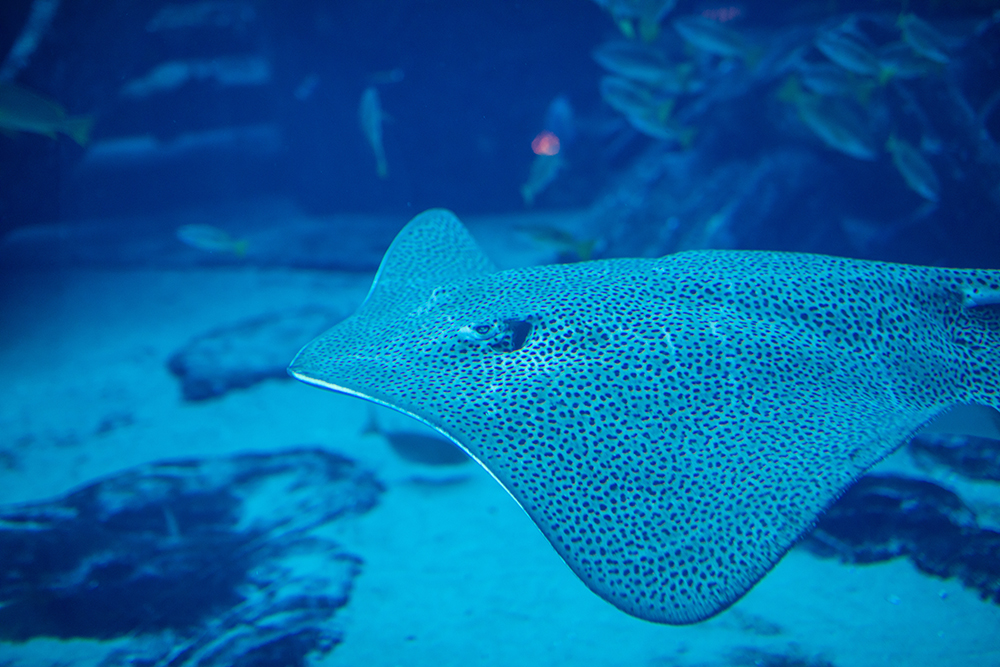

Beneath sandy ocean floors and along coastal shelves, one of the sea’s most unusual creatures quietly lurks: the electric ray. This flat, slow-moving fish may appear harmless, but it packs a surprising punch. Equipped with specialized electric organs, it can deliver powerful shocks that stun prey and keep predators at bay, making it one of the ocean’s most fascinating and mysterious hunters.
According to scientists, the electric ray can unleash shocks of up to 220 volts, capable of immobilizing fish and startling anyone who accidentally comes into contact with it. These fish are found in various oceans, including the Atlantic Ocean, the Mediterranean Sea, and the Pacific Ocean.
In addition, electric rays belong to the order Torpediniformes, a group of cartilaginous fish characterized by broad, rounded bodies and large pectoral fins that form a disc-like shape. Unlike other rays that glide gracefully with wing-like movements, experts say electric rays rely on muscular tails for propulsion.
Moreover, their electric organs, positioned on each side of the head, act like natural tasers, a defense mechanism honed by evolution over millions of years.
When it comes to size, species vary widely. The Atlantic torpedo ray (Torpedo nobiliana) is a true giant, reaching nearly 1.8 meters (6 feet) in length and weighing over 90 kilograms (200 pounds). However, smaller species, such as those in the Narcine family, typically measure between 30–70 centimeters (1–2 feet). Interestingly, even newborn pups are born ready for action, measuring 10–23 centimeters (4–9 inches), according to the Florida Museum of Natural History.
Electric rays are ambush predators. During the day, they often lie partially buried in the sand, waiting patiently for fish, crustaceans, or worms to swim within reach. Then, when prey comes close, the ray releases a burst of electricity that incapacitates it instantly, allowing the ray to feed with precision.
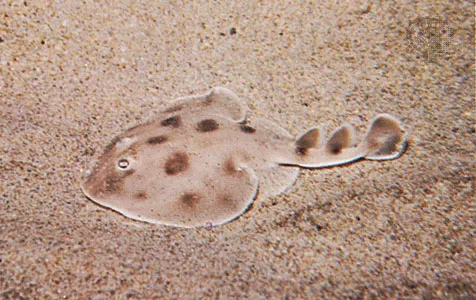
In addition, their flattened bodies, muted coloration, and sand-covered forms make them almost invisible, a tactic that enhances their hunting success.
Despite their shocking capabilities, electric rays are generally harmless to humans when left undisturbed. Although divers or fishermen who touch one accidentally may receive a painful jolt, fatalities are extremely rare, experts say.
Furthermore, their shy nature means encounters are uncommon, though those who have felt a ray’s electric pulse often describe it as startling and unforgettable.
Beyond their shock factor, electric rays play an essential role in marine ecosystems. By controlling populations of small fish and invertebrates, they help maintain balance on the seafloor. Additionally, their unique electric organs provide scientists with a natural laboratory for studying evolutionary adaptations and marine biodiversity.
Found in oceans around the globe, from tropical shallows to temperate waters, electric rays are a vivid reminder that the underwater world is full of surprises. Indeed, according to Wikipedia (2026), these fish showcase nature’s ingenuity, blending power, camouflage, and patience into a single fascinating predator. For this reason, encountering an electric ray is a memorable experience for divers, marine biologists, and ocean enthusiasts alike, reminding us of the ocean’s hidden wonders and extraordinary inhabitants.