
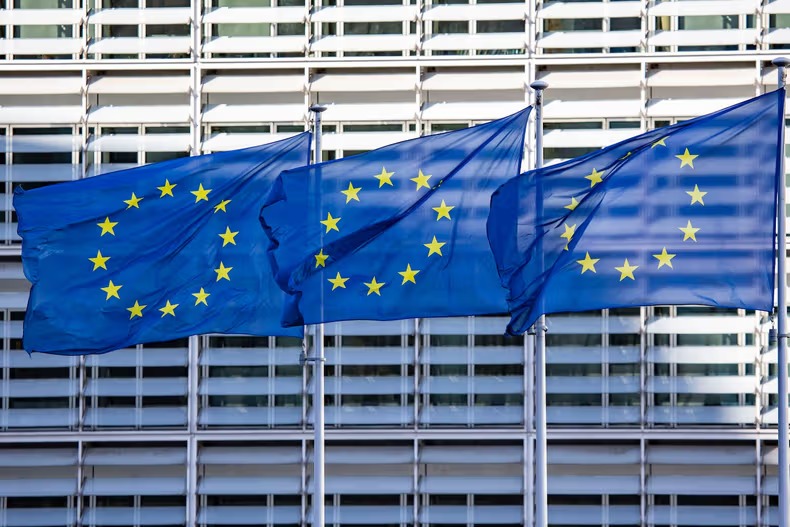

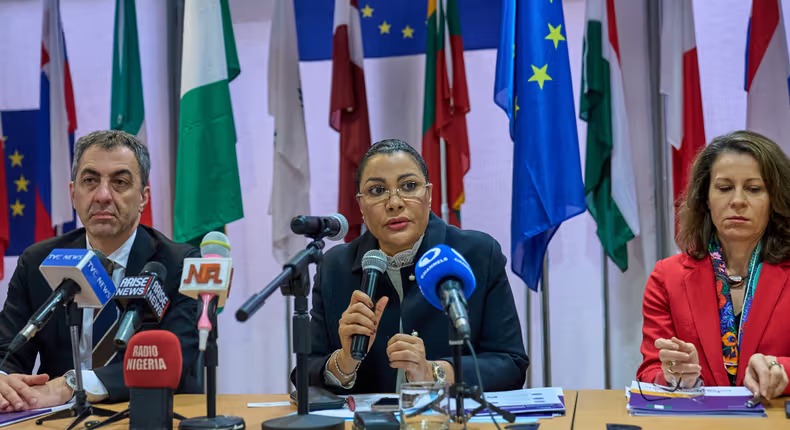
Announced during the EU–Nigeria Ministerial Dialogue in Abuja, the funding targets broadband expansion, pharmaceutical manufacturing, agriculture, and migration management under Europe’s flagship Global Gateway programme.
A major portion, €131 million, will finance the rollout of nearly 90,000 kilometers of fibre-optic infrastructure. This ambitious project aims to connect about 33 million Nigerians who currently lack reliable internet access.
The move is expected to accelerate digital trade, remote work, and innovation, while supporting Nigeria’s vision of building a globally competitive tech workforce.
Through European Investment Bank’s development branch, EIB Global, €50 million has been committed in partnership with the Bank of Industry to strengthen local pharmaceutical production.
The investment targets manufacturing of medicines, vaccines, and medical devices—reducing Nigeria’s reliance on imports and shielding it from global supply disruptions, a vulnerability exposed during COVID-19.
Another €85 million will be directed into agriculture, with over 70% focused on cocoa and dairy value chains. The funding will support agribusinesses, cooperatives, and smallholder farmers, helping them scale production and meet strict European sustainability standards.
This initiative is expected to boost exports while enhancing food security and rural incomes.
An additional €16 million has been earmarked for migration-related programmes, including reintegration support for returning migrants and efforts to dismantle human trafficking networks between West Africa and Europe.
EU officials say the goal is to address the root economic and social drivers of migration while strengthening cooperation on border security.
The EU remains Nigeria’s largest multilateral trading partner and a key buyer of its oil and liquefied natural gas. In 2024, Nigeria recorded a €9.6 billion trade surplus with the bloc, underlining Europe’s continued reliance on African energy.
With this latest package, total “Team Europe” funding in Nigeria has reached nearly €962.5 million since 2025. Meanwhile, the European Investment Bank has invested over €2.3 billion in the country since 1978 as reported by BIA .