
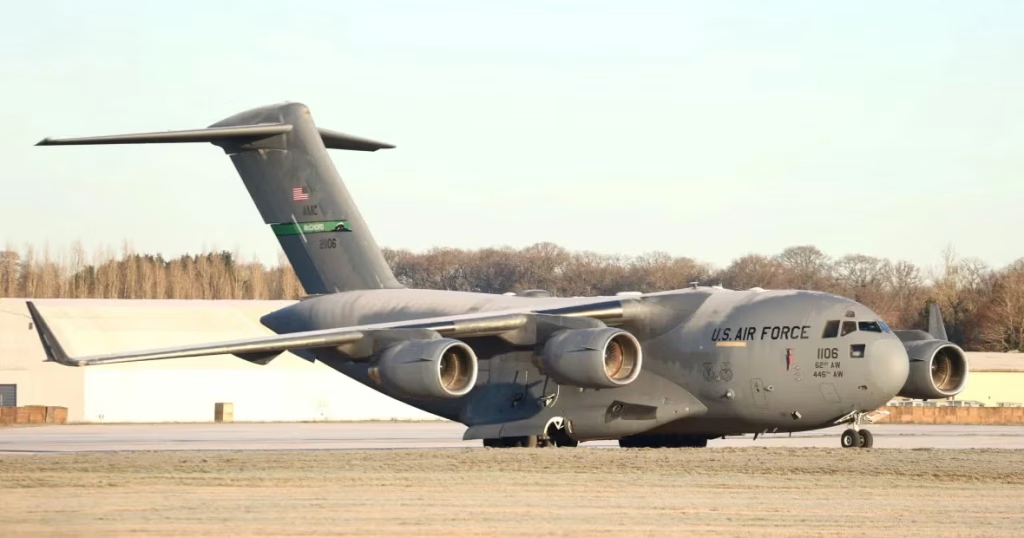

Spain has officially closed its airspace to U.S. military planes conducting operations in Iran, taking a stronger stance than its earlier refusal to allow the use of jointly-operated bases, Defence Minister Margarita Robles said on Monday.

“We do not authorize the use of military bases or airspace for actions related to the war in Iran,” Robles told reporters in Madrid.
The move requires U.S. military aircraft to reroute around Spanish territory when heading to targets in the Middle East, although exceptions are allowed in emergencies, according to Spanish newspaper El País, which first reported the decision.
Spain’s Economy Minister Carlos Cuerpo stated that the policy reflects the country’s stance against taking part in conflicts that are launched unilaterally and breach international law. He emphasized that Spain remains committed to upholding international legal standards and ensuring that national resources are not deployed in ways that could escalate tensions in the region.
Reuters reported that Spanish Prime Minister Pedro Sánchez has consistently criticized U.S. and Israeli military actions in Iran, labeling them as reckless and illegal. Meanwhile, former U.S. President Donald Trump has threatened to reconsider trade relations with Spain after Madrid refused to grant access to military bases.
The decision comes amid rising tensions within NATO, where allies are navigating complex geopolitical pressures surrounding the Iran conflict. Analysts say Spain’s stance may set a precedent for other European nations weighing their involvement in Middle East operations.
Observers also note that this move highlights Spain’s careful balance between maintaining alliance commitments and asserting national sovereignty. The Spanish government has emphasized that while it remains a committed NATO member, it will not support military actions it deems unlawful under international law.
Experts warn that airspace closures could have logistical impacts on U.S. military operations in the region, potentially requiring longer flight routes and adjustments to supply lines. However, Spanish officials maintain that the decision reflects a principled approach rather than political opposition.
Spain’s step underscores a growing trend in Europe of closer scrutiny over military involvement abroad, particularly in conflicts that lack broad international backing. The government has pledged to continue diplomatic engagement to promote de-escalation and peace in the Middle East while protecting Spanish national interests.


