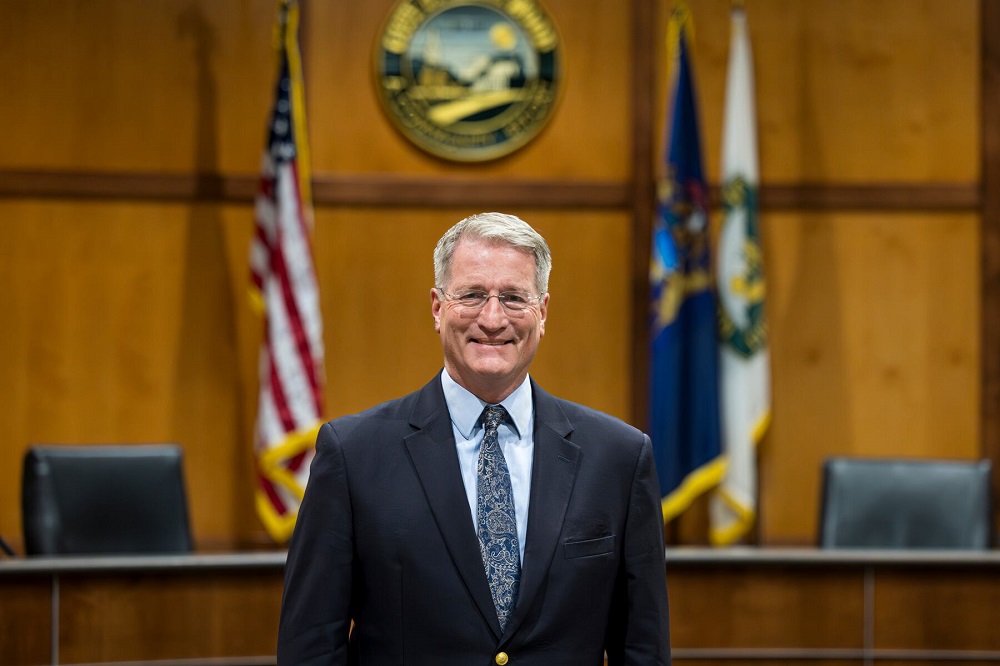

The city of Kentwood in the state of Michigan, United States, has designated April 7 as the International Day of Reflection on the Genocide against the Tutsi.
The mayor of the city, Stephen C.N. Kepley, stated in the announcement that the United States has long been a refuge for people fleeing mass atrocities from around the world. He also noted that in Rwanda, from April 7 to July 4, such atrocities occurred in the form of the Genocide against the Tutsi.
During that period, more than one million Tutsi men, women, and children, were killed.
The statement reads, “The United States and the city of Kentwood have become a refuge for survivors of the genocide, who are now citizens of the United States. Therefore, I, Stephen C.N. Kepley, Mayor of Kentwood, hereby proclaim April 7, 2026, as the International Day of Reflection on the 1994 Genocide against the Tutsi.”
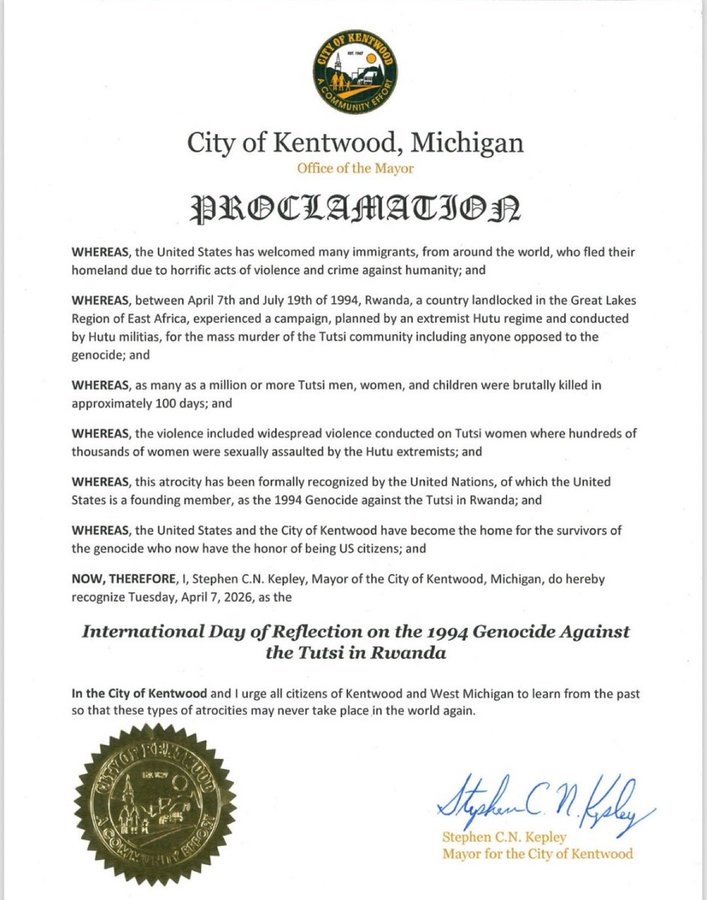
He went on to urge residents of Kentwood to learn from this history so that such events never happen again anywhere in the world.
This initiative was well received by Rwandans, especially survivors living in the United States who are members of IBUKA USA, who said it honors the more than one million Tutsi who were killed, as well as survivors and their families.
The Executive Director of IBUKA USA, Marcel Shyaka, said that recognizing this day strengthens their resolve to confront genocide denial.
He said: “This affirms the truth of our history and gives value to those who were killed in the genocide. Recognition by authorities and governments strengthens remembrance efforts, discourages denial, and reinforces our commitment to ensuring that such events never happen again anywhere in the world.”
The representative of Rwandans living in Kentwood, Caleb J. Uwagaba, said this will help them better prepare for the 32nd commemoration of the Genocide against the Tutsi and use the period to educate others that what happened in Rwanda is a lesson for the entire world and should never happen again.
He added: “This is an act of solidarity with survivors who are still on the journey of healing. It also reminds us that remembrance goes hand in hand with unity, reconciliation, and advocating for humanity. What happened in 1994 is not only a lesson for Rwanda but for the entire world.”