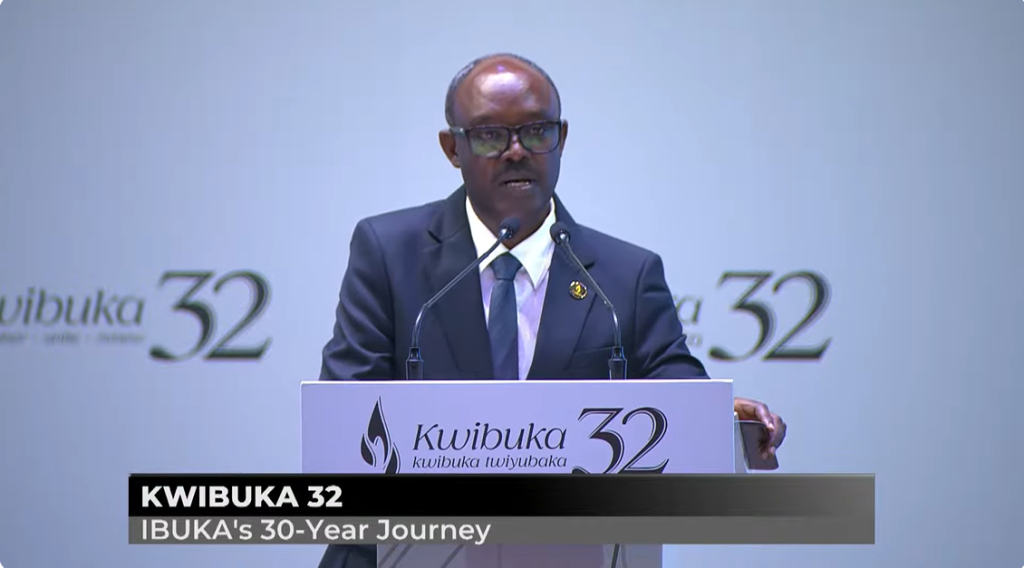

IBUKA was established in 1995 to defend the interests of survivors, preserve the memory of the Genocide against the Tutsi, and ensure such atrocities never happen again.
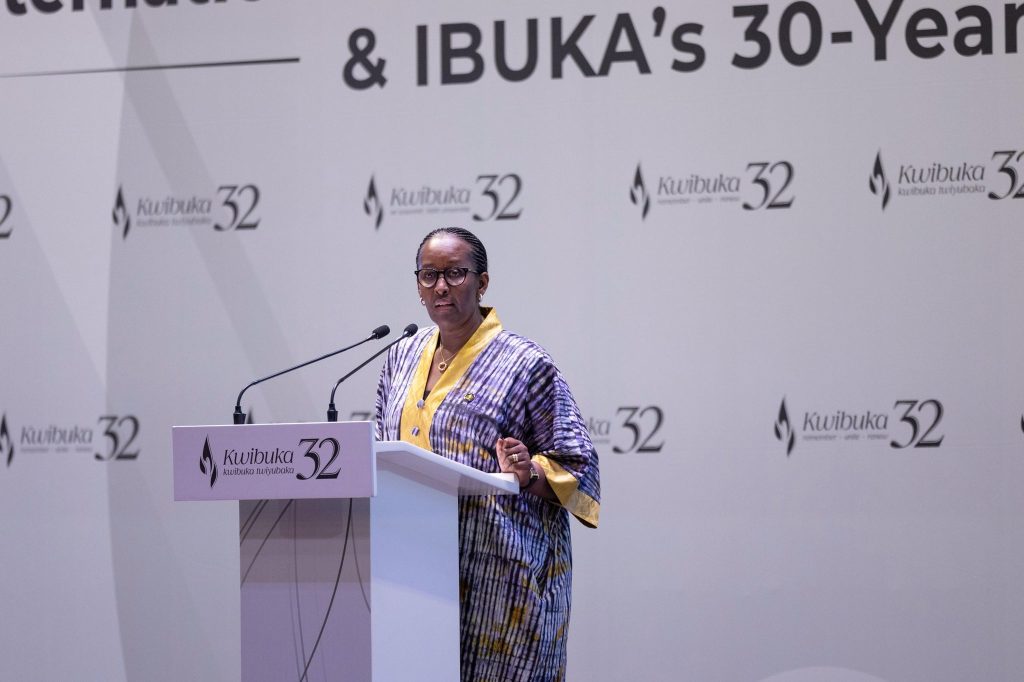
Jeannette Kagame commended the courage of those who founded IBUKA and the collective efforts of Rwandans who have supported its mission over the years.
She emphasized that Rwanda endured a tragic history whose legacy continues to be passed down through generations.
She said, “Rwanda experienced a great tragedy. It is painful to realize that this is also a legacy we will continue to carry as a nation, with no one else to pass it on to.”
She added that remembrance is neither a shame nor a crown, but a responsibility. Without humanity, she noted, such cruelty would not have been allowed to take root and claim over a million lives simply because of how they were born.
She stressed that remembering the victims of the Genocide against the Tutsi is a fundamental duty, as a society that does not remember cannot truly live.
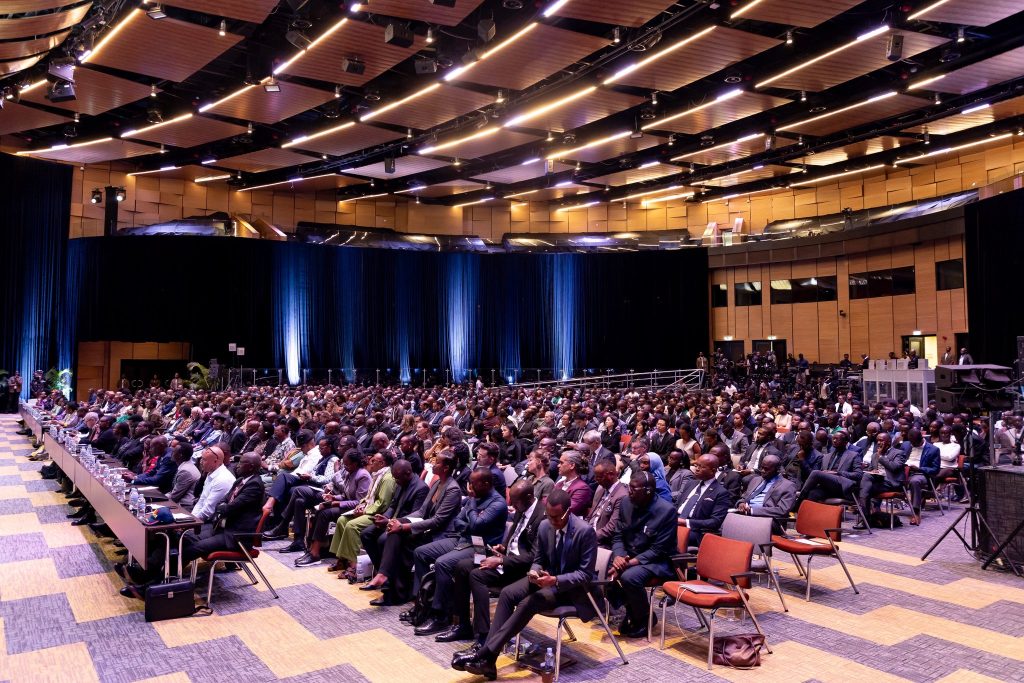
She highlighted that the creation of IBUKA was a response to Rwanda’s painful past and praised its 30-year journey as a testament to resilience.
“These 30 years reflect the life of a generation that endured deep suffering but made a firm decision to live,” she said, noting that despite the devastation, Rwanda’s spirit remains unbreakable when its people stand united.
She acknowledged the difficult journey survivors have taken, stating that their resilience and sacrifices are invaluable and beyond doubt.
Jeannette Kagame also emphasized that forgiveness stands above all achievements.
“Forgiveness is not weakness. It is a powerful strength of the heart and the courage to break free from the chains of hatred that breed resentment,” she said.
She noted that 30 years provide a strong foundation for IBUKA to expand its mission, address remaining challenges, and seize opportunities both in Rwanda and globally.
She warned against complacency, reminding Rwandans that peace and security must be actively protected, especially in the face of ongoing genocide denial and distortion of history.
“We will never regret the choices we made to build the Rwanda we want,” she affirmed, encouraging continued commitment to that path.
She also pointed out that history shows the international community has often failed to prevent genocides, emphasizing that Rwanda’s security must primarily depend on its own people.
She urged vigilance, noting that the country could lose its hard-won achievements if it becomes careless.
The principle of “Never Again” should not be mere words but a lasting commitment to victims, future generations, and the nation.
She called on young people to take responsibility in loving, building, and protecting Rwanda.
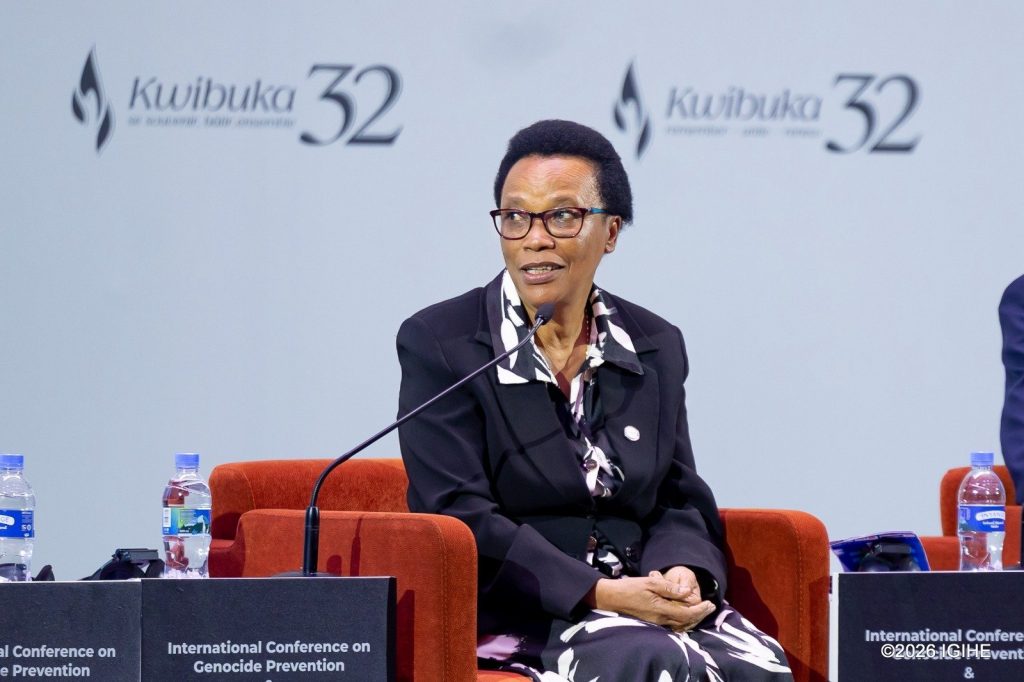
Dr. Rose Mukankomeje, one of IBUKA’s founders, stressed the need for structured and rigorous teaching of history, especially in institutions like the University of Rwanda, to prevent distortion.
She urged youth to preserve their heritage, uphold integrity, avoid harmful behaviors, and ensure such tragedies never recur.
Gahamanyi Landoald recalled that IBUKA began in the former Gitarama and gradually expanded nationwide, addressing numerous challenges including dignified burials for victims and the establishment of early memorial sites.
The President of IBUKA, Dr. Gakwenzire Philbert, noted that over the past 30 years, the organization has advocated for survivors, improved their welfare, preserved memory, and pursued justice against perpetrators of the genocide.
He added that challenges remain, including combating genocide denial, extremist ideology in the region, and ensuring accountability for those still at large.