
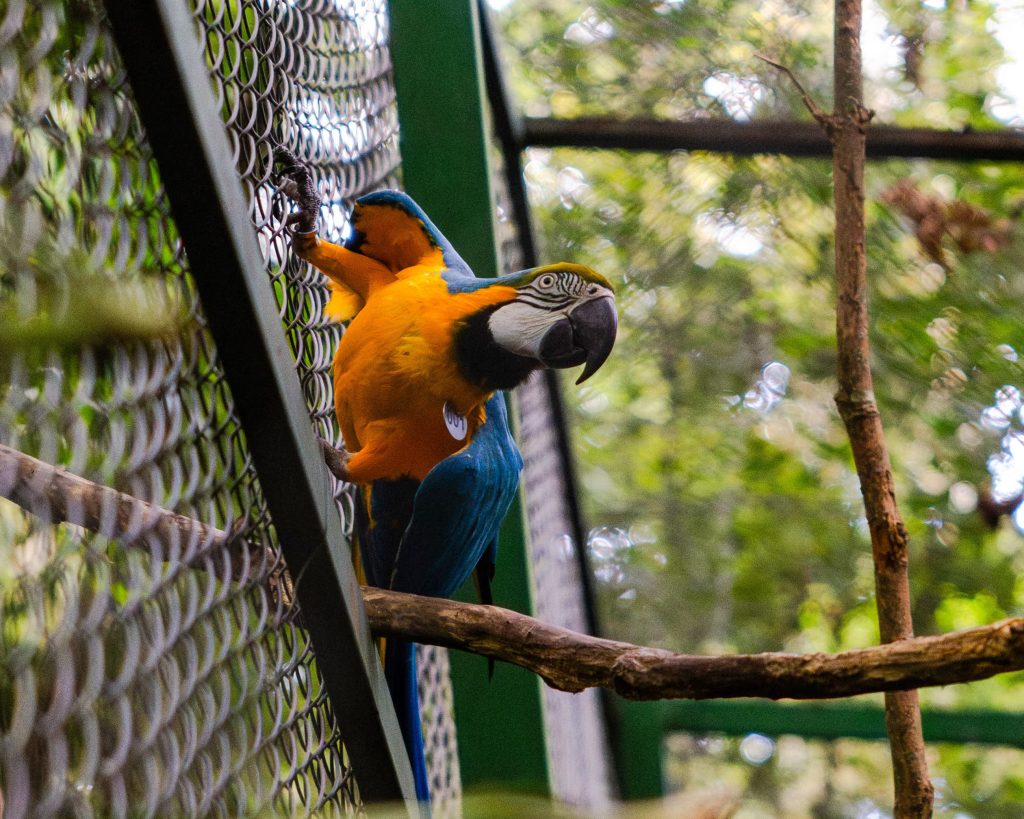

For the first time in two centuries, the skies over Rio de Janeiro are alive with flashes of blue and gold, as the city’s iconic blue-and-yellow macaws return to Tijuca National Park. Once lost to deforestation and the wildlife trade, these birds are now making a remarkable comeback, bringing both color and life back to the forest.
The macaws were carefully brought from captivity and trained to survive in the wild. As a result, they are not only a delight to watch but also play a crucial role in restoring the forest’s natural balance by dispersing seeds and reconnecting ecological links that had been broken for generations.
Macaws are vibrant, intelligent birds famous for their playful calls and social nature. Beyond their beauty, they play a key role in the forest by spreading seeds and helping plants regenerate, making their return essential for restoring the ecosystem.
Meanwhile, Visitors to the park are delighted by the returning parrots, marveling as they swoop through the trees, chatter playfully, and explore their renewed home. Marcelo Rheingantz, director of Refauna, the organization leading the effort, called it a powerful reminder of the region’s natural heritage coming back to life.
The macaws are part of a broader effort to reintroduce species that had disappeared from Tijuca’s urban forest. Over the past decade, animals such as red-rumped agoutis, howler monkeys, and yellow-footed tortoises have returned, each contributing to the restoration of the forest’s delicate ecosystem. With the macaws back, the forest is alive again, benefiting both the wildlife and the people who cherish it.
The Guardian reports that currently, four macaws, Fernanda, Selton, Fatima, and Sueli, are being closely monitored. Each has a distinct personality, from mischievous explorers to curious observers, charming everyone who visits. As more birds are gradually introduced, the forest’s “orchestra” is slowly coming together, one colorful note at a time.
The return of the macaws is more than a conservation achievement. It serves as a strong symbol of hope, demonstrating that even in the middle of a busy city, nature can recover, and the beauty once lost can return to our daily lives.