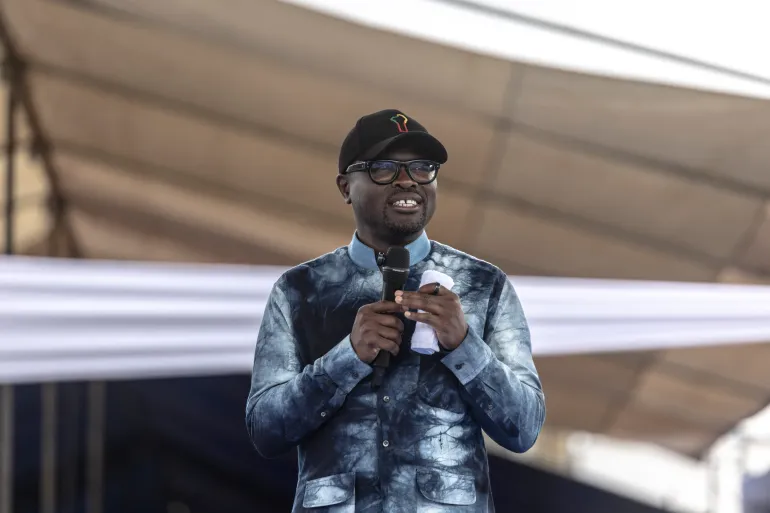

Romuald Wadagni has secured a decisive victory in Benin’s presidential election, winning more than 94 percent of the vote, according to provisional results announced on Monday.
The figures were released by Sacca Lafia (head of the country’s independent electoral commission), who said the outcome was based on over 90 percent of ballots counted, giving Wadagni an overwhelming and unassailable lead. The results were broadcast on national television following the April 12 vote.
Voter turnout stood at approximately 58.8 percent, suggesting moderate participation in an election that had been closely watched both domestically and across the West African region.
Opposition candidate Paul Hounkpe conceded defeat earlier on Monday, effectively confirming Wadagni’s path to the presidency and reducing the likelihood of any post-election dispute.
Wadagni, who has served as finance minister, campaigned on a message of continuity, economic reform, and stability. During his campaign, he emphasized the need to sustain economic growth, strengthen public finances, and build on existing government policies. His background in economic management is seen by supporters as a key asset as the country navigates development challenges.
The scale of his victory signals strong backing from voters, although it may also raise questions among observers about the competitiveness of the electoral process. Benin, once regarded as a model of democratic stability in the region, has in recent years faced scrutiny over political space and opposition participation.
As the country prepares for a leadership transition, attention is now turning to Wadagni’s next steps. Expectations are high for him to deliver on campaign promises, promote inclusive governance, and address socio-economic concerns affecting ordinary citizens.
The coming months will be critical in shaping how his administration balances continuity with reform, as well as how it responds to calls for broader political engagement in Benin’s evolving democratic landscape.