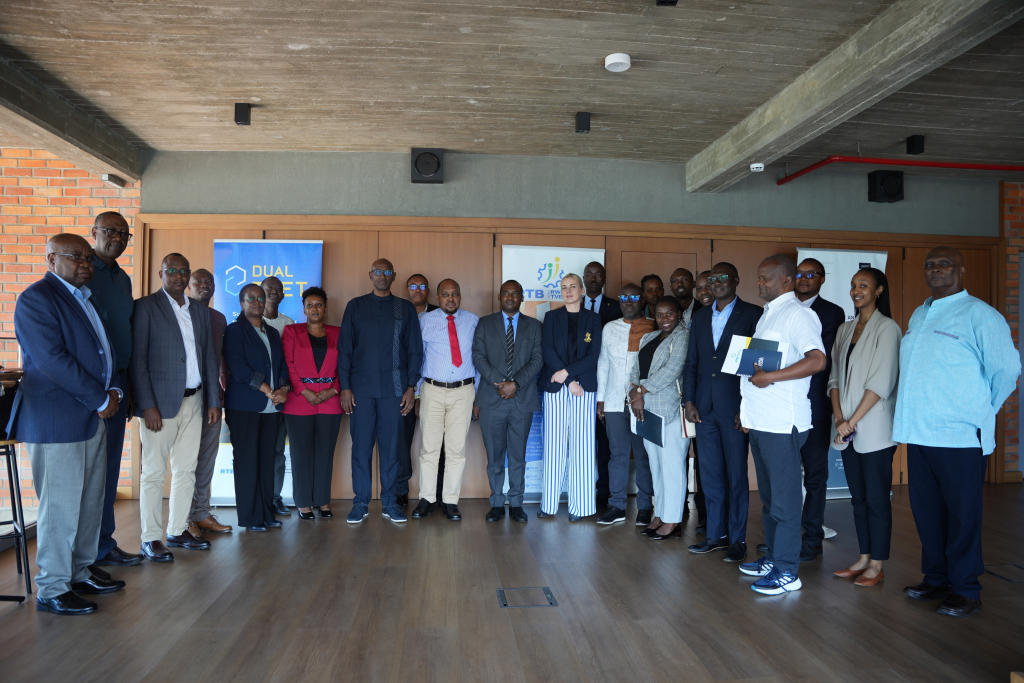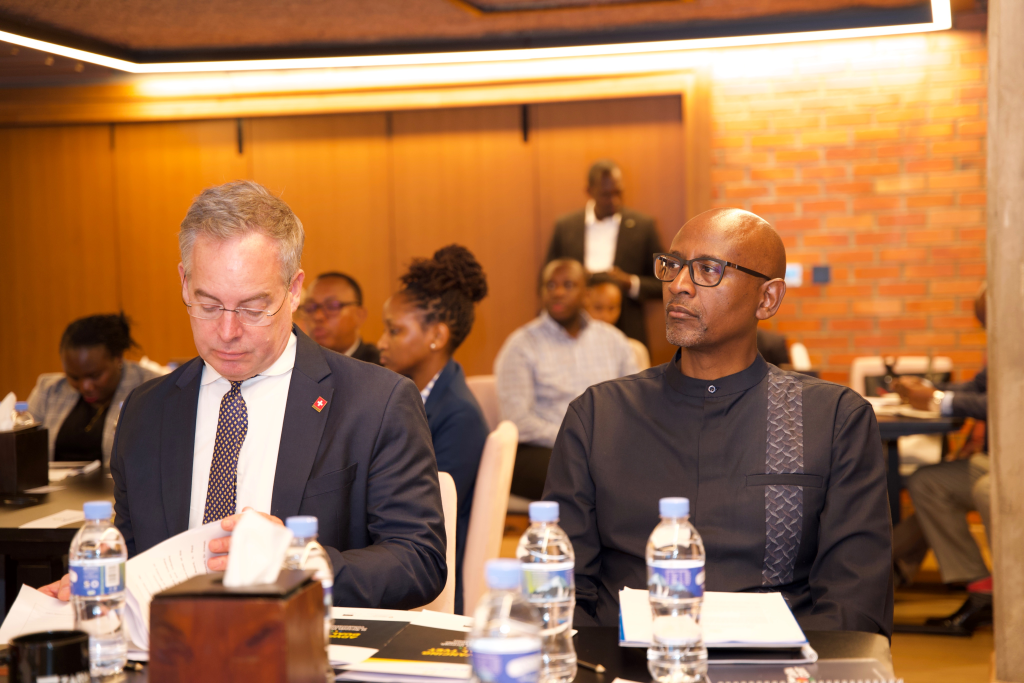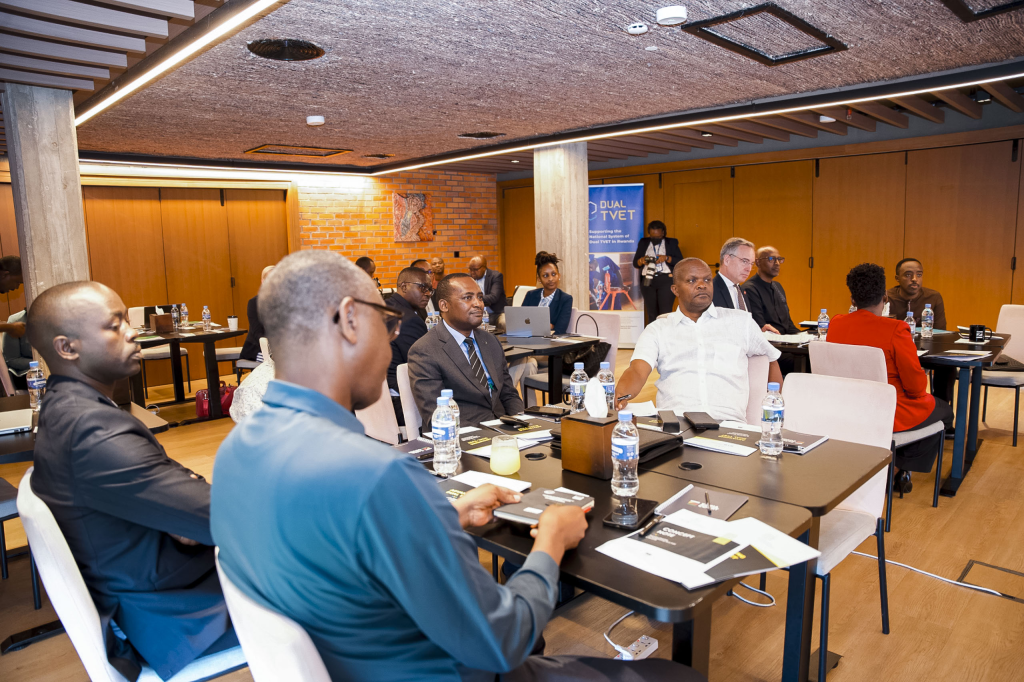
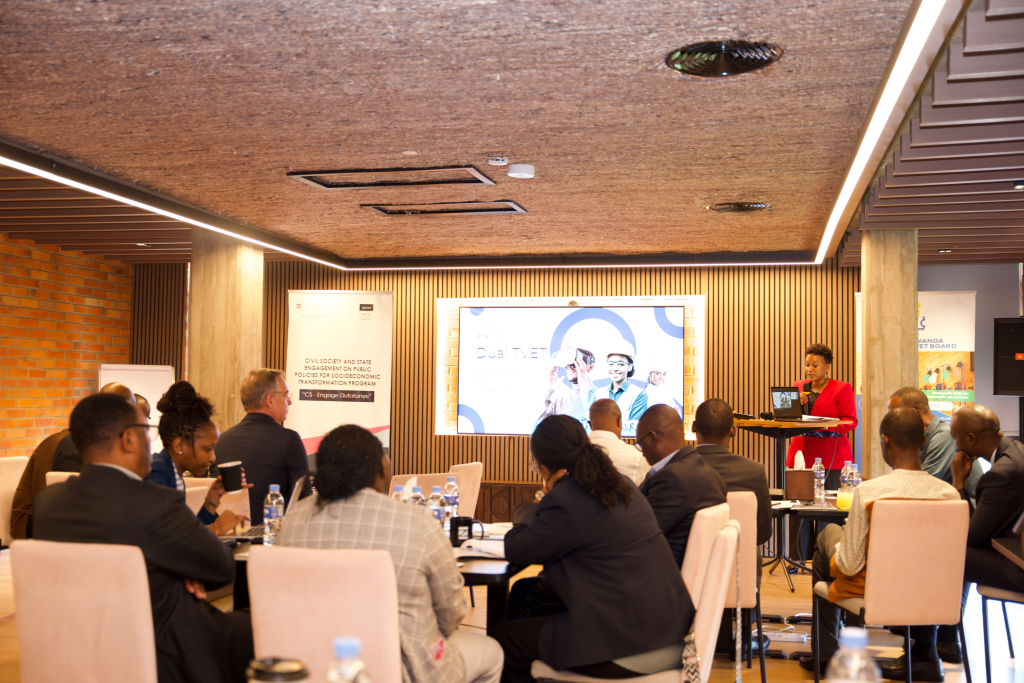

Government officials, private sector leaders, development partners, and civil society organizations convened at Zaria Court for a high-level breakfast meeting focused on strengthening collaboration in skills development and advancing Rwanda’s Dual Technical and Vocational Education and Training (Dual TVET) system.
The meeting, organized under the CSEngage Program in collaboration with Never Again Rwanda and Rwanda TVET Board, with support from the Swiss Agency for Development and Cooperation, was held under the theme “Bridging Skills and Employment by Advancing Dual TVET through Multi-stakeholder Collaboration.”
The dialogue created an important platform for stakeholders to exchange ideas and explore practical approaches to strengthening partnerships that support workplace learning and the development of a skilled workforce aligned with labor market needs.
The meeting brought together key leaders, including Rwanda’s Minister of Education Joseph Nsengimana, the Deputy Head of Mission of Switzerland, the Executive Director of Never Again Rwanda, the Vice Chairperson of the Private Sector Federation, the Director General of Industry and Entrepreneurship from the Ministry of Trade and Industry, the Permanent Secretary of the Ministry of Labor and Public Service, the Director General of RTB, alongside representatives from associations and civil society organizations.
Throughout the discussions, participants highlighted the growing importance of collaboration between government institutions, employers, training institutions, and development partners in preparing young people for the modern workforce. Stakeholders noted that strengthening workplace learning opportunities remains essential in helping students gain practical experience and skills that respond directly to industry demands.
Participants also emphasized the importance of equal partnerships, stronger cost-sharing mechanisms, and sustainable financing models to further expand and strengthen the Dual TVET system across the country.
Discussions further highlighted the value of improving career guidance and advisory services to better connect students’ skills with employment opportunities and evolving labor market demands. Stakeholders noted that stronger guidance systems can help learners make informed career choices while improving the transition from education to employment.
The meeting also reflected Rwanda’s broader commitment to promoting innovation, youth empowerment, and inclusive economic growth through quality technical and vocational education. Participants expressed optimism that continued investment in skills development will contribute significantly to building a competitive and productive workforce capable of supporting national development goals.
As Rwanda continues to invest in building a skilled and job-ready workforce, stakeholders expressed confidence that sustainable collaboration, shared responsibility, and long-term investment will play a key role in creating a more inclusive, impactful, and future-oriented Dual TVET ecosystem.