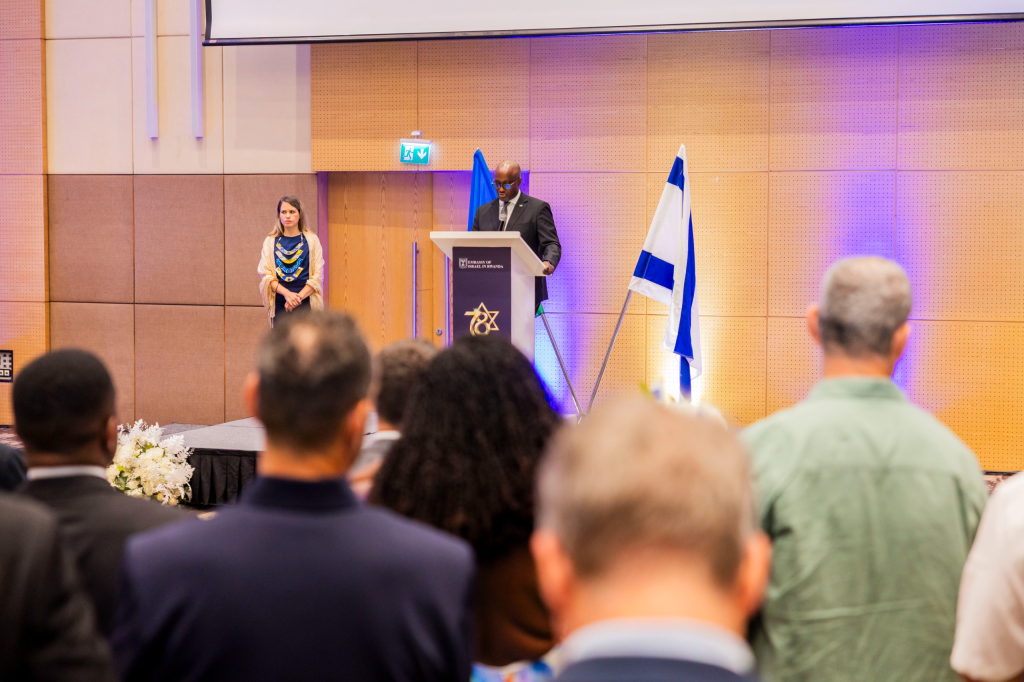

On 28 May, Kigali, Rwanda, and Israel further strengthened their bilateral relations during the celebration of Israel’s 78th Independence Day, with both sides highlighting continued progress in cooperation across key sectors such as agriculture, innovation, security, and investment.
The celebration, held at the Kigali Convention Centre and hosted by the Embassy of Israel in Rwanda, brought together senior government officials, diplomats, and development partners. In addition to commemorating Israel’s national day, the event also served as a reflection of the growing friendship and deepening collaboration between the two countries.
Speaking at the event, Rwanda’s Minister of Foreign Affairs and International Cooperation, Olivier Nduhungirehe, commended Israel’s remarkable journey over the past 78 years. He noted that Israel has developed into a global leader in innovation, particularly in agriculture, water management, and technology, consistently turning challenges into meaningful development opportunities.
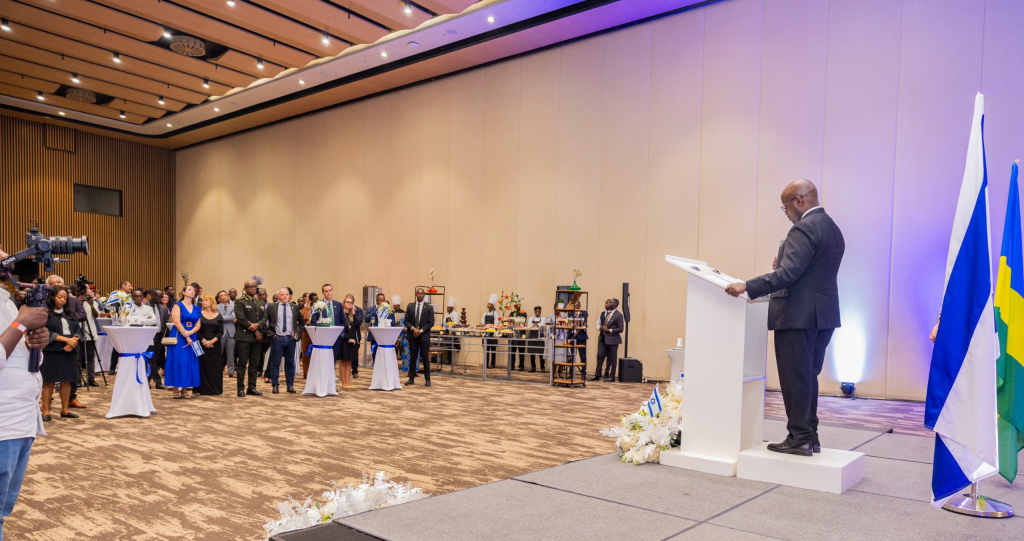
Furthermore, He emphasized that Rwanda–Israel relations continue to grow stronger, grounded in shared values, mutual respect, and a common commitment to resilience and progress. In this regard, he highlighted agriculture as one of the most important pillars of cooperation between the two nations.
In addition, he pointed to key joint initiatives that are already delivering impact. These include the Rwanda–Israel Horticulture Centre of Excellence, which provides training, research, and demonstration of modern agricultural practices. Moreover, he highlighted the Gabiro Agribusiness Hub, a transformative project that is set to develop over 15,000 hectares in eastern Rwanda into a large-scale, integrated agricultural production zone.
Beyond agriculture, cooperation between the two countries continues to expand into other strategic areas. For instance, collaboration in security, trade, and investment is steadily deepening, thereby creating new opportunities for economic growth, innovation, and entrepreneurship in both countries.
On her part, Israel’s Ambassador to Rwanda, Einat Weiss, described the partnership as both strategic and forward-looking. She noted that both nations share historical experiences shaped by resilience and recovery, which continue to guide their cooperation in education, remembrance, and joint efforts to combat genocide denial and extremism.
Similarly, she praised Rwanda’s stable governance and supportive business environment, stating that it has positioned the country as a key destination for investment and innovation in the region. Looking ahead, she added that cooperation is expected to expand further into emerging sectors such as artificial intelligence, renewable energy, climate resilience, and smart agriculture.
In addition, officials from both countries noted that ongoing cooperation is being reinforced through technical exchanges, capacity-building programmes, and institutional partnerships. These efforts are playing an important role in strengthening skills development, particularly among young people and professionals working in agriculture, technology, and enterprise development, thereby supporting broader innovation and economic growth.
Furthermore, both sides acknowledged that the partnership is also contributing to knowledge sharing between institutions, with a focus on improving productivity, enhancing innovation ecosystems, and promoting sustainable development practices.
Both sides reaffirmed that their partnership extends beyond traditional diplomacy. Instead, it reflects a dynamic and forward-looking relationship built on shared values, innovation, and long-term development goals. Consequently, they expressed optimism that cooperation will continue to grow, delivering lasting benefits and strengthening ties between Rwanda and Israel.