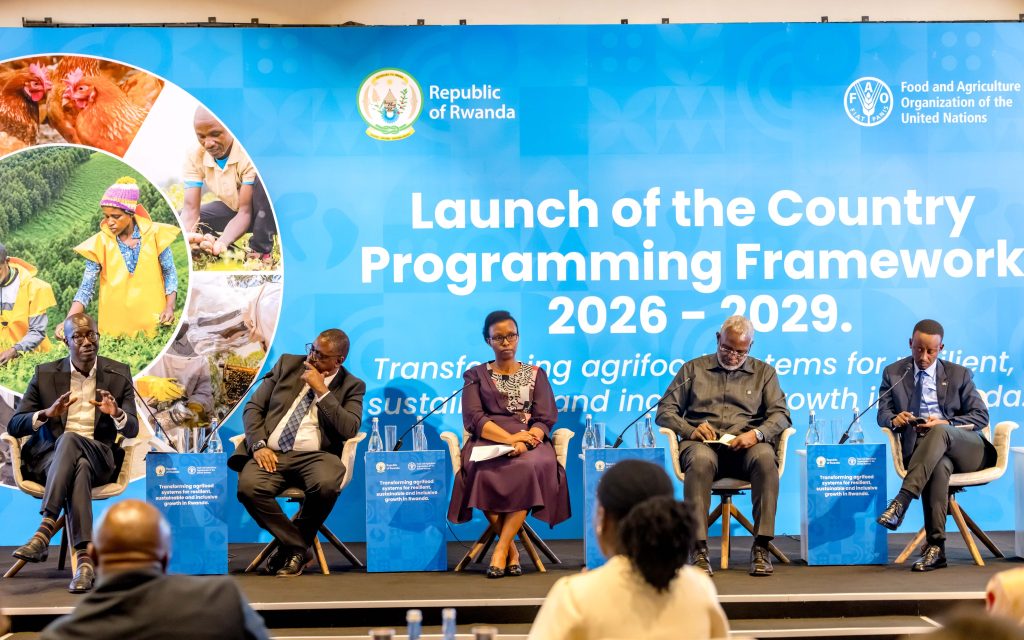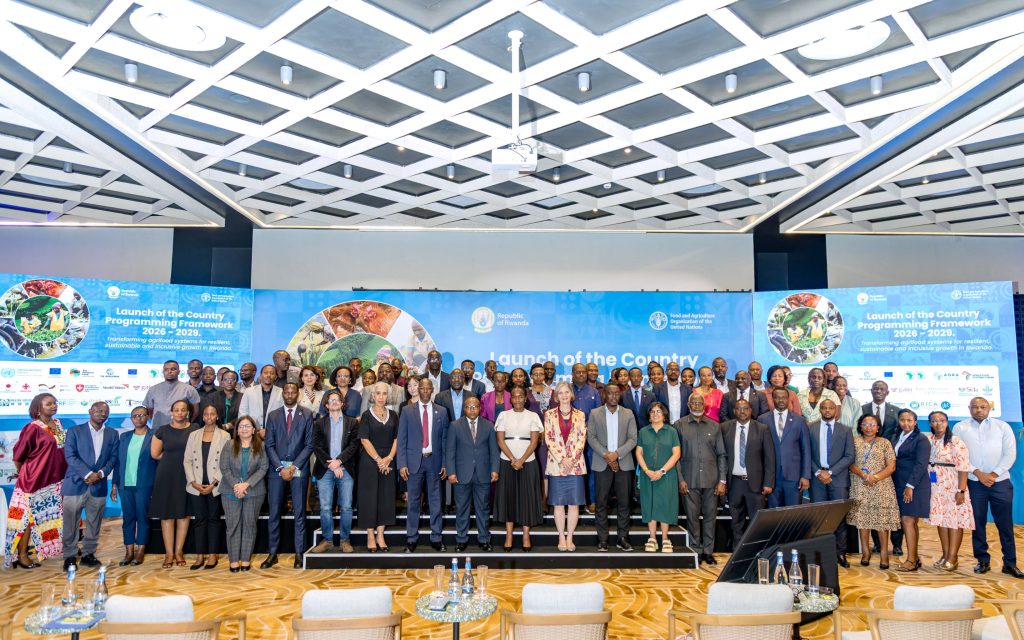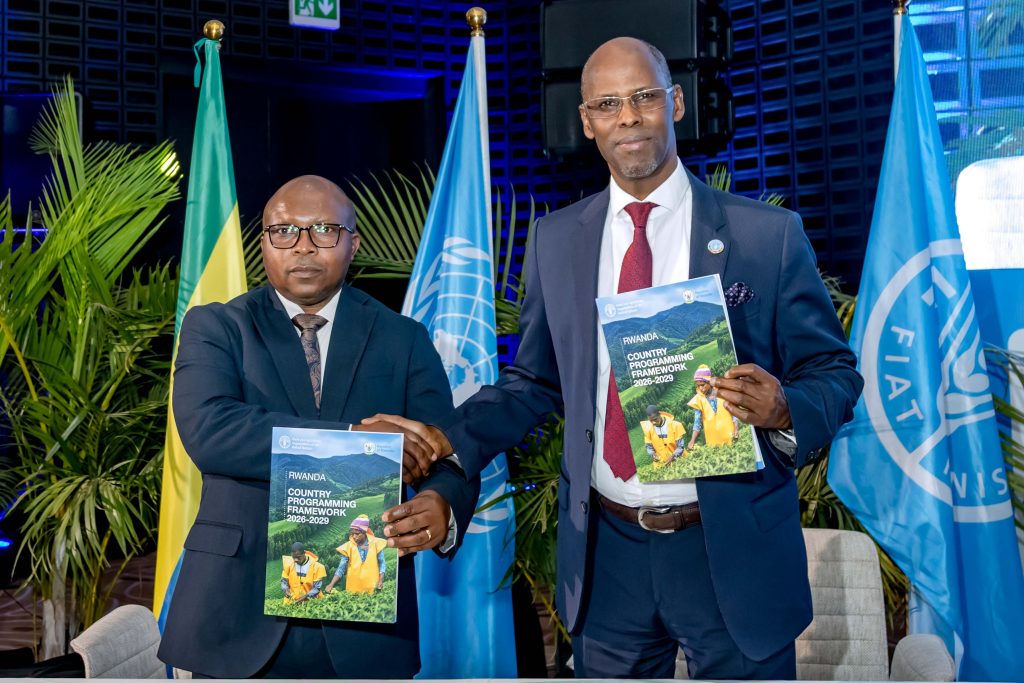

The Food and Agriculture Organization of the United Nations (FAO), in partnership with the Government of Rwanda, has launched a five-year program worth more than Rwf55.5 billion (US$37.7 million) to boost agricultural development and strengthen the country’s food security.
The initiative will also support efforts to reduce post-harvest losses, increase livestock production, improve food storage, expand irrigation in drought-prone areas, promote the use of improved seeds, and strengthen other key agricultural practices.
Rwanda’s Minister of Agriculture and Animal Resources, Dr. Telesphore Ndabamenye, said FAO has been a reliable development partner in advancing the country’s agricultural sector, highlighting several successful joint initiatives, including the development of Food Basket Sites.
“We currently have the Fifth Strategic Plan for Agriculture Transformation (PSTA 5), which focuses on strengthening the entire food value chain. This programme was developed in collaboration with FAO, which has consistently supported the government in improving agricultural and livestock policies, as well as implementing various development projects,” he said.
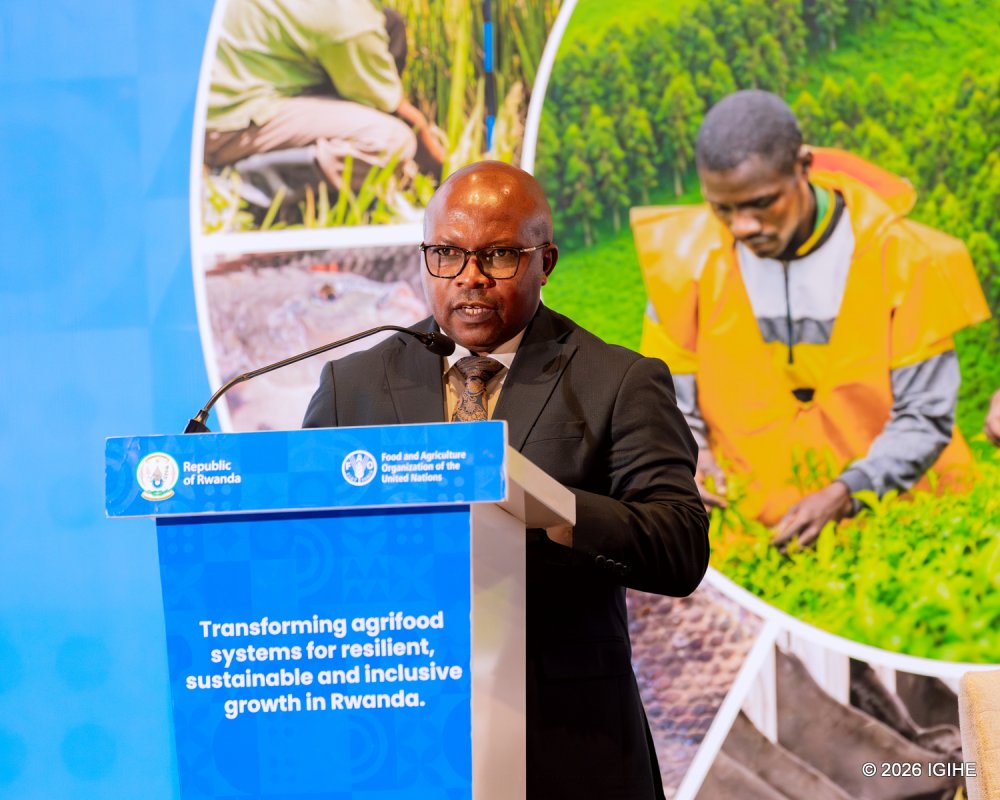
PSTA 5 is Rwanda’s fifth national agricultural transformation strategy. It aims to address land degradation, modernize agriculture, and establish sustainable food systems capable of adapting to climate change.
The strategy is expected to begin implementation soon and will require an investment of approximately US$5.4 billion to transform the agricultural sector.
Minister of Environment Bernadette Arakwiye emphasized that Rwanda’s food security, livestock production, and economic growth depend heavily on addressing climate change through environmentally sustainable farming practices.
“Rwanda is among the Sub-Saharan African countries most affected by climate change. Our farmers are already experiencing the impacts of unpredictable weather, including heavy rainfall, prolonged droughts, floods, and other extreme weather events. This requires us to work together and remain prepared for these increasingly unpredictable conditions,” she said.
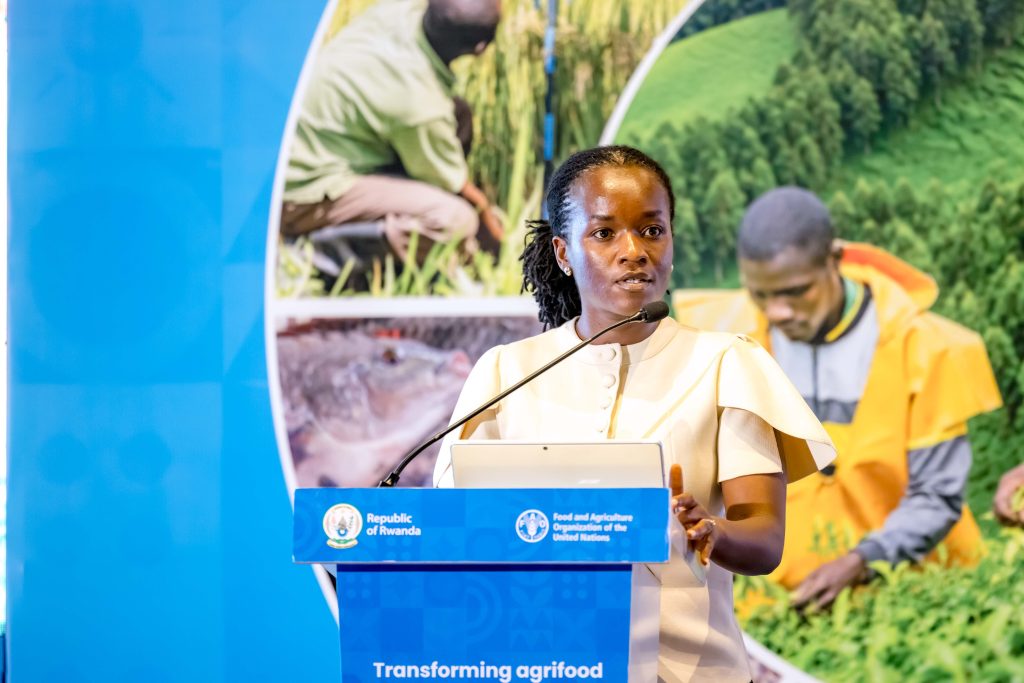
The FAO Representative in Rwanda, Mohamed Aw-Dahir, said the organization’s programmes are fully aligned with Rwanda’s national development priorities and are designed to promote modern, inclusive, and sustainable agriculture across the country.
“This programme reflects our commitment to supporting Rwanda’s agricultural transformation by promoting food security, combating malnutrition, strengthening climate resilience, and creating decent employment opportunities within the agricultural sector,” he said.
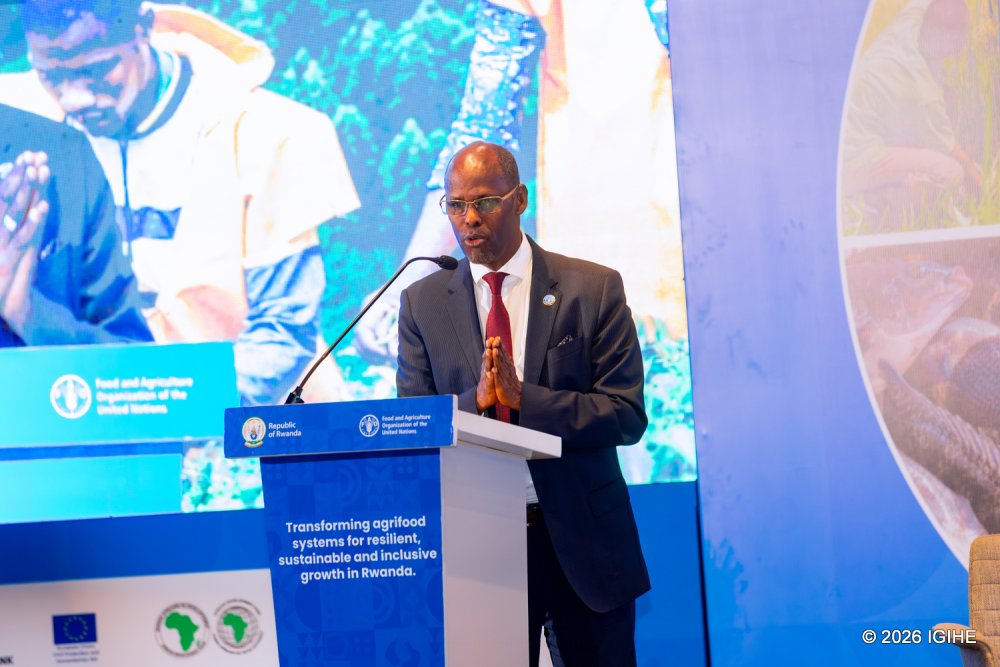
He added that the programme has been designed to align with Rwanda’s Second National Strategy for Transformation (NST2), PSTA 5, the country’s Nationally Determined Contributions (NDCs) under the Paris Climate Agreement, and other national development frameworks.