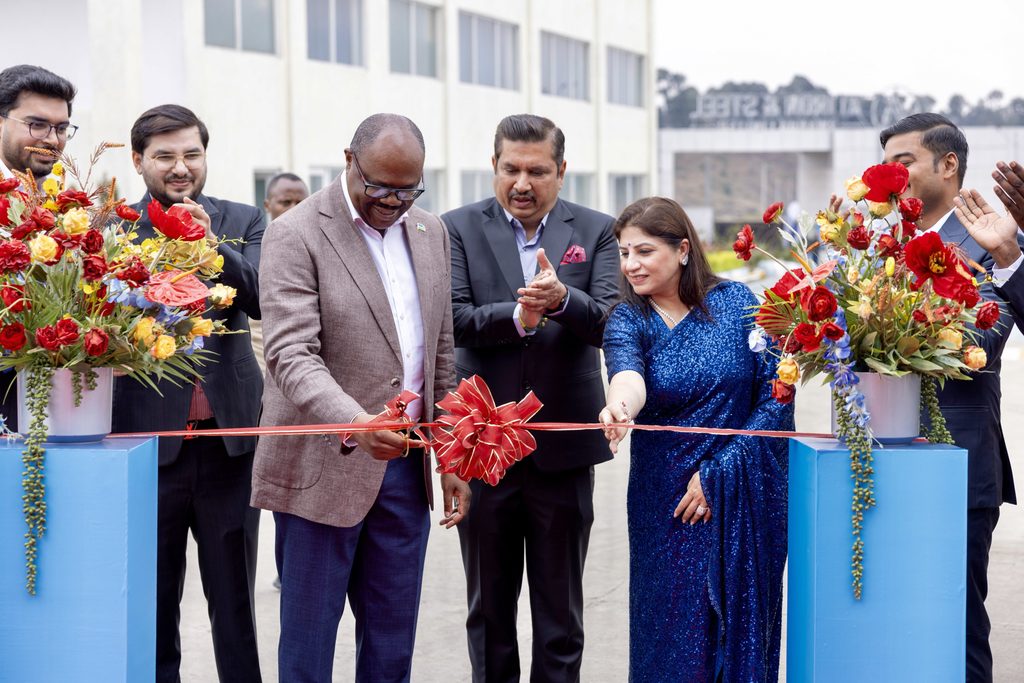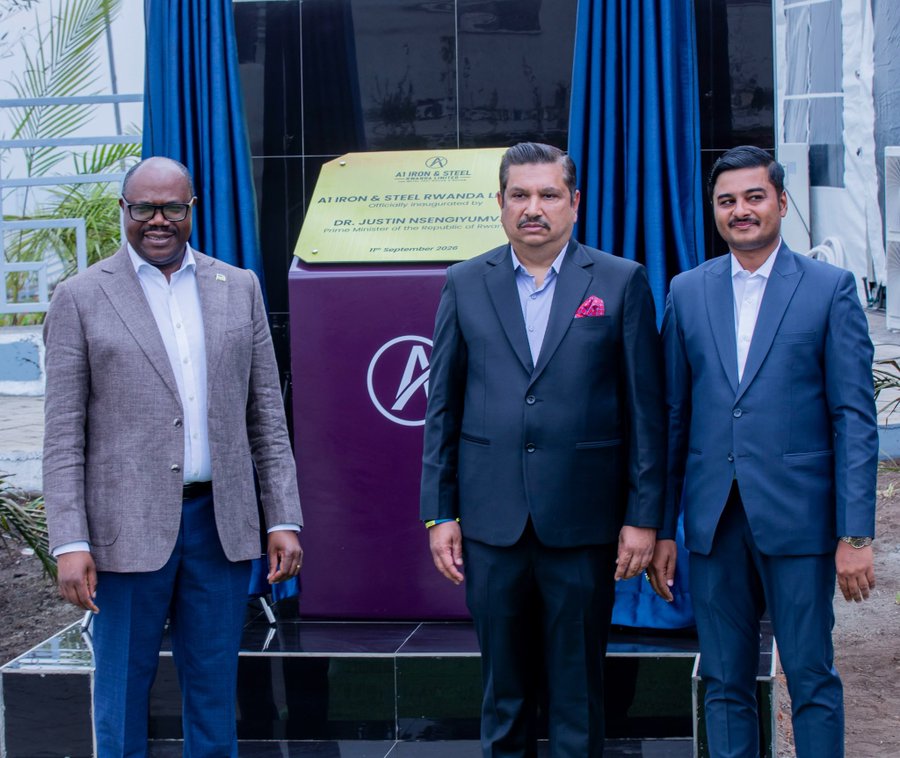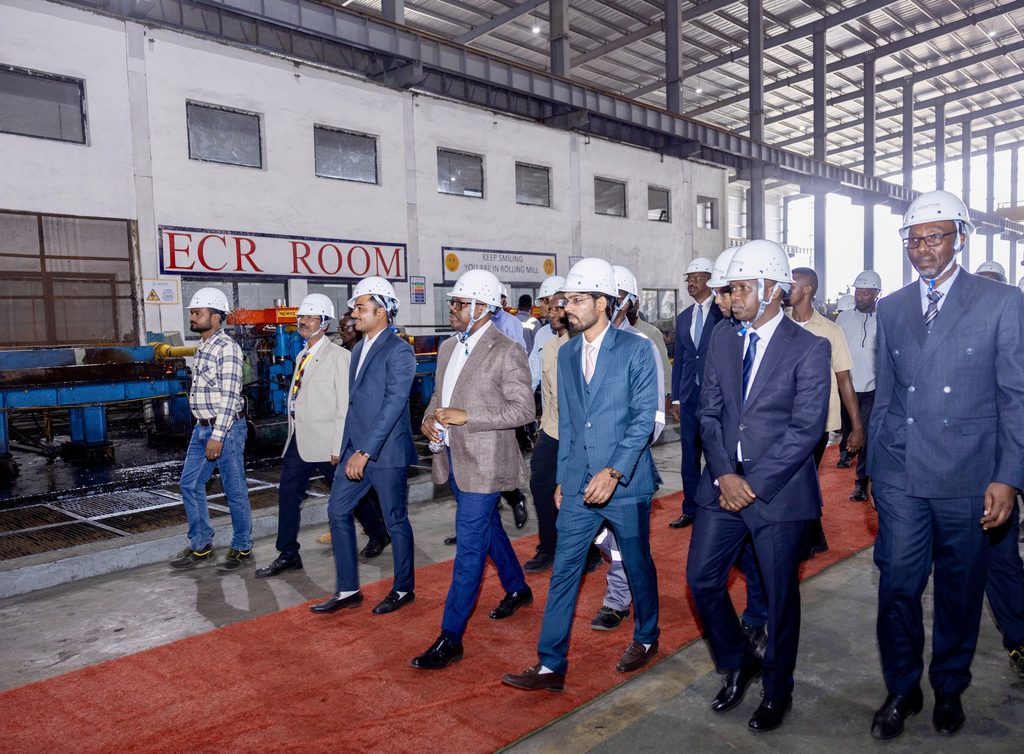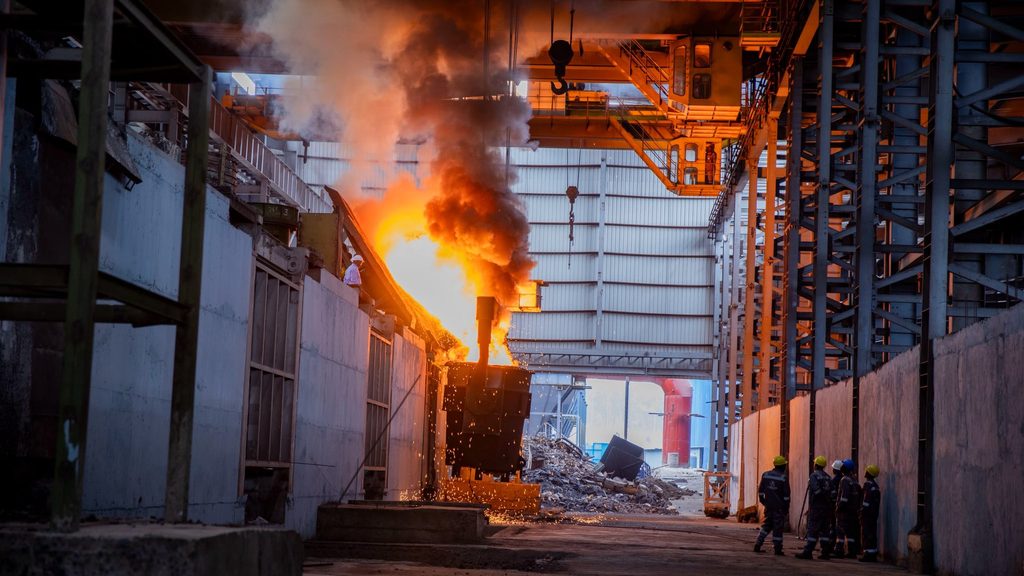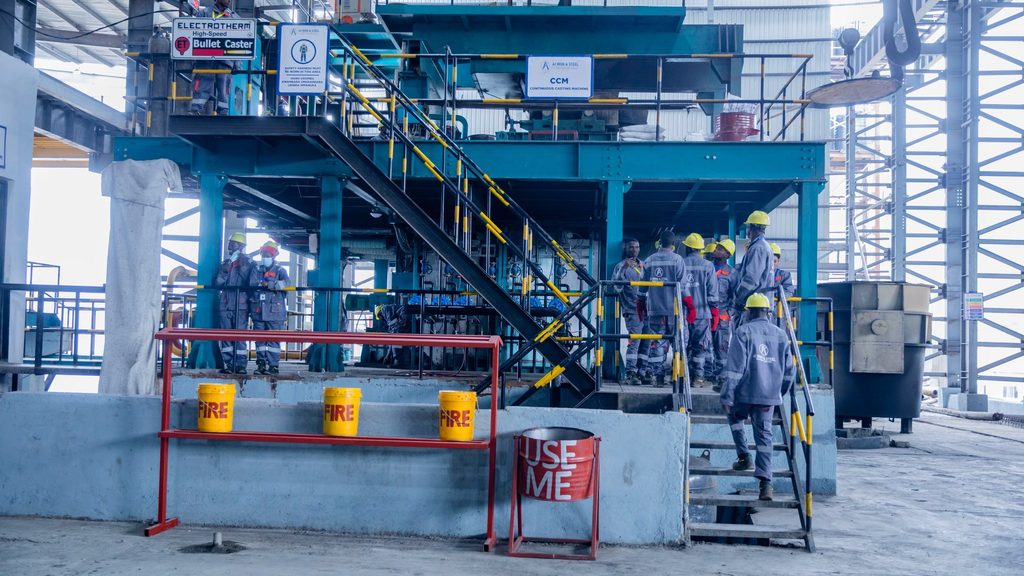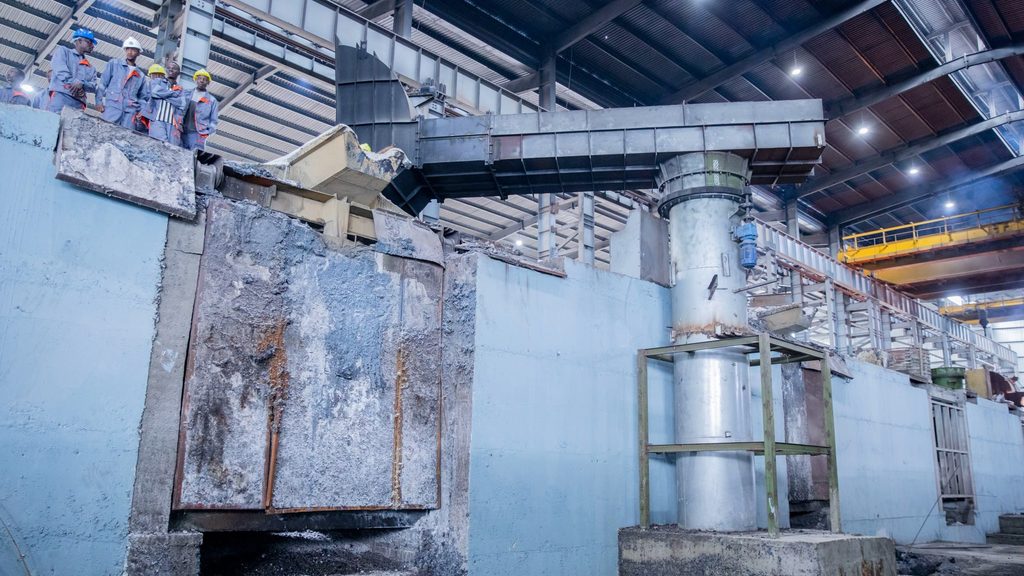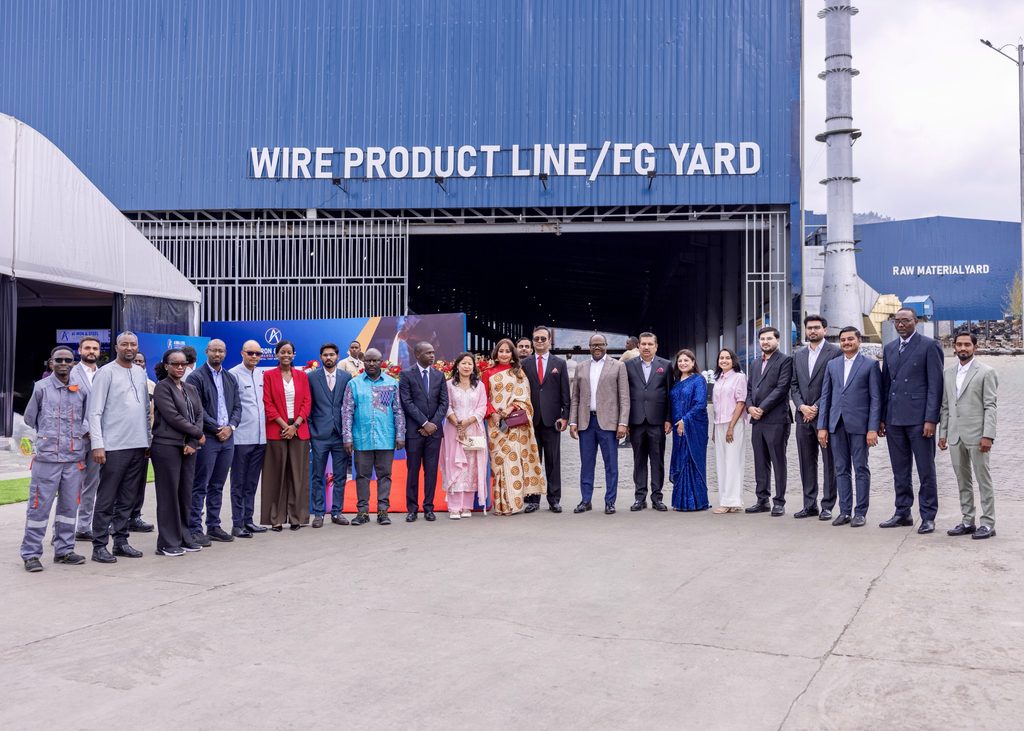
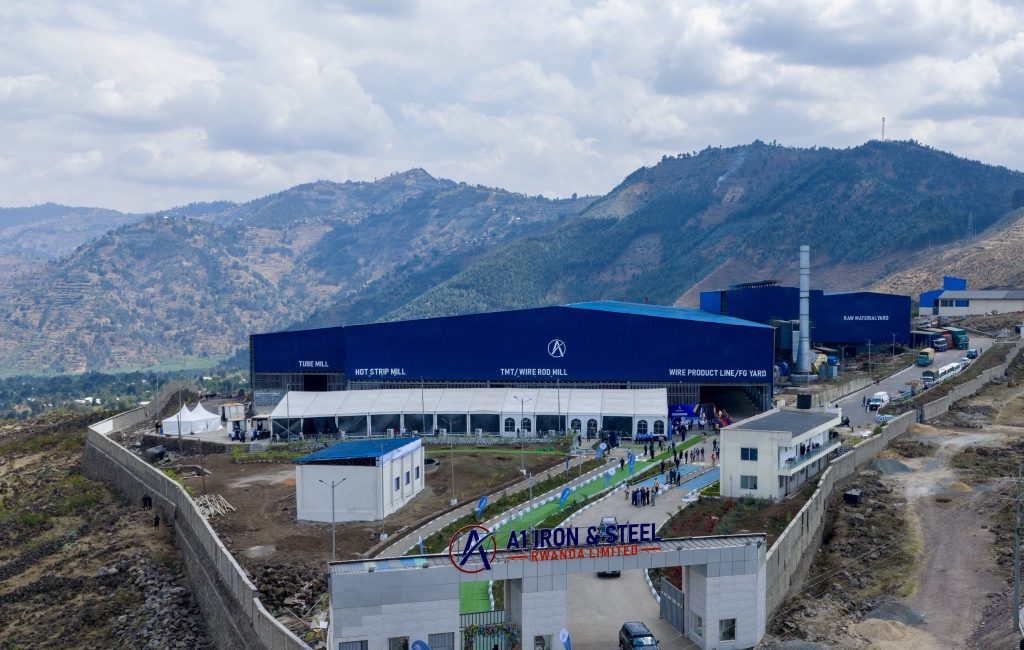

Known as A1 Iron & Steel Rwanda Ltd, the factory will manufacture steel products used in construction, adding to existing local manufacturers and increasing the country’s capacity to produce construction materials.
The factory was established at a cost of more than $20 million, equivalent to about Rwf29 billion. It has already been operational for four months, with its first steel products produced in April 2026.
The plant is expected to produce up to 250,000 tonnes of steel annually.
A1 Iron & Steel Rwanda Ltd requires about 20 megawatts of electricity per day, supplied through a power facility connected to Nyabihu District. The factory was built by investors from India.
The factory will process locally mined iron ore
Unlike many existing steel factories in Rwanda, which primarily recycle scrap metal to produce new steel products, A1 Iron & Steel Rwanda Ltd will process iron ore.
Rwanda has significant deposits of iron ore, particularly in the Northern Province, providing the factory with access to locally available raw materials.
Northern Province Governor Maurice Mugabowagahunde assured the investors that they would have access to the raw materials needed to sustain production.
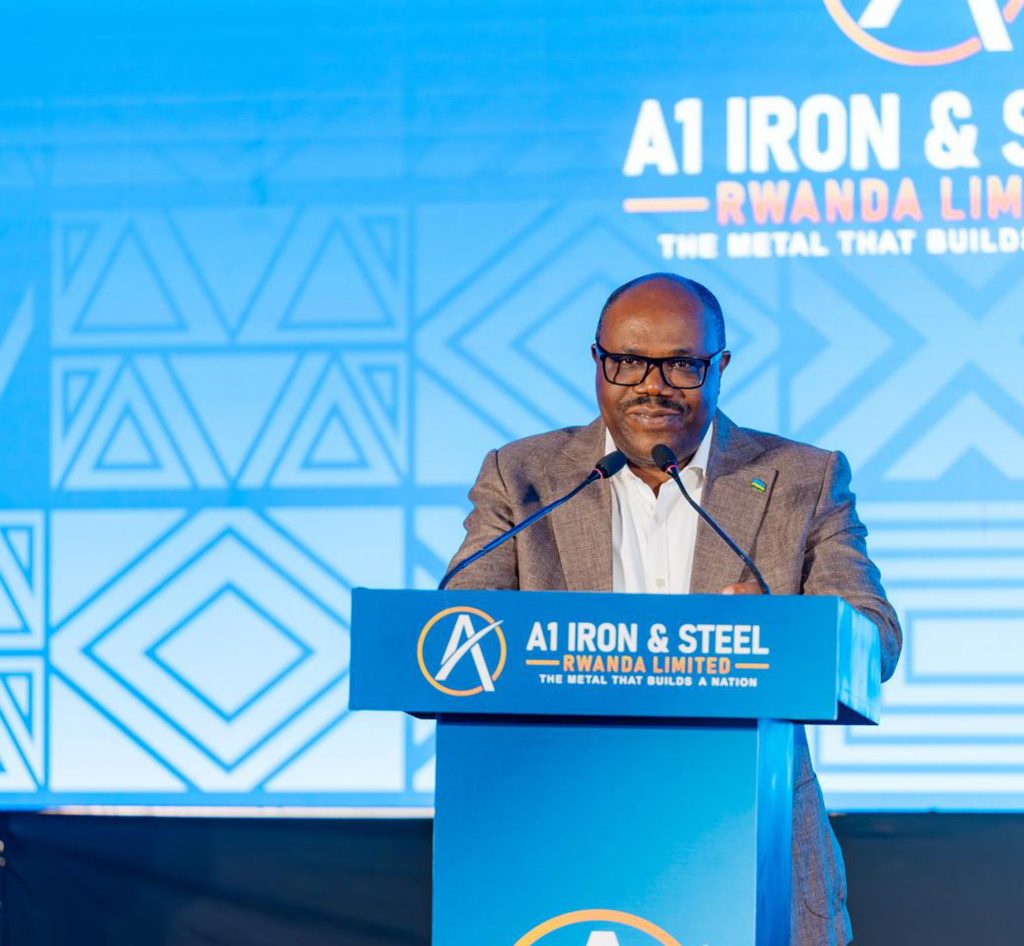
“We welcome A1 Iron & Steel Rwanda Ltd, and we consider it an important partner in our development,” he said.
Why the factory was built in Northern Rwanda
Governor Mugabowagahunde also highlighted the region’s long history of ironworking, saying the Northern Province has traditionally been known for metal craftsmanship.
Historical accounts indicate that ironworkers in the area produced tools and weapons such as arrows and spears, which were used for hunting and other activities.
They also produced agricultural tools, including hoes known as “Amasuka y’Amaberuka,” which were used to cultivate the fertile land in the region and support food production.
In Rulindo District, a new History Museum has been established at a site known as Ku Kirenge. The museum showcases the region’s heritage of iron ore mining and traditional metalworking, resources that will now contribute to the operations of A1 Iron & Steel Rwanda Ltd.
Boosting exports and reducing steel imports
Rwanda has experienced significant growth in the construction sector in recent years, driving increased demand for steel and other construction materials.
With domestic factories unable to fully meet the growing demand, Rwanda has continued to rely on imports to fill the gap.
Prime Minister Justin Nsengiyumva, speaking during the inauguration of the factory, said Rwanda had been spending nearly $200 million annually importing steel products.
He said the new factory is expected to reduce that import bill by about $100 million.
This means Rwanda will still need to import some steel products that are not currently manufactured locally, but the new factory could significantly reduce the country’s dependence on imports.
The factory will also produce steel products for export, with regional markets expected to be among its key destinations.
Prime Minister Nsengiyumva said the factory could help Rwanda become one of the leading exporters of steel products in the region.
“A1 Iron & Steel Rwanda Ltd will enable Rwanda to move to the forefront of countries in the region exporting large volumes of steel products,” he said.
A1 Iron & Steel Rwanda Ltd creates jobs
The factory currently employs around 500 people, the majority of them Rwandans. An additional 2,500 jobs are expected to be created outside the factory through businesses and services linked to its operations.
One of the employees, Izabayo Honore, told IGIHE that the factory had created employment opportunities, particularly for young people living in the surrounding communities.
“There are many of us working here because the factory operates in shifts. Some work during the day and are replaced by others in the evening. This has helped reduce unemployment, especially among people who had completed their studies but had not yet found jobs,” he said.
Local residents have also been encouraged to view the factory as an opportunity to acquire practical skills, particularly among young people, which they can use to contribute to Rwanda’s industrial development.