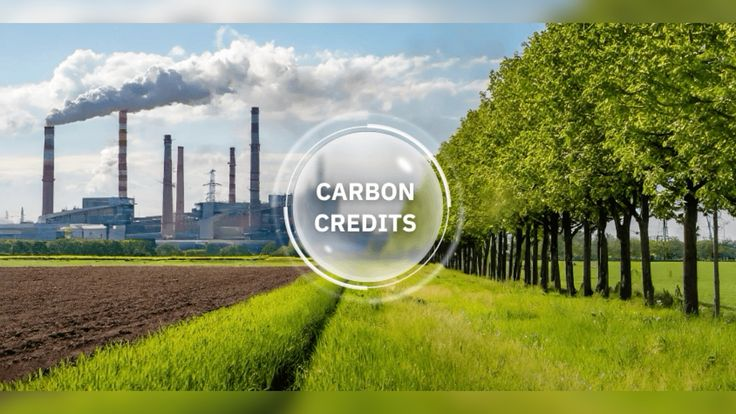

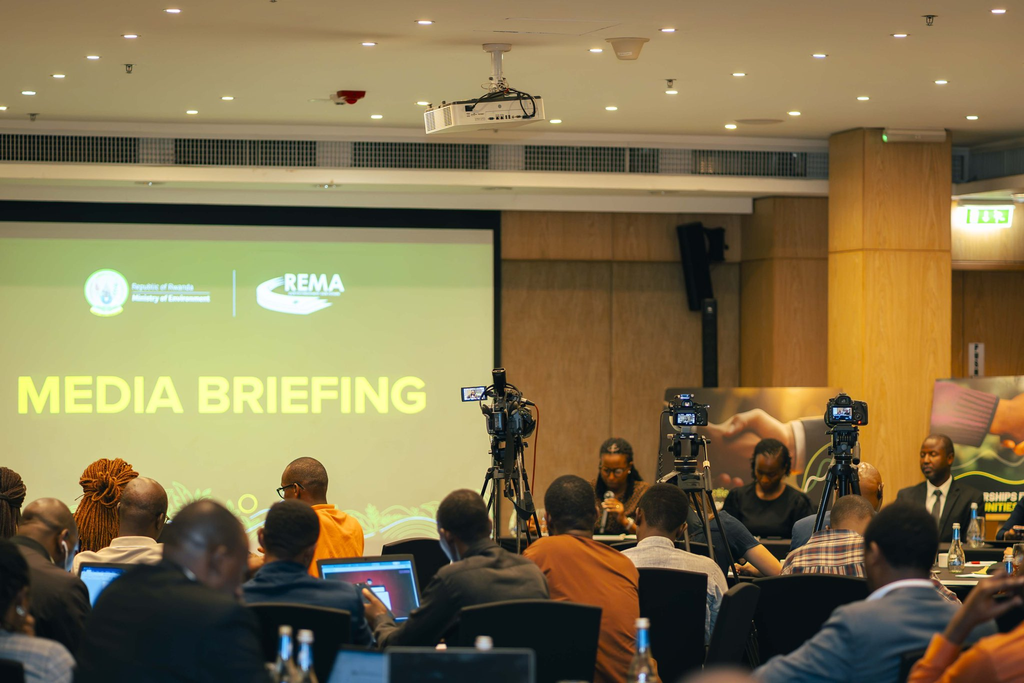
Rwanda’s carbon market is opening new opportunities for climate finance, with 29 projects registered across forestry, agriculture, land conservation, renewable energy, waste management and electric mobility, generating about $1.5 million (approximately RWF 2.2 billion) in carbon credit revenues so far. The progress was highlighted during a press conference held on 16 September ahead of the Africa Carbon Market Summit.
At the press conference, it was highlighted that carbon markets enable the buying and selling of carbon credits, creating financial incentives for activities that reduce, avoid, or remove greenhouse gas emissions. In Rwanda, the growing market is providing opportunities for communities and project developers to benefit from climate-friendly activities, including tree planting.
In fact, Rwanda launched its National Carbon Market Framework in 2023 during COP28 in Dubai, establishing a framework for carbon credit trading and supporting the country’s ambition to become climate-resilient and carbon-neutral by 2050.
Meanwhile, Faustin Munyazikwiye, Deputy Director-General of the Rwanda Environment Management Authority (REMA), said the 29 registered carbon market projects are progressing through different stages of development.
Moreover, some projects have reached the sales stage, while others are undergoing independent verification, reflecting the continued development of Rwanda’s carbon market.
“Some are at the level of being sold, while others are still being verified by external auditors. So far, Rwanda has generated $1.5 million from some of the carbon credits generated by the projects. A certain percentage goes to government coffers.”
Before credits are issued, projects are assessed and independently verified to confirm that reported emissions reductions or removals have been achieved. Carbon credits currently range from about $14 to $45 per tonne, according to Munyazikwiye.
Furthermore, the development of the carbon market is supporting Rwanda’s broader climate ambitions as the country continues to implement its Nationally Determined Contribution (NDC) 3.0, which targets a 53% reduction in greenhouse gas emissions by 2035 compared with a business-as-usual scenario.
Rwanda has so far mobilised $5 billion towards its climate commitments, while another $7 billion is needed to meet the estimated $12 billion cost of implementing NDC 3.0 through 2035. Of the total, $5 billion is expected to support mitigation, while $7 billion is allocated to adaptation.
Moreover, Rwanda participates in both voluntary and regulated carbon markets and has a cooperation agreement with Singapore, allowing eligible carbon credits generated by projects in Rwanda to be purchased by Singapore.
Looking ahead, Rwanda will showcase its growing carbon market at the Carbon Markets Africa Summit, scheduled for October 13–15, 2026, in Kigali. The event will highlight projects focused on nature-based solutions, regenerative agriculture, carbon removals, waste-to-value initiatives and blue carbon, while connecting developers with investors and buyers.
Read more about the summit:https://aenewslive.com/rwanda-to-host-carbon-markets-africa-summit-as-africa-advances-towards-active-carbon-market-trading/
Rwanda’s expanding carbon market is opening new avenues for climate finance and green investment while supporting the country’s broader sustainable development ambitions.