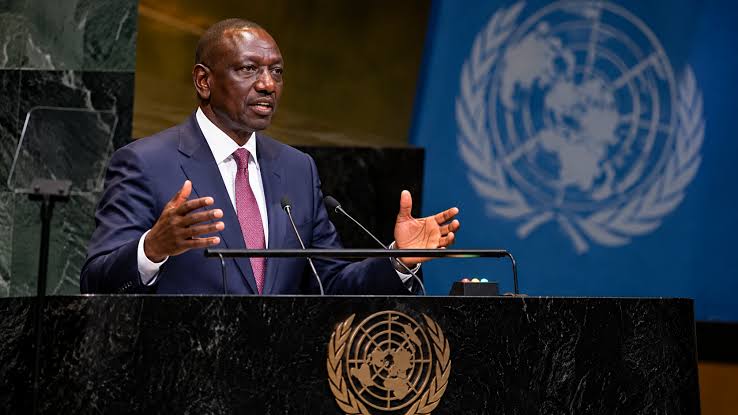

In an address to the United Nations, President Ruto said Africa is coming to the international negotiating table with a vision of shared economic growth and development, rather than continuing to ask for assistance.
“Distinguished leaders, Africa is not here to ask. We are here with an idea. We are no longer what we used to be, because we have the capacity and we have something to offer.”
For many years, Africa’s engagement with the international community has largely focused on aid, debt relief and calls for greater representation in international institutions.
President Ruto said the continent’s growing economic potential has changed this dynamic, arguing that Africa should no longer be in a position of asking for support but should have a greater say in decisions affecting it.
He highlighted Africa’s abundant mineral resources, strong agricultural potential, rapidly expanding renewable energy resources, young population and a market of more than 1.5 billion people.
“Our continent is endowed with vast mineral resources, tremendous agricultural potential, extraordinary sustainable renewable energy resources, and the youngest population in the world. We are a market of more than 1.5 billion people.”
President Ruto said these resources should no longer be viewed simply as raw commodities exported abroad, but should form the foundation for industrial development on the continent.
“Africa is not a problem for the world to solve. Africa is the solution the world is looking for.”
Africa possesses minerals needed to manufacture batteries, solar energy equipment and electric vehicles. However, President Ruto said the continent wants to retain a greater share of the value generated from these resources by developing its own industries.
He cited Kenya’s plan to build an oil refinery in Lamu as an example of investment aimed at adding value to Africa’s resources.
He said the refinery would have the capacity to process 700,000 barrels of oil per day and would require an investment of $16 billion.
President Ruto also called for an end to the continued assumption that Africa must rely heavily on external capital to achieve development.
He noted that more than $4 trillion is held in pension funds, insurance companies, African banks and other institutions across the continent, arguing that mechanisms should be created to channel this capital into infrastructure, manufacturing and energy.
“Africa has 54 countries and almost one in five people in the world lives on this continent, yet African countries continue to have a limited role in decisions governing international lending, the cost of servicing debt and the rules of international finance.”
He added: “We cannot continue to have significant obligations in a system while having limited influence over the rules that govern it.”