
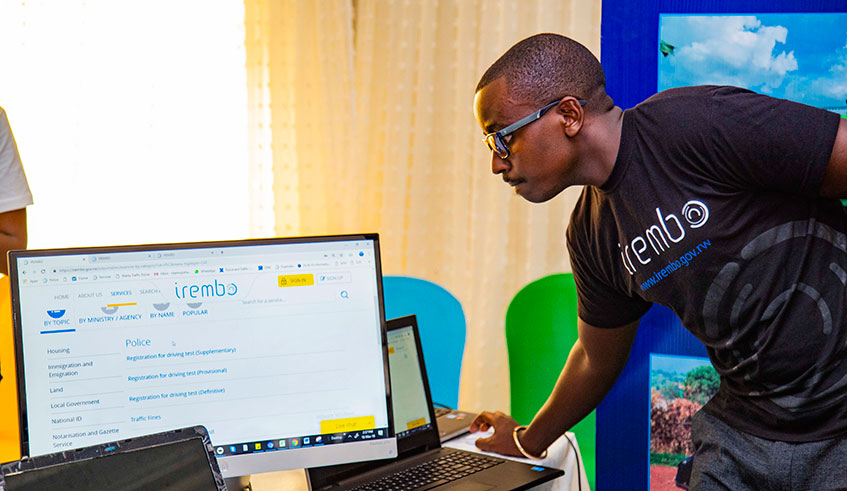

Rwanda is steadily emerging as a supplier of trusted digital governance solutions, with several homegrown systems now being adopted across Africa and the Caribbean, and more exports expected in 2026.
Officials say the country’s shift from a consumer of imported technologies to an exporter of tested, locally developed digital platforms is gaining momentum, supported by the rollout of a Digital Trust Seal aimed at strengthening credibility, quality standards and international confidence.
Patricia Uwase, Chief Executive Officer of the Rwanda Cooperation Initiative (RCI), which coordinates the sharing of Rwanda’s development solutions, said a number of flagship systems are already operational abroad, mainly through South-South cooperation, with rising interest from both governments and the private sector.
Justice system exported to the Caribbean
One of the most prominent examples is the Integrated Electronic Case Management System (IECMS), developed in Rwanda and now being deployed in Jamaica under a 37-month contract valued at about $4.6 million. The system digitises court processes, allowing cases to be filed, tracked and managed online, improving efficiency, transparency and access to justice.
Originally launched in Rwanda in 2016, IECMS has transformed how courts operate by reducing delays and eliminating the need for physical visits to registries. Its adoption in Jamaica signals growing confidence in Rwanda’s ability to export complex digital public sector solutions.
Strengthening public finance in Africa
In Central and West Africa, Rwanda has supported the rollout of key public finance systems in Chad, including the Integrated Financial Management System (IFMS), the Integrated Tax System (E-Tax) and the Electronic Billing Machine (EBM). According to Uwase, these platforms have helped strengthen tax compliance, improve revenue collection and modernise fiscal administration.
Guinea Conakry has also turned to Rwanda’s experience by adopting Telemo, a national e-procurement platform inspired by Rwanda’s Umucyo system. Launched in November 2025, Telemo is designed to enhance transparency, reduce procurement delays and improve traceability in public tenders, building on Rwanda’s own digitalisation of government-to-business services.
In Southern Africa, Eswatini is implementing Umsebe, an Integrated Financial Management Information System modelled on Rwanda’s framework, to improve budget control, expenditure management and fiscal transparency.
A growing private sector footprint
Rwanda’s private technology firms are also expanding beyond the country’s borders. Digital Umuganda’s AI-powered data collection platform is already being used in projects in Benin, Congo Brazzaville, Ethiopia and The Gambia, supporting the creation of high-quality datasets for language models and development planning. The company plans to operate in at least 15 African countries by 2026.
Meanwhile, Faranga, a Rwandan mobile money and personal finance application offering real-time tracking, budgeting tools and enhanced security, is preparing to enter new markets, including Tanzania and Cameroon.
From local innovation to global relevance
Uwase said the growing demand reflects a broader transition: Rwanda is no longer just implementing digital reforms at home, but packaging and exporting solutions that have been tested in real governance environments.
“These developments position Rwanda as a single-window hub for development knowledge exchange in the Global South,” she noted, adding that the Digital Trust Seal is critical in assuring partners of the reliability, security and standardisation of Rwandan digital products.
With increasing private sector participation and rising demand for cost-effective, proven systems, Rwanda’s digital exports are expected to expand further in 2026, reinforcing the country’s role as a source of practical, scalable and locally built solutions for governments and institutions worldwide.
Source: The New Times