
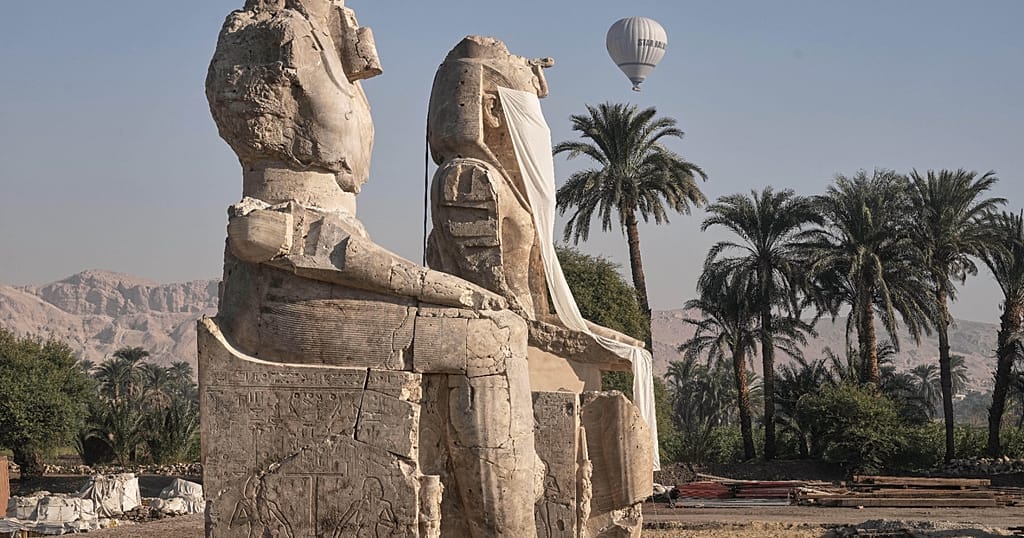

Recent archaeological discoveries made by a joint , Egypt–China research team at the Montu Temple site in southern Egypt are reshaping scholars’ understanding of ancient Egyptian civilization. The findings are helping to address long-standing gaps in historical knowledge while also underscoring the deepening academic and cultural cooperation between Egypt and China,two nations whose histories stretch back thousands of years.
The excavation, carried out by experts from both countries, focused on previously unexplored areas of the Montu Temple complex, a site dedicated to Montu, the ancient Egyptian god of war and strength. Preliminary analyses suggest that newly uncovered architectural remains, inscriptions, and artifacts may provide valuable information about religious practices, temple administration, and daily life during key periods of ancient Egyptian history.
According to archaeologists involved in the project, the discoveries offer fresh evidence that could clarify transitions between different dynastic eras, particularly in Upper Egypt. Some findings are believed to reflect changes in temple design and ritual use over time, helping historians better understand how religious institutions evolved in response to political and social shifts.
Beyond their academic importance, the discoveries highlight the growing partnership between Egypt and China in the field of archaeology. The joint mission combines Egypt’s deep local expertise with advanced research technologies and methodologies contributed by Chinese scholars, including digital mapping, material analysis, and conservation techniques. This collaboration has enabled a more comprehensive and precise examination of the site than would have been possible through traditional excavation alone.
Officials and researchers from both sides have emphasized that the project reflects a broader commitment to cultural exchange and mutual respect for ancient heritage. Egypt, home to one of the world’s most influential ancient civilizations, and China, with its own rich and continuous historical legacy, increasingly view such collaborations as a bridge between past and present civilizations.
The Montu Temple discoveries are expected to undergo further study, with detailed findings to be published in academic journals in the coming months. Researchers hope that continued excavation will reveal additional layers of history, offering a more complete picture of the region’s role in ancient Egypt’s religious and political landscape.
As work at the site continues, the Egypt–China archaeological mission stands as a testament to how international cooperation can unlock new chapters of human history, reinforcing the shared responsibility of preserving and understanding the world’s ancient civilizations.
Source:china xinhua news