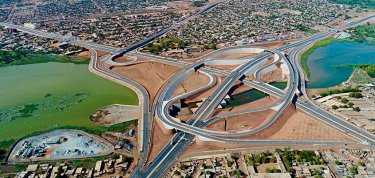

Burkina Faso is undertaking one of the most ambitious infrastructure projects in its history with the construction of what is widely described as the longest and most modern highway in West Africa. The Ouaga–Bobo highway, linking the capital city Ouagadougou to the economic hub of Bobo-Dioulasso, is expected to significantly transform transportation, trade, and regional integration across the country and beyond.
Stretching across hundreds of kilometers, the highway is designed to meet modern international standards, with multiple lanes, reinforced road surfaces, improved drainage systems, and enhanced safety features. Once completed, it will drastically reduce travel time between the nation’s two most important cities, making movement of people and goods faster, safer, and more efficient.
For Burkina Faso, a landlocked country that relies heavily on road transport for commerce, the Ouaga–Bobo corridor is of strategic importance. Ouagadougou serves as the administrative and political center, while Bobo-Dioulasso is the country’s commercial heart and a key gateway to neighboring coastal states such as Côte d’Ivoire, Ghana, and Togo. By modernizing this critical route, authorities aim to strengthen domestic connectivity while improving access to regional and international markets.
Government officials say the project is not just about building a road, but about unlocking economic potential. The highway is expected to boost trade flows, lower transportation costs for businesses, and improve supply chains for agricultural products, manufactured goods, and imports. Farmers and traders along the corridor are likely to benefit from easier access to urban markets, while exporters could see improved links to ports in the Gulf of Guinea.
Beyond economic gains, the highway is also expected to have a strong social impact. Improved road safety standards are anticipated to reduce traffic accidents, a major concern on older routes. Communities located along the highway will gain better access to essential services such as healthcare, education, and employment opportunities. The construction phase itself has already created jobs, contributing to local livelihoods and skills development.
The project reflects Burkina Faso’s broader commitment to infrastructure-led development, despite facing security and economic challenges in recent years. By investing in large-scale transport networks, the government is signaling its intention to promote long-term growth, resilience, and regional cooperation. Analysts note that such infrastructure can play a stabilizing role by encouraging investment, improving mobility, and fostering national cohesion.
Regional observers also view the Ouaga–Bobo highway as a potential game-changer for West Africa’s transport network. As part of major transnational corridors, the road could enhance connectivity between Sahelian countries and coastal economies, supporting the movement of goods across borders and strengthening intra-African trade in line with the African Continental Free Trade Area (AfCFTA).
While construction is still ongoing, expectations remain high. Authorities emphasize that the project incorporates modern engineering techniques to ensure durability and sustainability, taking into account climate conditions and long-term maintenance needs. If delivered as planned, the Ouaga–Bobo highway could set a new benchmark for road infrastructure in the region.
As Burkina Faso pushes forward with this landmark project, the highway stands as a symbol of ambition and progress,one that could reshape the country’s economic landscape and reinforce its role within West Africa’s evolving transport and trade networks.
Source:Africanews