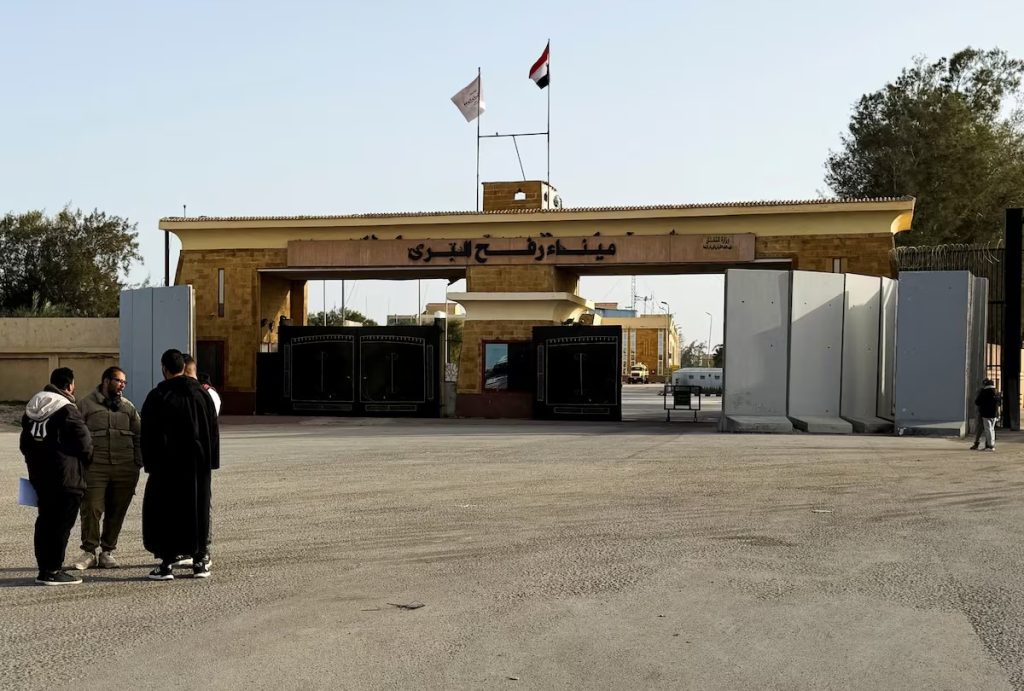

Israel has reopened the Rafah border crossing with Egypt for people on foot, nearly two years after seizing it during the 2024 Gaza war. The reopening allows Palestinians to leave Gaza or return under strict security checks, though movement remains tightly controlled. Travel caps are expected to limit the number of people crossing daily, and foreign journalists are still barred from entering Gaza.
In the months leading up to the reopening, life in Gaza remained extremely difficult. Residents have continued to live amid destroyed homes, makeshift shelters, and limited access to medical care, food, and basic services. Movement has been heavily restricted, with most Palestinians unable to leave the enclave except through rare, tightly controlled permits.
Humanitarian agencies report that shortages of medicine and essential supplies have persisted, while the ongoing blockade has kept the population isolated.
The move is part of U.S. President Donald Trump’s broader plan to stabilize the region and bring an end to hostilities between Israel and Hamas militants. Under the plan’s second phase, governance of Gaza would be transferred to Palestinian technocrats, Hamas would lay down its weapons, and Israeli troops would gradually withdraw while the territory is rebuilt. Reuters reporting highlights that the reopening of Rafah fulfills an important requirement of this plan, offering both humanitarian relief and political leverage.
Humanitarian and Political Context
Gaza’s roughly 2 million residents have endured almost two years of war, displacement, and damage to infrastructure. About 100,000 Palestinians have fled the enclave since the conflict began, many seeking medical care or safety in Egypt. The closure of Rafah and the Philadelphi corridor had previously cut off a key route for those in need of treatment abroad.
While the crossing’s reopening represents a step toward easing these restrictions, conditions remain precarious, and access is still limited.
Highlighting a major challenge, Israel continues to block foreign journalists from entering Gaza, citing risks to both soldiers and reporters. The Foreign Press Association has appealed to the Israeli Supreme Court to overturn the ban, warning that the public is being denied independent coverage of the conflict.
Meanwhile, aid workers and United Nations personnel continue to operate on the ground, striving to navigate the escalating humanitarian crisis.
The reopening of Rafah underscores the delicate balance between humanitarian needs and security concerns, illustrating how international diplomacy, local governance, and ongoing conflict shape daily life in Gaza. Reuters reporting emphasizes that while the move is a positive step for residents, significant obstacles remain before the region can stabilize fully.