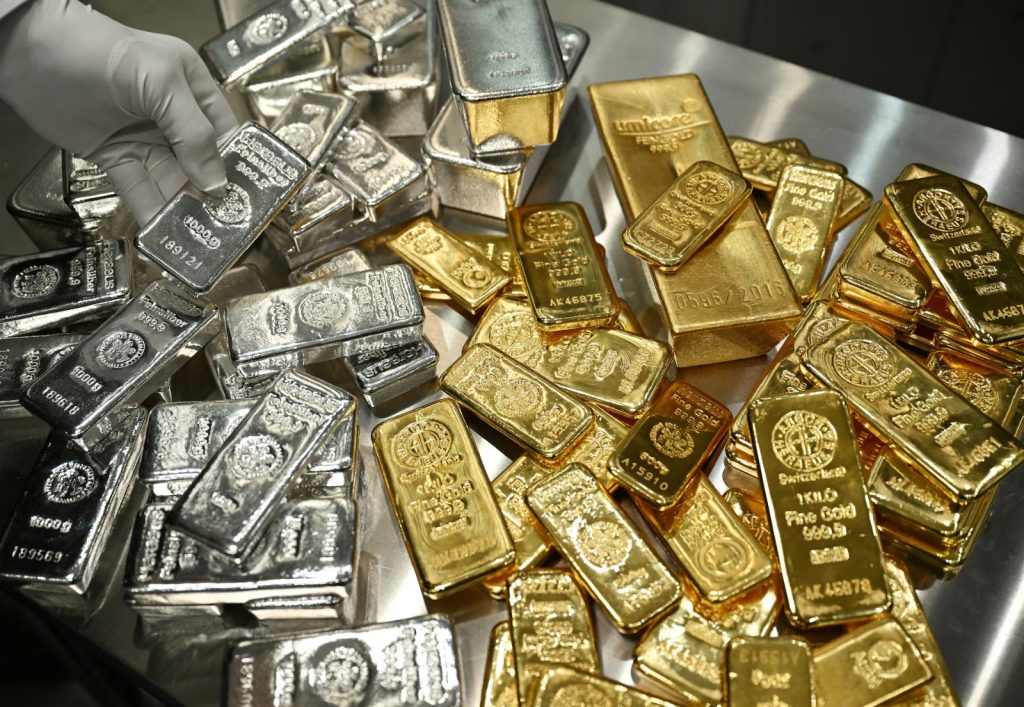

Gold and silver prices fell sharply on Monday, ending a record-breaking rally that had pushed both metals to historic highs. Spot gold dropped more than 9% to $4,403 an ounce, while silver slumped 15% to below $72 an ounce. On Friday, gold had its largest one-day drop since 1983, and silver plunged 27%, signaling a sudden correction after weeks of rapid gains.
The decline comes after the nomination of Kevin Warsh as the new US Federal Reserve chair, which strengthened the US dollar. A stronger dollar makes gold and silver more expensive for international buyers, prompting investors to take profits after the metals’ recent surge. Analysts see this as the main trigger behind the sharp sell-off.
For context, gold and silver are often considered “safe-haven” assets, which investors buy during periods of uncertainty. In recent months, concerns over trade disputes, geopolitical tensions, and economic risks drove prices to record highs gold surpassed $5,500 an ounce and silver topped $120. The current drop is a market correction after these rapid gains, not a sign that demand has disappeared.
The sell-off also affected broader markets. Asian stock indices fell, with South Korea’s Kospi down 5%, Hong Kong’s Hang Seng down 3%, and Japan’s Nikkei 225 falling over 1%. Crude oil prices declined more than 5% as major producers maintained output and signs of easing US-Iran tensions emerged.
Market Outlook
Experts warn that gold and silver may remain volatile in the near term. Profit-taking, currency fluctuations, and shifts in global economic conditions are likely to influence prices. Mark Matthews, head of research for Asia at Bank Julius Baer, said the recent falls “largely result from profit-taking after an overextended rally.” BBC Business reporting highlights how these swings reflect the sensitivity of precious metals to global economic and political developments.