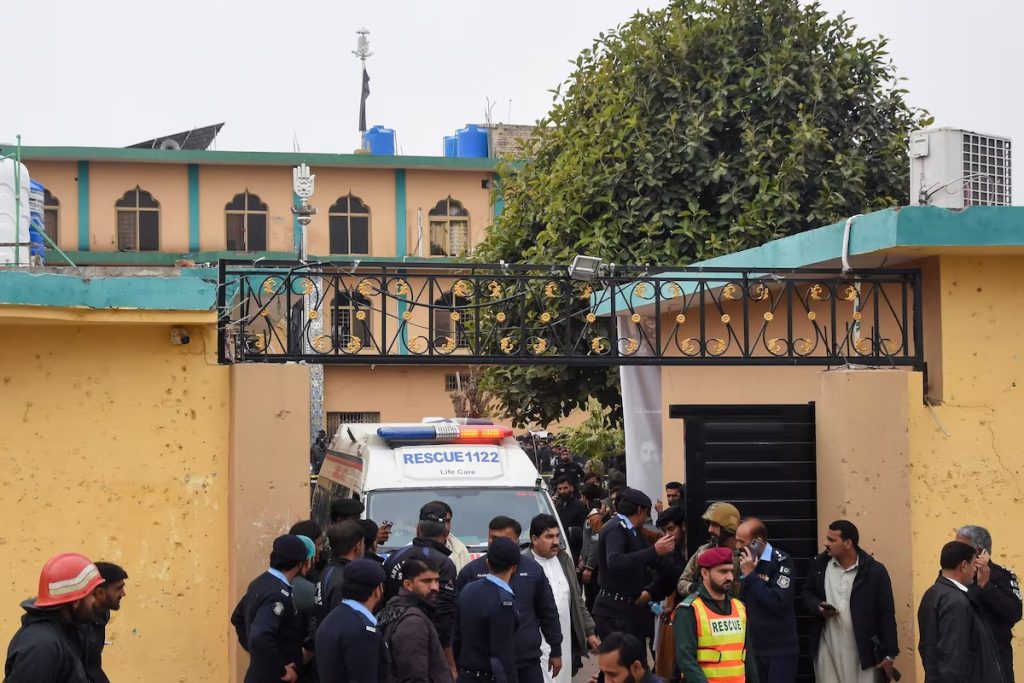

On February 6, 2026, a suicide bomber struck the Khadija Tul Kubra Imambargah, a Shi’ite mosque on the outskirts of Islamabad, during Friday prayers, killing at least 31 people and injuring around 169 others, officials said.
Witnesses reported scenes of chaos and panic as worshippers tried to escape, while many of the injured sought help in the mosque’s surrounding gardens. Images from the scene showed damage inside the mosque, including shattered glass and debris scattered across the prayer area.
Authorities reported that the attacker detonated explosives after being stopped at the mosque’s gate. Deputy Commissioner Irfan Memon confirmed the rising death toll and the number of injured transported to local hospitals. Paramilitary forces were deployed to secure the area and assist emergency responders.
According to a Reuters report, bombings in Islamabad are relatively rare due to heavy security, but Pakistan has faced increasing militant activity in recent years. Shi’ite Muslims, a minority in the predominantly Sunni nation of 241 million, have been targeted in sectarian violence, often by extremist groups such as Tehreek-e-Taliban Pakistan, which considers them heretics.
Sectarian attacks have roots in longstanding religious and political tensions, combined with regional instability. Militant groups exploit divisions between Sunni and Shi’ite communities and have repeatedly carried out attacks on minority populations, often citing ideological motives. Analysts note that these attacks aim not only to sow fear but also to challenge state authority and destabilize communities.
Authorities are investigating the attack and have not yet reported any group claiming responsibility. Emergency services continue to treat the wounded, and security forces are working to prevent further incidents.