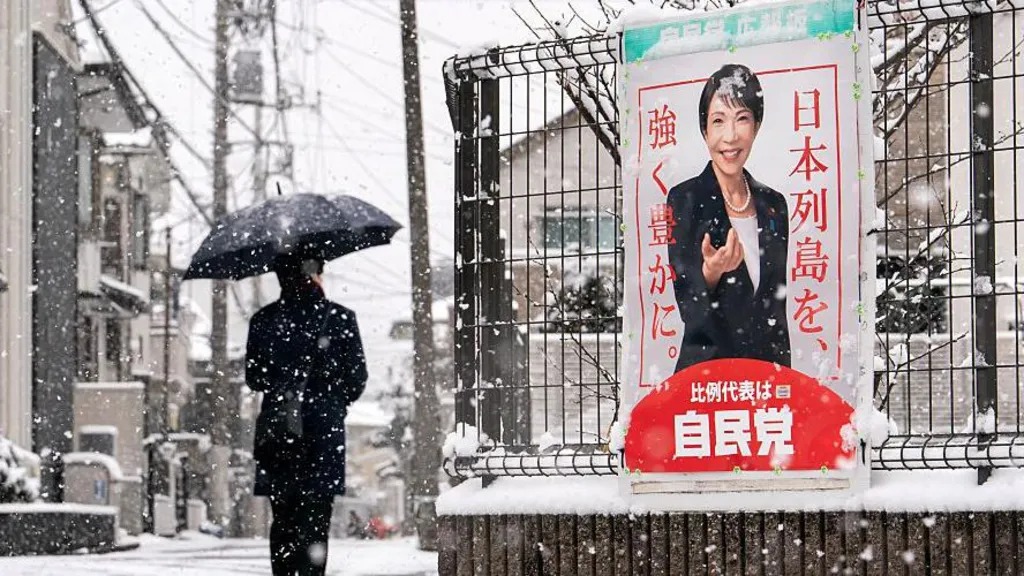

Japanese voters turned out in large numbers despite rare winter snowfall to participate in a snap general election called by Prime Minister Sanae Takaichi, who is seeking a fresh public mandate.
The mid-winter vote, the first of its kind in Japan in 36 years, was announced shortly after Takaichi won the leadership of the ruling Liberal Democratic Party (LDP) last October. The move was seen by some analysts as risky, especially after the LDP lost its majority in both houses of parliament and its long-standing coalition with the Komeito party collapsed.
Despite these challenges, opinion polls suggest an LDP-led coalition is on course for a decisive victory, driven largely by Takaichi’s personal popularity, with her approval ratings remaining above 70%, according to BBC News. Projections indicate the coalition with the Japanese Innovation Party could secure up to 300 of the 465 seats in the lower house.
Voters interviewed by the BBC cited rising living costs, inflation, and housing affordability as key concerns. While Takaichi’s populist spending promises and nationalist rhetoric have energised some voters, critics remain sceptical about her ability to revive Japan’s sluggish economy, especially given the country’s high public debt, the BBC notes.
The election is also unfolding amid growing international uncertainty. According to the BBC, Takaichi has drawn criticism for her tough stance on China and her comments on Taiwan, while Japan’s alliance with the United States has come under renewed scrutiny under President Donald Trump. Defence spending and its impact on everyday life have become major issues for voters.
Severe weather disrupted transport across parts of the country, with train services, ferry routes, and flights cancelled in several regions, according to Japan’s transport authorities, cited by the BBC. Early voting figures were reported to be lower than in the previous election, a decline largely attributed to the snowfall.
As polls close, the outcome is expected to shape Japan’s political direction on economic reform, social stability, and foreign policy, a