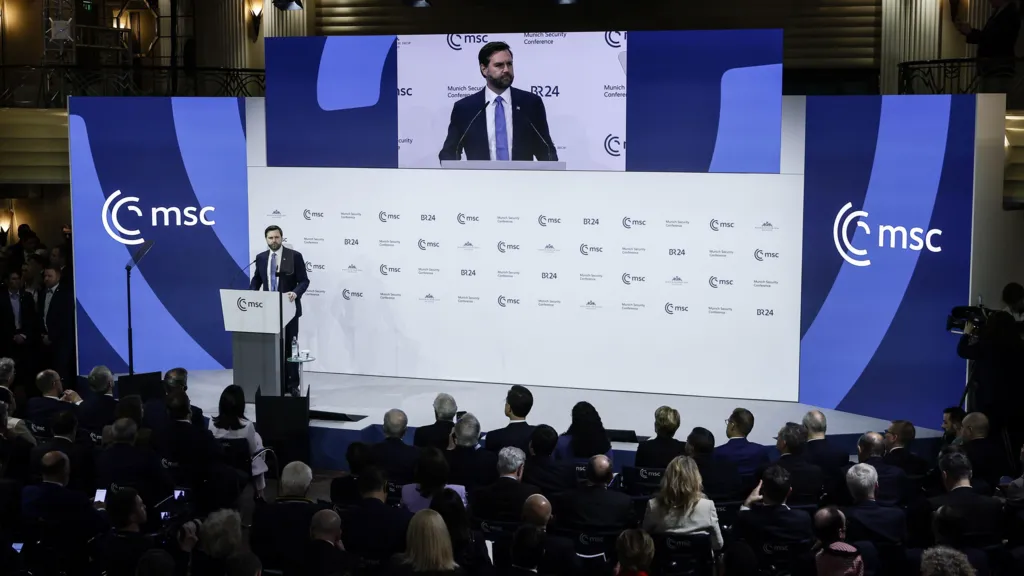

One year after US Vice-President JD Vance shocked European leaders with a fiery speech at the Munich Security Conference, the transatlantic alliance faces its most serious test in decades. As global decision-makers gather once again in Munich, President Donald Trump’s reshaping of US foreign and security policy continues to unsettle Europe, raising deep concerns about NATO’s future and the reliability of America’s security guarantees.
Since Vance’s speech, which accused Europe of undermining itself through migration and free speech policies, the Trump White House has upended long-standing international norms. Allies and rivals alike have faced punitive tariffs. Washington has pursued an uneven peace approach in Ukraine, seen as favourable to Moscow, and Trump’s provocative statements, including suggesting Canada become the “51st state”, have amplified fears of a shifting world order.
This year’s conference comes at a particularly fragile moment. The latest US National Security Strategy calls on Europe to “stand on its own feet” and assume primary responsibility for its defence, reinforcing perceptions that Washington is increasingly reluctant to underwrite European security. Nowhere has this tension been clearer than in Trump’s repeated claims that the US should “own” Greenland for security reasons, comments that alarmed Denmark and sent shockwaves through NATO.
Although the Greenland crisis has cooled for now, it has left a lingering question: are Europe-US security ties damaged beyond repair? Former UK MI6 chief Sir Alex Younger argues they are not broken, but undeniably changed. He, like many others, believes Europe must shoulder more responsibility, noting the imbalance of a 500-million-strong Europe relying heavily on a 300-million-strong United States to deter Russia.
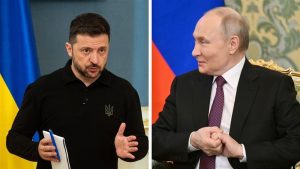
Yet divisions extend beyond defence spending. Trump’s confrontations with Europe over trade, migration and democratic values, alongside his warmer rhetoric toward Russian President Vladimir Putin, have deeply worried European governments, particularly as Russia’s full-scale invasion of Ukraine enters its fifth year.
Analysts say Trump’s approach marks a fundamental break from post-World War II US strategy, which was built on multilateralism, economic integration, and the promotion of democracy and human rights. The Washington-based Centre for Strategic and International Studies has described the US National Security Strategy as a “shocking wake-up call” for Europe, highlighting a growing gap between Europe’s self-image and Washington’s new vision.
At the heart of the debate lies NATO’s Article 5, the cornerstone of collective defence. While NATO officials insist it remains intact, Trump’s unpredictability has raised doubts about how the alliance would respond to potential Russian provocations in sensitive regions such as Estonia’s Narva border area, the Suwalki Gap, or the Arctic archipelago of Svalbard.
As Europe confronts these uncertainties, the Munich Security Conference is expected to offer critical signals about the future of the transatlantic alliance. Whether it reassures European leaders or deepens existing anxieties remains uncertain, but one reality is increasingly clear: Europe is being pushed toward a new era of greater security self-reliance.
Source: BBC News