
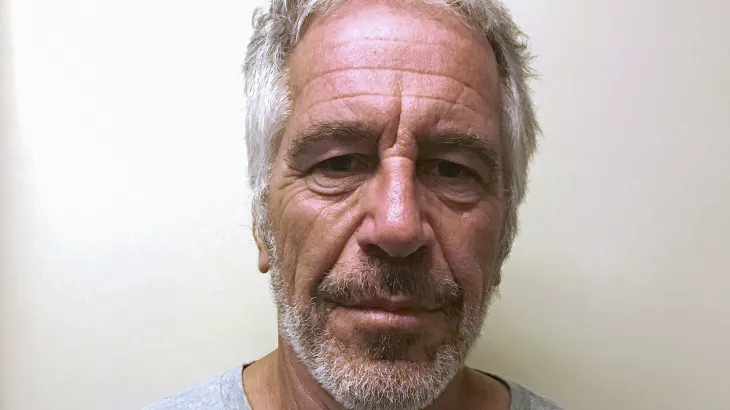

More details continue to emerge following the United States Department of Justice’s release of millions of documents related to the late financier and convicted sex offender Jeffrey Epstein, shedding new light on the scale of his crimes and the vast network of influential figures connected to him.
On January 30, the DOJ released more than 3.5 million pages of records under the Epstein Files Transparency Act, a law signed in November 2025 requiring the disclosure of all unclassified materials linked to Epstein and his longtime associate, Ghislaine Maxwell.
The documents expose the extraordinary breadth of Epstein’s social, political, and financial connections, spanning royalty, senior politicians, business leaders, and academics across several continents.
The released materials include email exchanges, text messages, financial records, flight logs, property documents, FBI interview summaries, and internal investigative reports. Authorities say the total archive amounts to six million pages, meaning nearly half of the evidence has yet to be made public.
Among the most sensitive materials are more than 180,000 images and 2,000 videos seized from Epstein’s properties. These files are heavily redacted, with the DOJ stating the redactions are necessary to protect victims’ identities. However, critics argue that the approach may still leave some victims identifiable while obscuring the roles of alleged perpetrators.
Jeffrey Epstein, born in Brooklyn in 1953, built a fortune through financial consulting for ultra-wealthy clients despite having no university degree. His wealth allowed him to cultivate relationships with powerful individuals in politics, business, royalty, and academia. In the 1990s, he became closely associated with Ghislaine Maxwell, who later played a central role in recruiting underage girls for his sex trafficking operation.
Epstein first came under criminal investigation in 2005 after a 14-year-old girl reported sexual abuse in Palm Beach, Florida. Although federal prosecutors prepared a sweeping indictment in 2007, Epstein received a controversial non-prosecution agreement that granted him broad immunity. He ultimately served just over a year in a minimum-security facility after pleading guilty to state charges in 2008.
According to Al Jazeera, Public scrutiny intensified after a 2018 investigative series by the Miami Herald revisited the case. In 2019, Epstein was arrested on federal sex trafficking charges in New York but died in jail while awaiting trial. His death was officially ruled a suicide.
The case continued with the prosecution of Ghislaine Maxwell, who was convicted in 2021 and sentenced to 20 years in prison for sex trafficking and conspiracy.
The newly released files also provide extensive documentation of Epstein’s private island, Little Saint James, in the US Virgin Islands, which prosecutors say served as the central hub of his trafficking operation. The records include flight manifests, island blueprints, property logs, and financial ledgers. Epstein owned at least six luxury properties worldwide, valued at approximately $180 million at the time of his death.
One of the most closely examined aspects of the document release is the list of prominent figures mentioned in the files. While being named does not imply wrongdoing, the documents show extensive correspondence and interactions with Epstein long after his 2008 conviction. Among those referenced are former and current politicians, royalty, technology executives, billionaires, media figures, and academics.
The DOJ has emphasised that further releases are expected as legal reviews continue. Journalists and researchers worldwide are still working through the massive volume of material, which ranks among the largest document disclosures related to a criminal investigation in US history.
As new details emerge almost daily, the Epstein files continue to raise serious questions about accountability, institutional failures, and how Epstein was able to operate for decades while protected by wealth, influence, and powerful connections.