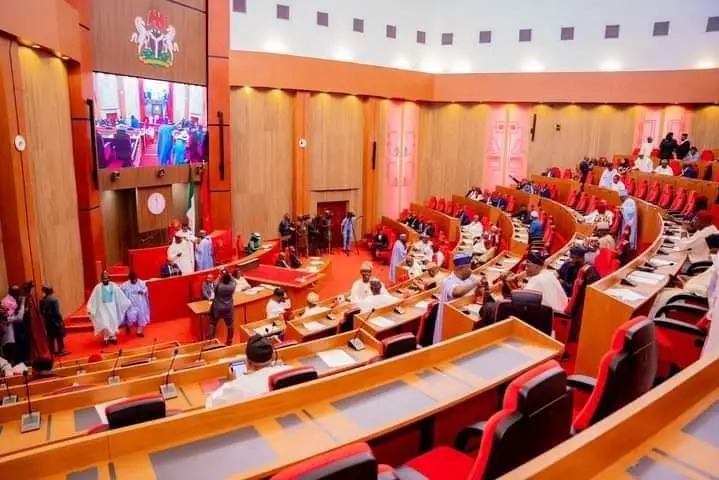

Members of the Nigerian Senate Committee on Capital Market have raised concerns over the Investments and Securities Tribunal (IST) spending N16 million on office cleaning and fumigation in 2025, at a time when many Nigerians face economic challenges.
The IST, a specialised civil court in Nigeria, established under the Investments and Securities Act 2007 (amended 2025), adjudicates disputes within Nigeria’s capital market, providing expert rulings for investors and market operators. Appeals from its decisions are handled by the Court of Appeal.
During Monday’s committee session, Aminu Junaidu, Chairperson of the tribunal, appeared to defend the 2026 budget proposal. The tribunal’s 2025 performance report revealed that over half of the N30 million budgeted for cleaning and fumigation, a total of N16 million, was spent on these services, as reported by Premium Times.
Senate Committee Chairperson Osita Izunaso (APC, Imo West) questioned why such a large sum was allocated to cleaning while critical areas like publicity received limited funding, despite low public awareness of the tribunal’s activities.
In response, Mr. Junaidu explained that the tribunal conducts quarterly fumigation to protect sensitive documents from rodents and that cleaning services are outsourced across its zonal offices.
Senator Ogoshi Onawo (Nasarawa South) also criticised continued spending on stationery, arguing that operations should increasingly shift toward digital solutions. The tribunal reported spending N6.134 million on office stationery and computer consumables in 2025, as reported by Premium Times.
Mr. Junaidu defended the expenditure, noting that stationery is essential for writing judgments and producing certified true copies (CTCs) for applicants. Although applicants pay for CTCs, the fees are remitted directly to the Federal Government’s Treasury Single Account (TSA), and the tribunal does not control these funds. He said: “It is a tribunal. We must write our rulings, produce judgments, and provide CTCs for litigants and other applicants. The fees are minimal, just N10 per page and go directly to the TSA.”
Other reported expenditures by the tribunal in 2025 included local travel, transport, and training (N29 million), local travel and transport (others) – N64 million, electricity charges – N981 million, telephone charges – N990 million, internet access – N702 million, vehicle maintenance – N3.4 million, plant and generator fuel – N39 million, and local training – N9.5 million.
The Nigerian Senate panel’s scrutiny highlights growing concerns over fiscal responsibility in government agencies, especially during periods of national economic hardship.