
If you’ve nibbled on a spring onion, green bean, or corn cob in the UK this winter, chances are it journeyed all the way from northern Senegal. At the edge of the Sahara, two British-run farms are quietly transforming this arid landscape into a powerhouse of fresh produce.
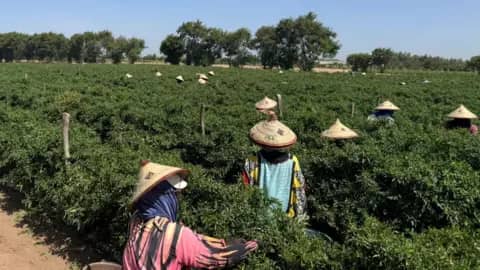
Under the blazing sun, workers like Diarra move swiftly through towering maize stalks, harvesting vegetables that will be chilled, packed, and shipped across continents. Within a week, the produce is on supermarket shelves in the UK, supplying major chains such as Tesco, Sainsbury’s, Asda, Aldi, and Lidl.
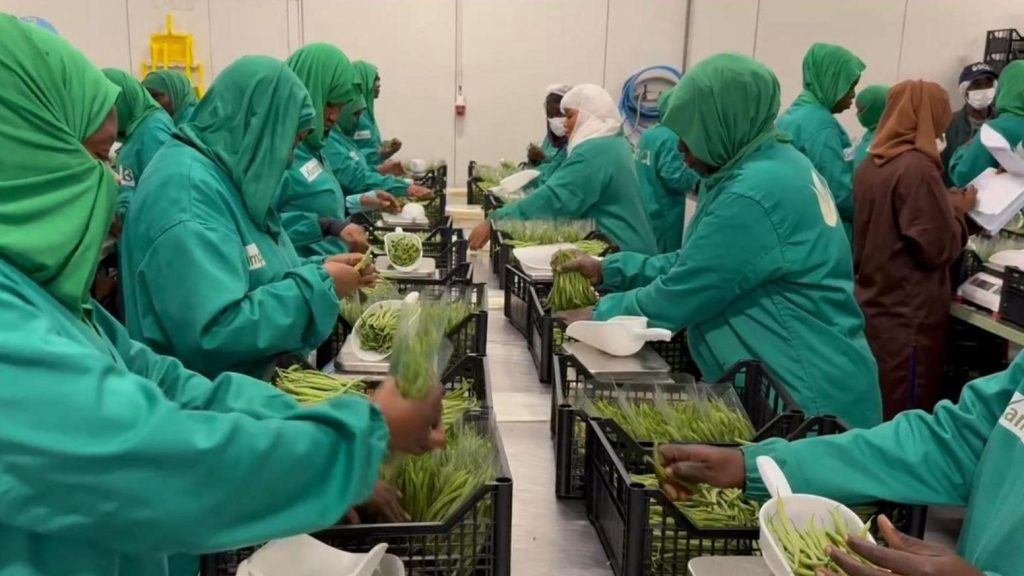
The farms, operated by G’s Fresh and Barfoots, rely on sophisticated irrigation systems fed by the Senegal River, turning once-barren land into 2,000 hectares of fertile fields, an area nearly the size of 3,000 football pitches. The farms produce millions of vegetables every week, including spring onions, green beans, radishes, chillis, butternut squash, and corn. Together, they employ 9,000 people, mostly women, providing stable work in a region where unemployment has hovered around 19%, especially among young adults in rural areas.
The origins of these farms date back to the early 2000s, when French entrepreneur Michael Laurent used Google Earth to identify locations ideal for large-scale food production. The combination of abundant sunlight, inexpensive labour, and access to water through the Senegal River proved ideal. Over time, the land was transformed from bushland into thriving agricultural fields.
Analysts say West Africa’s rise as a winter supplier to Europe is driven by multiple factors: climate challenges and droughts in southern Europe, the costs and environmental impact of air-freighted produce from East Africa, and changing trade rules after Brexit. Senegal offers political stability, having avoided coups common in the region, along with long-term land leases and access to water licenses, making it an attractive destination for British agribusiness.
However, the reliance on long-distance imports raises environmental concerns. While sea freight is less carbon-intensive than air transport, shipping still accounts for a significant share of global greenhouse emissions. Experts argue that focusing on seasonal, locally grown vegetables could be more sustainable.
Still, the benefits for Senegal are tangible. The farms have injected investment and infrastructure into rural communities, while providing thousands of jobs, even if wages remain modest. For companies like Barfoots and G’s Fresh, the combination of reliable labour, fertile land, and the ability to meet year-round UK demand makes Senegal an increasingly important partner in the global food chain.
From sun-scorched soil to chilled supermarket aisles, these farms are reshaping the way Britain eats and proving that even on the edge of the Sahara, agriculture can thrive.