
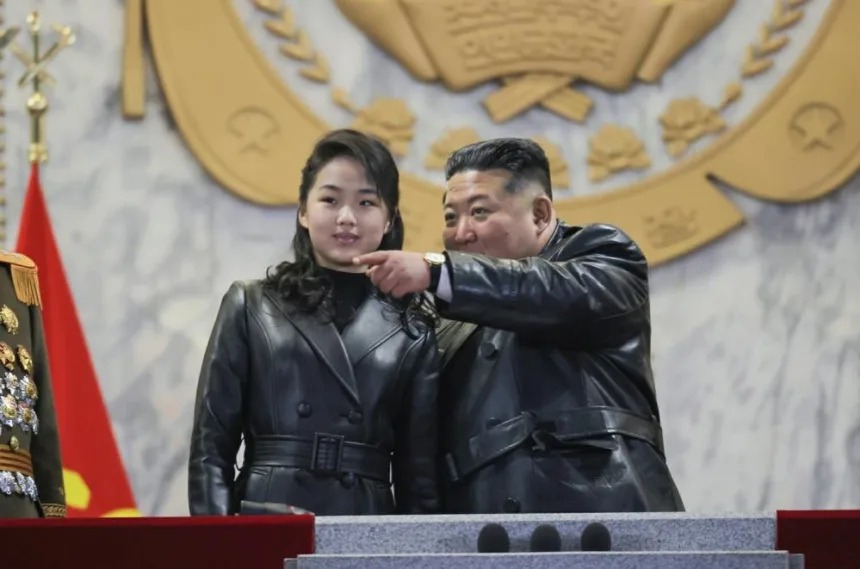

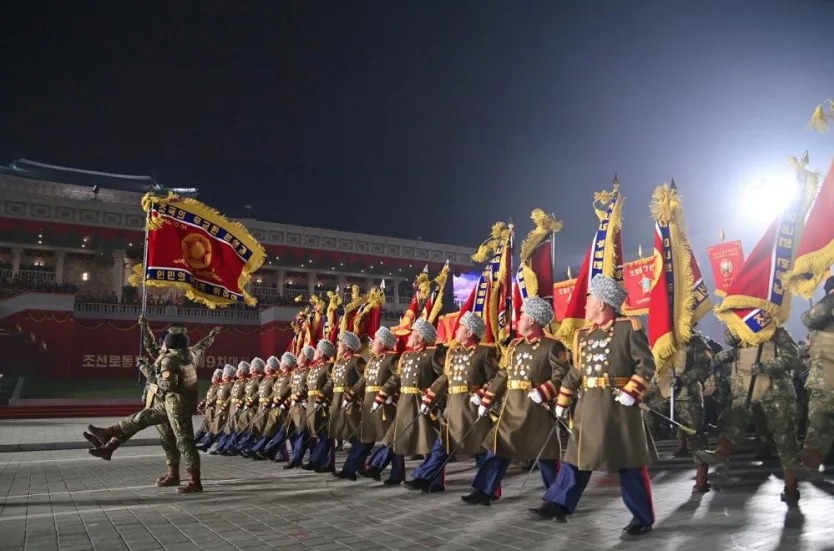
North Korean leader Kim Jong Un vowed to strengthen his country’s nuclear weapons program while presiding over a nighttime military parade in Pyongyang, accompanied by his daughter, widely believed to be named Ju Ae. About 14,000 troops marched through Kim Il Sung Square, while fighter jets roared overhead, highlighting North Korea’s focus on military readiness, as reported by CNN.
Parade Emphasizes Troops Over Weapons
Despite Kim’s nuclear rhetoric, most of North Korea’s strategic hardware was absent from the parade. Tanks, intercontinental ballistic missiles, and hypersonic weapons were not displayed, a notable shift from previous parades. Analysts suggest this restraint signals both discipline and political control while preserving North Korea’s most powerful weapons as strategic leverage for future diplomacy.
Nuclear Ambitions and Conditional Diplomacy
In closing remarks at the ruling party congress, Kim reaffirmed plans to expand the nation’s nuclear arsenal, develop stronger ICBMs, enhance submarine-launch capabilities, and explore drone and AI military applications.
He also left the door open for talks with Washington, but strictly on Pyongyang’s terms, stating that U.S. attitudes must respect North Korea’s nuclear status and end what it considers a “hostile policy.”
Strategic Context and Russia Partnership
Observers note the timing of the parade may be linked to U.S. President Donald Trump’s upcoming visit to China, potentially opening narrow diplomatic channels.
Meanwhile, North Korea has strengthened ties with Russia, formalizing a “comprehensive strategic partnership” that includes mutual defense. The parade’s emphasis on troops and domestic unity reinforces Kim’s control at home while signaling readiness to international adversaries.


