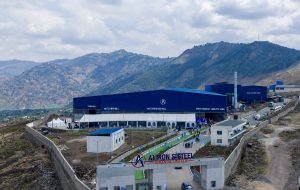
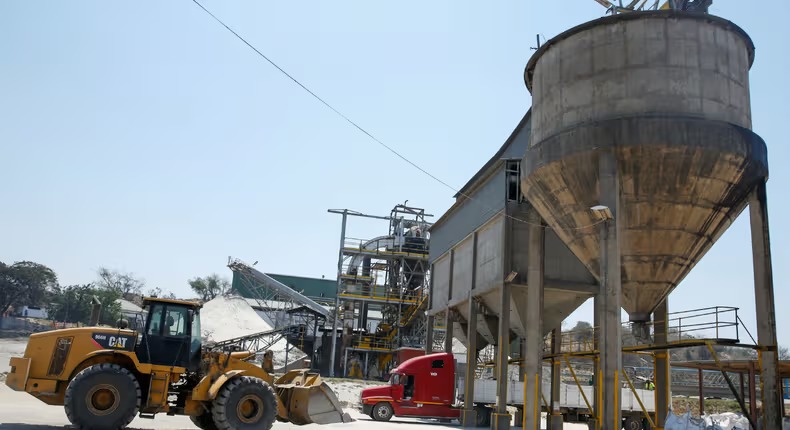

Construction has begun on a new lithium sulphate plant in Zimbabwe, led by Chinese company Sichuan Yahua Industrial Group, marking the country’s third such facility.
The move comes as global demand for lithium continues to rise and reflects Zimbabwe’s shift from exporting raw lithium to producing higher-value lithium sulphate.
Transition from Raw Lithium to Value-Added Products
Zimbabwe previously inaugurated Africa’s first lithium sulphate plant, managed by Prospect Lithium Zimbabwe and financed by Zhejiang Huayou Cobalt Co.
The government plans to fully ban raw lithium exports starting January 2027, aiming to capture more value locally. Mines Minister Winston Chitando emphasized that the measure is in the national interest to promote local beneficiation, as reported by Business Insider Africa.
Economic Impacts and Global Market Reaction
The announcement immediately impacted global markets, with Chinese lithium prices and stocks surging. On the Guangzhou Futures Exchange, lithium carbonate prices jumped 6.07% to 178,020 yuan per metric ton, after earlier spiking over 9% to 187,700 yuan. Analysts view Zimbabwe’s policy as a strategic move to boost local industry while leveraging its “white gold” resources.
Industry and Government Coordination
Sichuan Yahua Industrial Group, which operates the Kamativi lithium mine in a joint venture with Zimbabwe, confirmed construction on its new lithium sulphate plant via a Shenzhen Exchange announcement.
Zimbabwe’s mines ministry has directed mining companies to cooperate with the export ban and value-addition strategy, citing past malpractices in mineral exports.