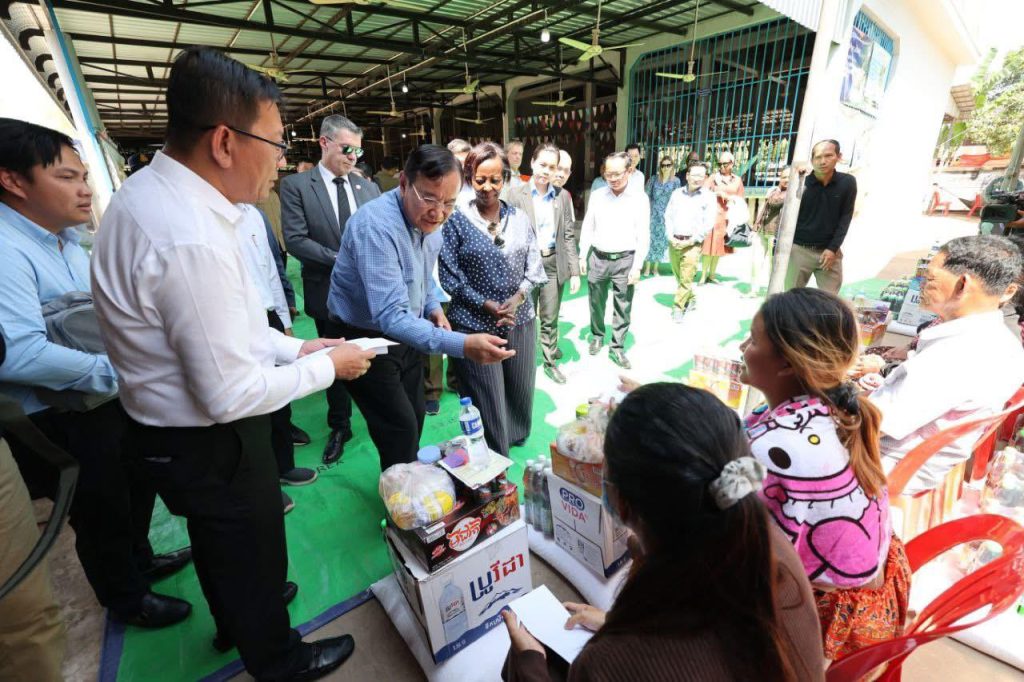
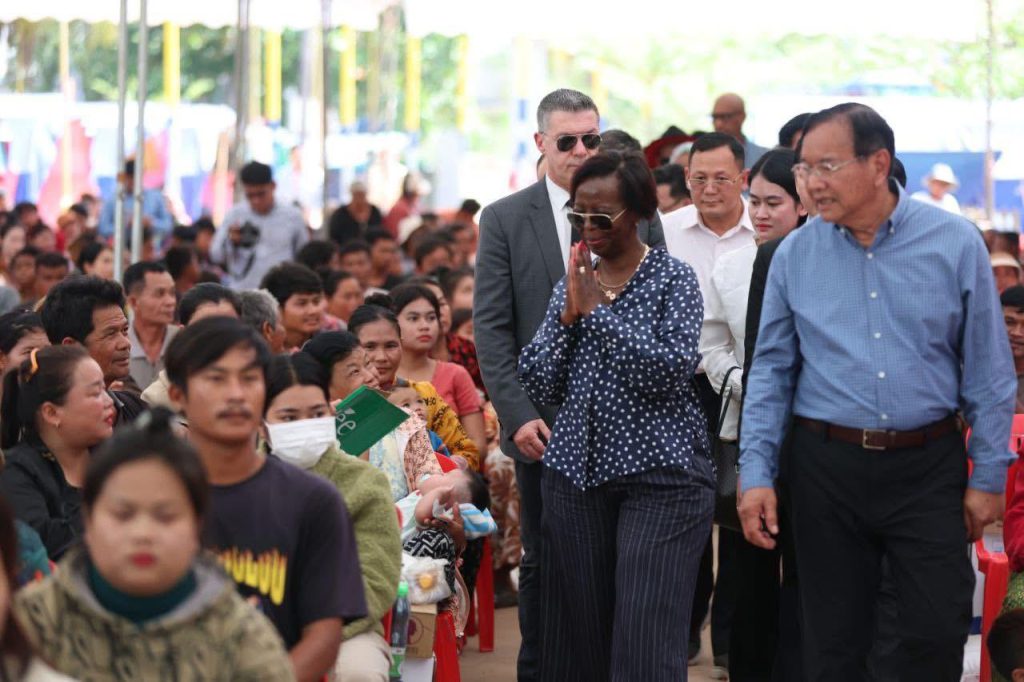

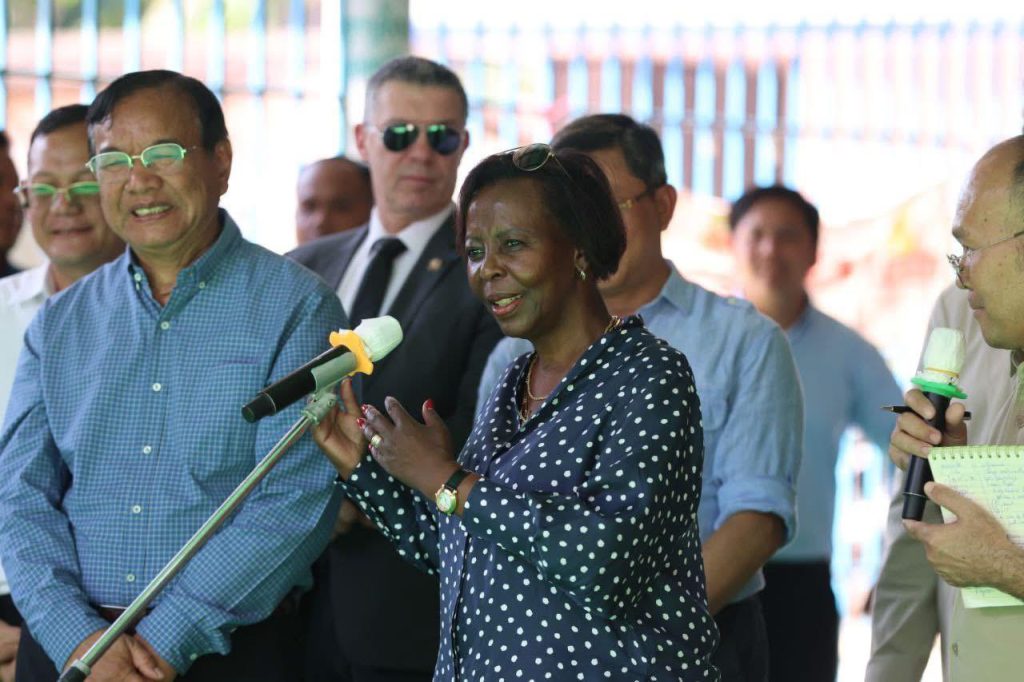
The Secretary-General of the Organisation internationale de la Francophonie (OIF), Louise Mushikiwabo, visited displaced families sheltering at Thormak Raingsei Pagoda in Siem Reap on March 3, in a show of solidarity with civilians affected by the ongoing border tensions between Cambodia and Thailand.
Accompanied by Cambodian Deputy Prime Minister and Foreign Minister Prak Sokhonn, Mushikiwabo met with families forced from their homes due to the prolonged territorial dispute. The visit underscored the Francophonie’s commitment to standing with vulnerable communities caught in the crossfire of geopolitical disagreements.
A Personal Connection to Displacement
Speaking with displaced residents, Mushikiwabo reflected on the painful history of her own country, Rwanda, where conflict once drove countless families from their homes. Drawing on that experience, she emphasized the human cost of instability and the urgent need to protect civilians.
“Behind every statistic is a family, a child, a future disrupted,” she noted during her visit, stressing that displacement leaves deep social and emotional scars that can last for generations.
Her message resonated strongly among the families gathered at the pagoda, many of whom have sought temporary refuge there as uncertainty persists along the border.
Francophonie’s Call for Solidarity and Dialogue
The Secretary-General reaffirmed the Francophonie’s solidarity with all those affected by the dispute and called for peaceful dialogue to resolve tensions. The OIF, which brings together 88 member states and governments, has long promoted cooperation, cultural exchange, and conflict prevention within its community.
While the border disagreement between Cambodia and Thailand has flared intermittently over the years, recent developments have once again displaced civilians living near contested areas. Humanitarian assistance has been mobilized locally, but officials acknowledge that long-term stability will require sustained diplomatic engagement.
A Symbolic Visit
The choice of Thormak Raingsei Pagoda as a meeting place carried symbolic weight. Pagodas in Cambodia often serve not only as places of worship but also as sanctuaries in times of crisis. By visiting the site, Mushikiwabo highlighted the resilience of communities and the role of solidarity in difficult times.
Her presence alongside Prak Sokhonn also signaled close coordination between the Francophonie and Cambodian authorities in addressing the humanitarian impact of the dispute.
Looking Ahead
As tensions continue between Cambodia and Thailand, international observers are closely watching diplomatic efforts aimed at de-escalation. For displaced families in Siem Reap, however, the priority remains safety, stability, and the hope of returning home.
Mushikiwabo’s visit served as both a humanitarian gesture and a diplomatic reminder: that beyond borders and politics, it is civilians who bear the heaviest burden of unresolved conflict and whose voices must remain at the center of any lasting solution.