
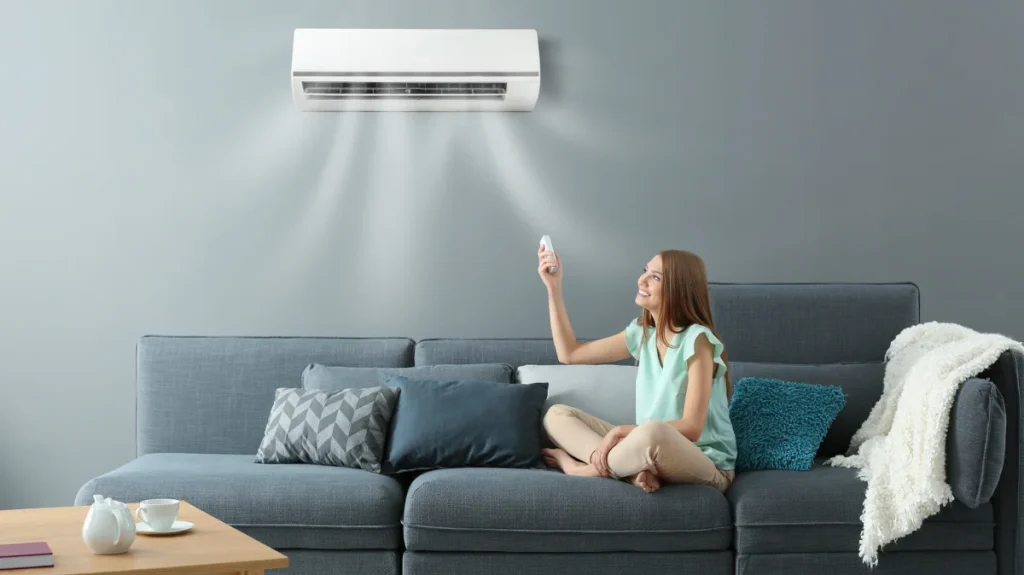

As temperatures continue to rise across the globe, air conditioning has become one of the most widely used solutions for staying cool indoors. While it provides essential relief from extreme heat, experts warn that prolonged exposure may affect the body in several ways if not properly managed.
To begin with, air conditioners work by removing heat and moisture from indoor air and releasing it outside. The process starts when a unit pulls in warm air from a room and passes it over cold evaporator coils. Inside these coils, a refrigerant absorbs the heat, changes from liquid to gas, and cools the air.
After that, a fan circulates the cooled air back into the room, while the warmed refrigerant is sent to an outdoor unit. There, it releases the absorbed heat through a condenser coil before returning to liquid to repeat the cycle. As a result, this continuous process helps regulate indoor temperatures and reduce humidity levels.
In terms of history, modern air conditioning is credited to engineer Willis Carrier, who developed a humidity-control system in 1902. Since then, the technology has evolved significantly, with window units becoming common in the 1930s and household adoption expanding rapidly after World War II. In addition, refrigerants have changed over time due to environmental concerns, shifting toward more sustainable alternatives, according to Al Jazeera.
However, while air conditioners help prevent heat-related illnesses such as heatstroke, long-term or improper use can have side effects on the body.
For example, one of the most common effects is dry skin and eye irritation, caused by reduced humidity in indoor environments. Similarly, many users experience dry nasal passages and sore throats, as AC systems can strip moisture from the air.
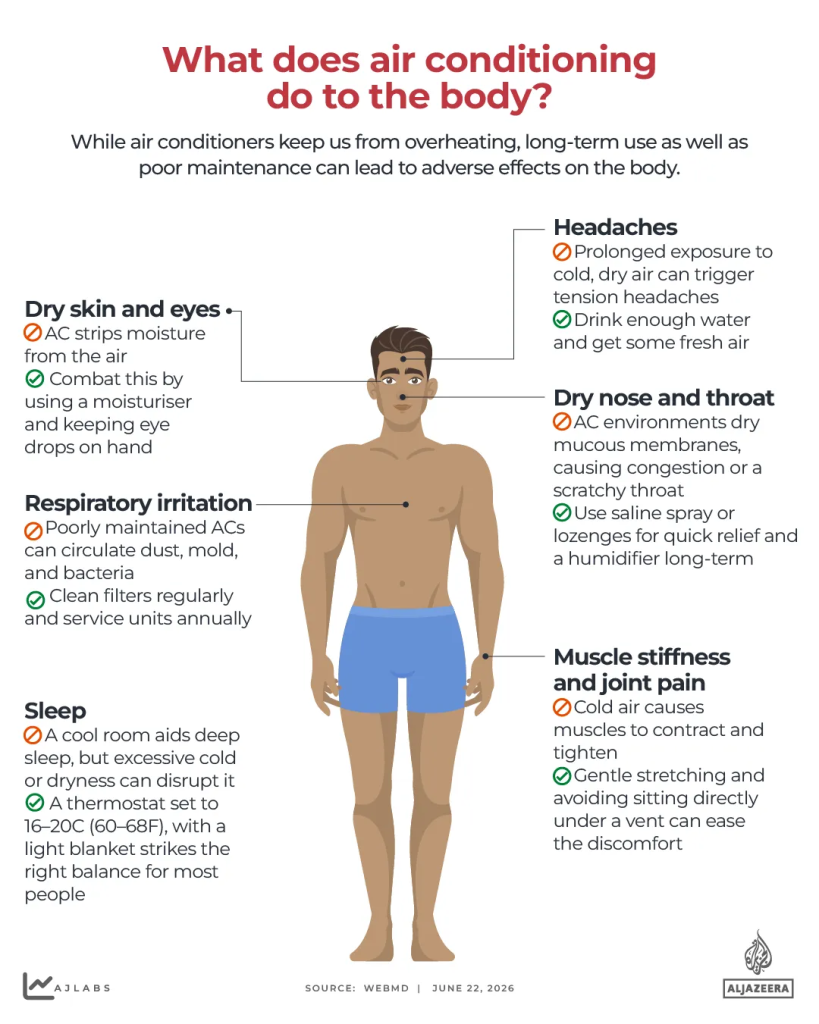
Moreover, medical experts note that prolonged exposure to cold, dry air may trigger headaches, particularly when combined with dehydration. In some cases, poorly maintained systems can circulate dust, mold, or bacteria, which may worsen respiratory conditions such as asthma.
In addition, muscle stiffness is another reported effect, especially when people are exposed directly to cold airflow for long periods. On the other hand, when used correctly, air conditioning can also support better sleep by helping regulate body temperature at night.
Therefore, health specialists recommend simple measures to reduce the negative effects of air conditioning, including staying hydrated, using moisturizers, keeping rooms slightly ventilated, and avoiding prolonged direct exposure to cold air. Regular cleaning of air conditioning filters is also essential to maintain healthy indoor air quality.
Air conditioning continues to play a vital role in helping people cope with extreme heat. However, experts emphasize that responsible use, regular maintenance, and healthy practices are essential to maximize its benefits while minimizing potential health risks.
Courtesy of Al Jazeera