

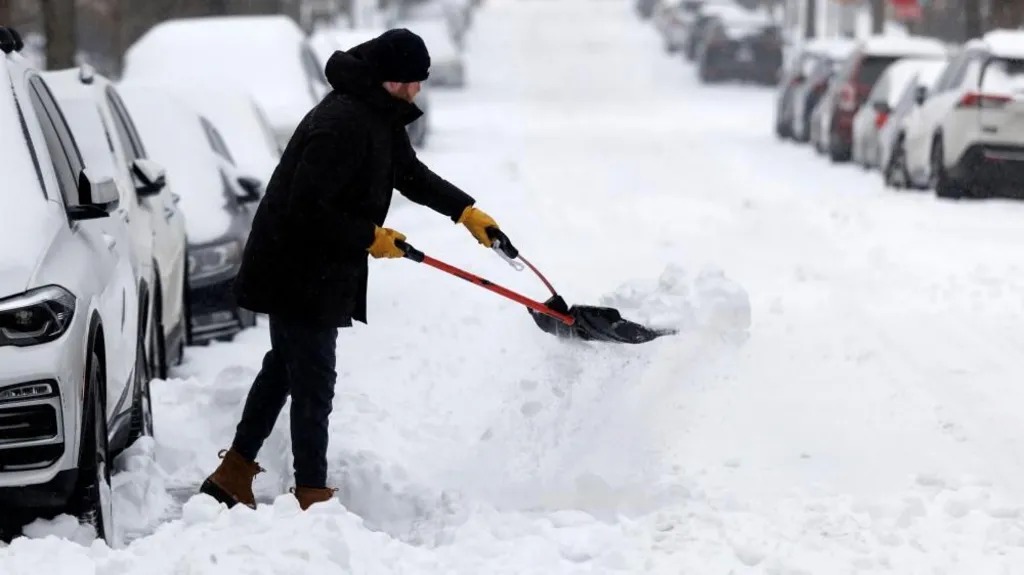
A powerful winter storm has swept across large parts of the United States, leaving at least seven people dead and plunging more than 800,000 households into darkness as extreme cold, snow and ice disrupt daily life from Texas to New England. Authorities have described the conditions as life-threatening, with widespread school closures, dangerous roads and thousands of cancelled flights highlighting the scale of the emergency.
According to officials, at least two people died from hypothermia in Louisiana, while other storm-related deaths have been reported in Texas, Tennessee and Kansas. In New York City, Mayor Zohran Mamdani said at least five people died over the weekend, though the exact causes were still under investigation, warning that the severe cold remains a deadly threat for vulnerable residents.
The National Weather Service (NWS) said heavy snow, sleet and freezing rain could persist for several days, affecting around 180 million Americans, more than half of the country’s population. As of Sunday afternoon, the power tracking site poweroutage.us reported that over 800,000 homes were without electricity, while FlightAware said more than 11,000 flights had been cancelled nationwide.
Meteorologists warn that ice poses one of the greatest dangers, with freezing rain capable of snapping trees, bringing down power lines and turning roads into skating rinks. Hundreds of traffic accidents have already been reported in states such as Virginia and Kentucky, while emergency services struggle to respond under hazardous conditions.
New York Governor Kathy Hochul urged residents to stay indoors, describing the storm as the coldest and most severe the state has seen in years. “It is bone-chilling, and it is dangerous,” she said, adding that the prolonged cold could bring the longest freezing stretch and highest snowfall in a decade. Similar warnings were echoed by officials in Washington DC, where Mayor Muriel Bowser declared a state of emergency as the capital faced its biggest snowstorm in ten years.
Weather experts say the storm was driven by a weakening polar vortex, which allowed frigid Arctic air to plunge southward and collide with warmer air, fueling intense winter weather. While the system is expected to move eastward by midweek, forecasters warn that dangerously low temperatures could linger into early February.
With nearly half of US states declaring emergencies, authorities continue to urge caution, stressing that the slow melt of snow and ice could delay recovery efforts and prolong disruptions well into the coming days.
Source : BBC News