

As the world prepares to celebrate the International Day of Forests this Saturday, the focus will be on the theme ‘Forests and Economies,’ highlighting the vital role forests play in supporting sustainable growth and livelihoods. The day was initiated by the Food and Agriculture Organization (FAO) in the late 1970s, and the United Nations General Assembly later adopted a resolution on 21 December 2012, officially declaring 21 March as the International Day of Forests.
Every year, governments, institutions, and communities organize various activities, including tree-planting campaigns and public awareness events. While these efforts are important, they often mask a more uncomfortable reality: forests continue to disappear at a pace that outstrips restoration.
According to the Convention on Biological Diversity report of 2018, Forests provide shelter, jobs, and security for forest-dependent communities, with 1.6 billion people relying on forest resources for their livelihoods, often using trees on farms to generate food and income.
Furthermore, this report highlights that forests are among the most critical natural systems on Earth, regulating the climate, stabilizing ecosystems, and sustaining biodiversity. They cover about 30% of the planet’s land, contain 80% of terrestrial biomass, and provide habitat for more than half of all known land plants and animals. Although the global rate of forest loss has slowed in recent decades, it remains a serious concern, as destruction continues in areas of particularly high ecological value.

The Rwanda Forestry Authority’s 2023 report shows that forests in Rwanda now cover approximately 724,695 hectares, representing 30.4% of the country’s total land area. Of this, 387,425 hectares (53.5%) are plantations, 130,850 hectares (18.1%) are natural mountain rainforests, 161,843 hectares (22.3%) are wooded savannah, and 43,963 hectares (6.1%) are shrubs.

In Africa, forests are vital to people’s everyday lives. For many rural communities, they provide fuel, food, medicine, and income. At the same time, forests protect water sources and keep the soil healthy, showing just how essential they are both for people and the environment.
However, these benefits are increasingly under threat across the globe, as expanding agriculture, urbanization, and infrastructure development continue to drive deforestation. Although this expansion is often presented as necessary for economic growth, its long-term consequences, meanwhile, raise serious concerns.
The loss of forests weakens climate resilience, disrupts rainfall patterns, and accelerates land degradation. It also places additional pressure on already vulnerable communities, particularly in regions where agriculture depends heavily on stable environmental conditions.
From a policy perspective, the challenge lies in balancing development with conservation. While many countries have adopted environmental protection frameworks, enforcement remains inconsistent. Illegal logging, land encroachment, and unsustainable land use practices persist, often due to limited oversight and competing economic priorities.
Forests sustain communities and local economies. Supporting sustainable farming, alternative energy, and community-led conservation can help protect these vital resources for the people who rely on them.
The role of young people and civil society cannot be overlooked. Across the continent, youth-led initiatives are increasingly shaping environmental discourse, raising awareness, and holding institutions accountable. Their involvement signals a shift toward more inclusive and participatory approaches to conservation.
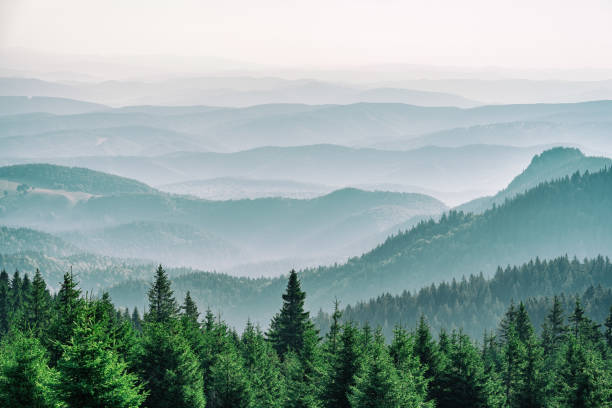
People around the world are being urged to play an active role in forest protection by supporting conservation initiatives, using natural resources responsibly, and keeping environmental issues in focus beyond international observance
World Forest Day is a time to celebrate forests and assess whether current efforts are sufficient to protect them. The day highlights the need for governments, communities, and individuals to take meaningful, ongoing action to ensure forests remain healthy and resilient