

Rwanda is taking significant steps towards cleaner cooking as households and communities shift from firewood and charcoal to Liquefied Petroleum Gas (LPG). Experts say this transition can reduce indoor smoke, cut harmful emissions, save time and money, and protect forests. By embracing LPG, Rwandans are improving public health while also contributing to the fight against global environmental challenges.
Environmental Researcher Insight: The Health Risks of Traditional Cooking
Dr. Nsanzumukiza Martin Vincent, a lecturer and environmental assessment expert, currently the Director of Research and Consultancy at the University of Lay Adventists of Kigali (UNILAK), says charcoal and firewood are silent killers.
“Indoor measurements in homes using firewood or charcoal showed a 24-hour mean PM₂.₅ around 93 µg/m³, with peaks far above WHO guidelines. Carbon monoxide levels sometimes exceeded 500 ppm, while CO₂ emissions were substantial, particularly from charcoal due to inefficient burning,” he said.
He emphasized that these pollutants pose serious health risks, especially for children under 12 and the elderly, who are more susceptible to respiratory illnesses such as chronic bronchitis and chronic obstructive pulmonary disease. According to Dr. Martin, switching to cleaner fuels like LPG reduces harmful emissions, eases pressure on forests, and contributes to environmental sustainability.

Detailed dangers of the traditional way of cooking
According to the National Institute of Statistics of Rwanda (NISR) EICV7 household survey (2023–2024), the vast majority of Rwandan households still rely on traditional cooking fuels such as firewood and charcoal. Nationally, about 75 percent of households use firewood as their main cooking fuel, while 18.8 percent use charcoal, and only around 5.4 percent rely on gas or biogas.
Dr. Martin added that particulate matter (PM₂.₅), tiny particles that can penetrate deep into the lungs, is released in much higher concentrations from firewood and charcoal stoves due to incomplete burning.
“Studies in Rwandan homes show a 24-hour average PM₂.₅ level of around 93 µg/m³, with peaks far exceeding the WHO guideline of 25 µg/m³ during active cooking,” he explained.
In comparison, LPG stoves emit very low PM₂.₅, often below detectable levels, offering a cleaner alternative for indoor air, and in his words, he mentioned that Carbon monoxide (CO), a toxic gas produced by inefficient combustion, is another major concern.
“Indoor CO levels in homes using biomass average around 35 ppm over 24 hours, with peaks sometimes exceeding 500 ppm, compared to the WHO guideline of 3.5 ppm,” Dr. Martin said.
“By contrast, LPG stoves generate much lower CO emissions due to more complete combustion, although ventilation is still recommended to prevent indoor accumulation.” He Added.
Moreover, He mentioned that Carbon dioxide (CO₂), a greenhouse gas, is also produced when cooking with carbon-based fuels. Firewood emits between 1,560 and 1,620 grams of CO₂ per kilogram, while charcoal releases even more, between 2,155 and 2,567 grams per kilogram, due to inefficient conversion during production.
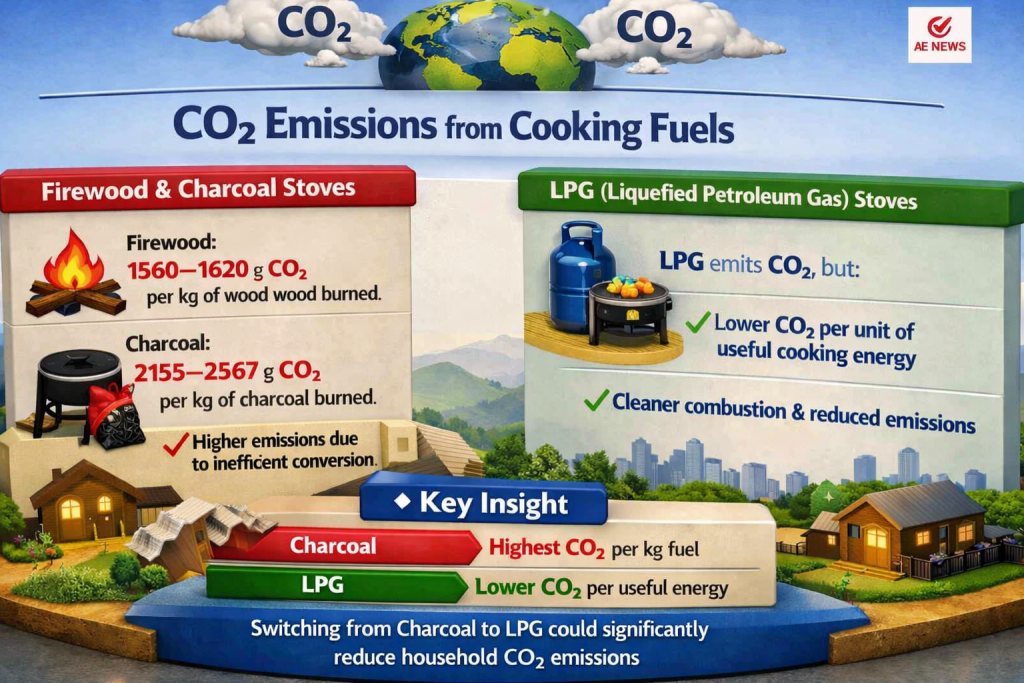
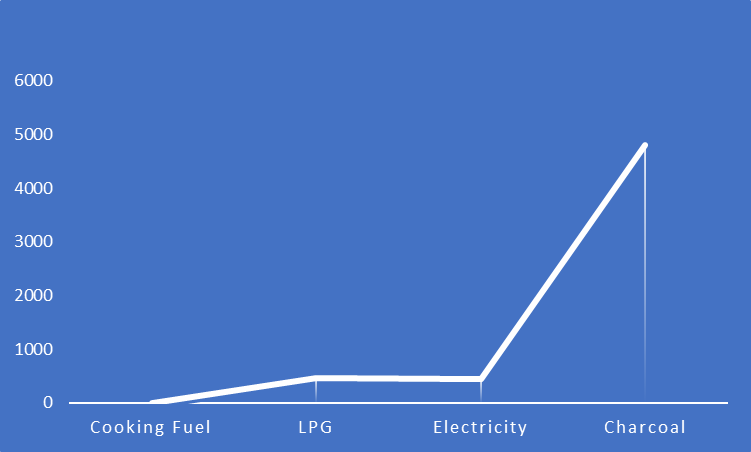
On average, households relying on charcoal generate over 4,800 kilograms of CO₂ per year, more than ten times the emissions produced when cooking solely with LPG or electricity. While LPG still emits CO₂, it produces lower emissions per unit of useful cooking energy because of its higher burning efficiency.
Impact on Health and the Environment
Smoke from charcoal and firewood significantly affects indoor air quality, particularly in poorly ventilated kitchens. Children under 12 and elderly individuals are the most vulnerable, as they spend more time near cooking areas. Exposure to high levels of PM₂.₅ and CO can lead to chronic respiratory diseases, including chronic obstructive pulmonary disease, chronic bronchitis, and persistent coughing and wheezing.
Beyond health impacts, widespread reliance on biomass fuels contributes to deforestation and accelerates climate change, underscoring the environmental consequences of traditional cooking methods.
PM₂.₅ are tiny airborne particles small enough to penetrate deep into the lungs, produced by firewood, charcoal, and smoke. High exposure can cause respiratory and heart diseases, making the switch to cleaner fuels like LPG essential for healthier homes and improved air quality in Rwanda.
LPG: A Cleaner Alternative
Dr. Martin emphasized that switching to LPG can drastically reduce household emissions while improving indoor air quality. In Rwanda, cooking with LPG produces around 468.5 kilograms of CO₂ per year per household, slightly higher than electricity at 449 kilograms, but vastly lower than charcoal, which reaches 4,802.5 kilograms per year.
He emphasized that the transition to LPG not only mitigates indoor pollution but also lowers greenhouse gas emissions, reduces deforestation, and supports better public health outcomes.
By adopting cleaner fuels like LPG, Rwandan households can significantly cut exposure to harmful pollutants, reduce their carbon footprint, and contribute to a healthier, more sustainable environment.
Pulmonologist Dr. Sibomana from King Faisal Hospital Explains Cooking Fuel Health Risks
Dr. Sibomana J. Pierre, an expert in Pulmonology (Respiratory Disease Department) at King Faisal Hospital, Rwanda, has shared insights on the health risks of household cooking fuels, emphasizing both public awareness and environmental protection.
Understanding Biomass Fuel and Health Risks
Dr. Sibomana explained that biomass fuels include both solid and liquid types used in cooking. He noted that both charcoal and gas pose health risks, though charcoal carries a higher risk, while gas (specifically LPG used in Rwanda) carries a moderate risk. The lowest-risk options include green energy solutions such as electricity.
The differences in health risks arise from the combustion by-products. Charcoal and gas produce distinct emissions, with charcoal generating higher levels of black carbon and ultrafine particles (PM2.5), while gas produces higher levels of nitric oxide. Proper ventilation is crucial to mitigate indoor air pollution, and tools like Rwanda’s Rema air quality monitoring system can help households assess outdoor air quality before opening windows.

“Burning is burning, whether you burn gas or charcoal, because there’s always an end product of combustion,” Dr. Sibomana stated.
Health Implications of Gas and Charcoal
Charcoal releases black carbon and PM2.5, contributing to chronic diseases such as COPD, bronchitis, emphysema, cardiovascular disease, and cancers. Gas produces moderate risks, mainly from nitric oxide, which can trigger asthma exacerbations.
Indoor air pollution is a concern regardless of the fuel type. Proper ventilation and monitoring of air quality remain essential to reduce health risks.
Clinical Evidence in Rwanda
Spirometric studies have found features of small lung syndrome in the population who actually have no symptoms and are likely linked to childhood exposure to dust and cooking fumes, among other risk factors not investigated. Long-term exposure to these emissions can result in COPD, asthma exacerbations, cancers, pneumonia, and tuberculosis. Reduced immunity from pollution exposure increases susceptibility to infections.
Spirometric studies measure how much air a person can breathe in and breathe out, and how fast. They reveal hidden lung problems and show the long-term impact of pollutants like smoke from firewood and charcoal on respiratory health.
Recommendations: Awareness and Safer Alternatives
Dr. Sibomana stresses switching from charcoal to gas, and where possible, electricity, as the safest cooking option. Public education campaigns are crucial to increase awareness and encourage safer cooking practices.
“Awareness is more important because from awareness, the population can move to the best option they can afford,” he added.
Environmental Considerations
Charcoal use contributes to deforestation and environmental pollution. Reducing charcoal consumption protects forests, improves air quality, and promotes sustainable practices. Collective efforts at the community and national levels are essential since emissions from neighbors can affect everyone.
“If your neighbor is cooking and using wood, these fumes will come back to you. So, it should be a collective effort,” he emphasized.
Dr. Sibomana’s message underscores the importance of reducing exposure to harmful emissions, raising public awareness, and prioritizing safer cooking fuels for both health and environmental benefits.
Practical Benefits: Faster Cooking and Cost Savings
The advantages of LPG extend beyond health benefits. At ES Ruhango, Head Teacher Jean Claude Munyaneza described the improvements after adopting the gas system.

“Before adopting the smart LPG system, the school used more than 350 steres of firewood per term, spending over 8 million Rwandan Francs at times due to fluctuating prices. After switching to LPG, costs dropped to around 4,580,000 Rwf per term, and firewood use fell from 400 steres to just over 100,” he said.
Munyaneza added that cooking with LPG reduces the effort for cooks, as igniting firewood is replaced by simply adjusting a regulator. Consequently, kitchens have become cleaner and more hygienic, while exposure to smoke has decreased, improving overall well-being.
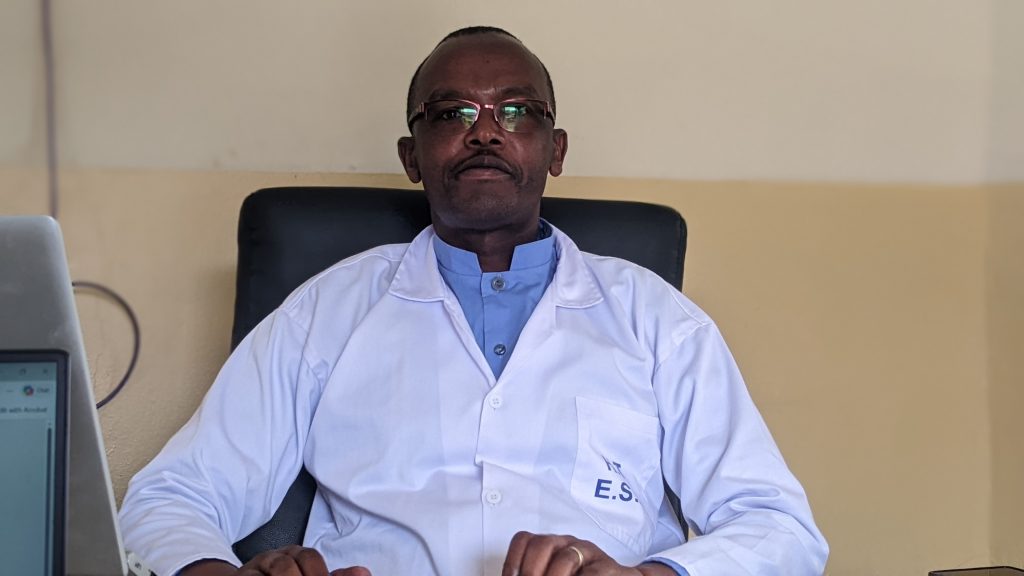
He noted that while some dishes may still require firewood due to high cooking intensity, LPG has overall led to a significant reduction in fuel consumption and expenses, and he praised REMA for the Green Amayaga Project.
Gakuru Callixte, a cook at ES Ruhango, said switching to LPG has sped up meal preparation and improved kitchen hygiene by reducing smoke exposure.

“Some meals used to take almost four hours using firewood, but with LPG it only takes about one hour and 30 minutes,” Gakuru said.
A Global Perspective on Household Air Pollution
The issue is not unique to Rwanda. According to the World Health Organization (WHO), around 2.1 billion people worldwide still rely on solid fuels such as wood, charcoal, and dung, often using inefficient stoves that release fine particles harmful to health. Indoor smoke levels can reach up to 100 times higher than safe limits, particularly affecting women and children who spend the most time near cooking areas. WHO notes that transitioning to clean fuels such as LPG is a critical step in reducing household air pollution and protecting public health globally.
REMA’s Role: Policy in Action
According to REMA’s report, on May 3, 2023, Liquefied Petroleum Gas (LPG) was introduced for bulk cooking in schools and institutions across Kamonyi, Nyanza, Ruhango, and Gisagara districts under the Green Amayaga Project. The initiative included LPG equipment and 20 tons of gas, one ton per school.
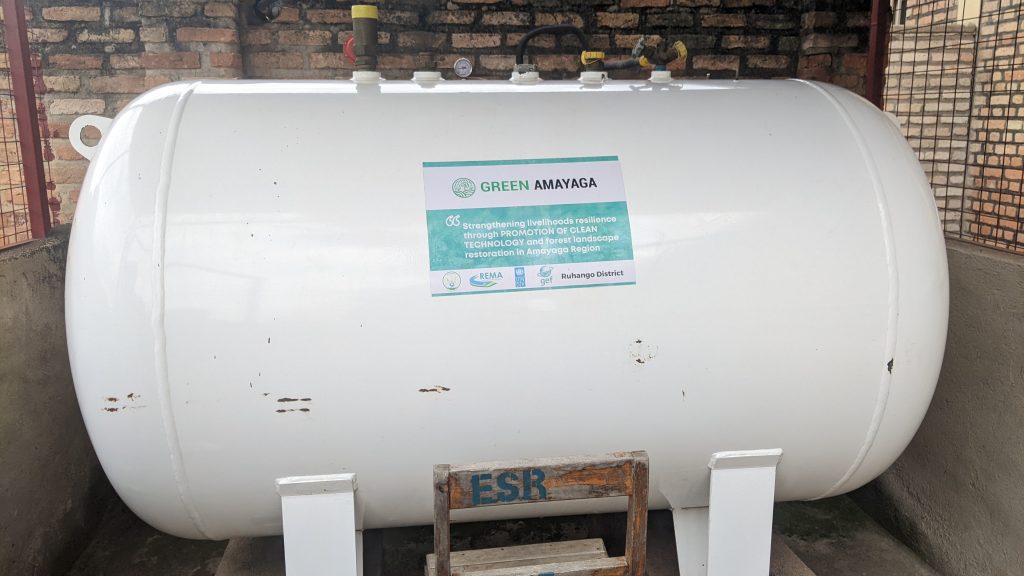
REMA states that the program aimed to reduce reliance on firewood, lower emissions, protect forests, enhance climate resilience, improve health outcomes, and cut cooking costs. The Green Amayaga Project demonstrates how well-planned policies can deliver practical and tangible benefits to communities and the environment.
According to Remy Songa, the Green Amayaga Coordinator, “The initiative supplied LPG gas systems to the five schools to reduce reliance on firewood in Ruhango only,” and he added that about 3,100 households received improved cookstoves that use less fuel when preparing meals.
“Even in areas where the project did not directly operate, trained beneficiaries of Green Amayaga are helping extend its impact by promoting environmental protection, contributing to greener and more climate-resilient communities,” Songa noted.
He also explained that at the beginning of the project, community members were trained in planting and protecting trees to ensure long-term sustainability. “The initiative helps prevent soil erosion and supports the absorption of carbon dioxide, contributing to efforts to reduce air pollution,” he added.
Resident Perspective
Emmanuel Jyamubandi, a resident of Gahanga Sector, Kicukiro District, said he previously spent over Frw 18,000 per month on charcoal. He now spends about Frw 11,800 on 6kg of gas and approximately Frw 2,000 on charcoal for special meals.

“Switching to gas has reduced my household expenses, eliminated indoor air pollution, and improved the cleanliness of my kitchen,” Emmanuel noted.
The shift from firewood and charcoal to LPG and other sustainable, environmentally friendly cooking fuels is proving to be a game-changer for air quality in Rwandan homes. By cutting emissions of particulate matter, carbon monoxide, and carbon dioxide, LPG significantly reduces indoor air pollution and the associated health risks. Beyond improving public health, this transition also lowers the country’s overall carbon footprint, showing that cleaner cooking fuels deliver both environmental and societal benefits. As more households adopt these friendly cooking solutions, Rwanda moves closer to a future of healthier communities and cleaner air.