
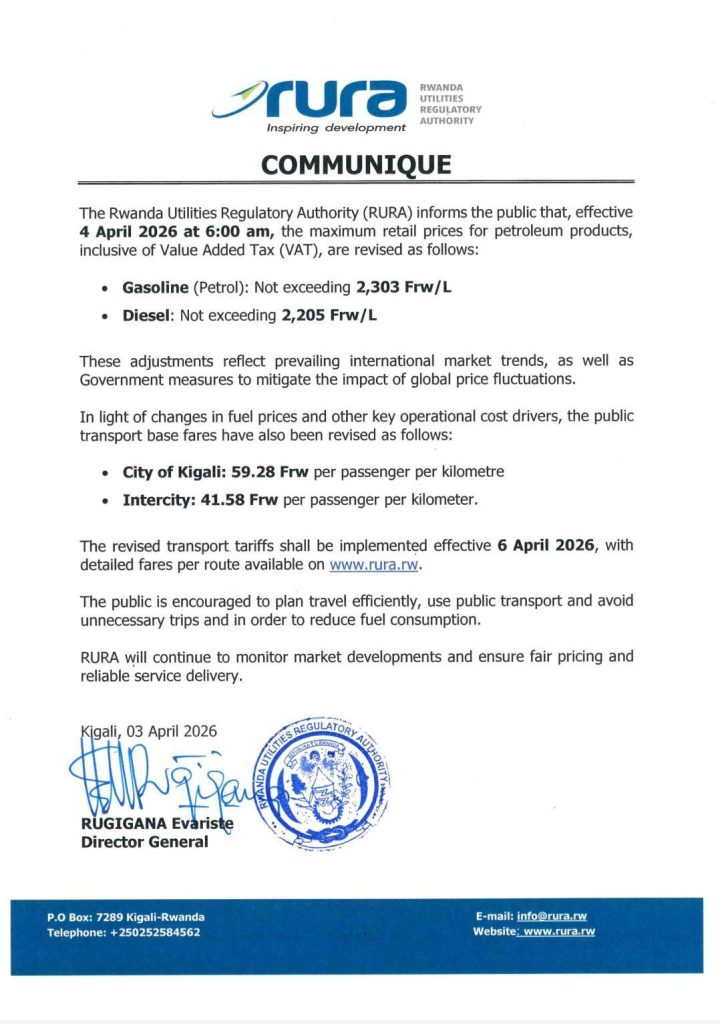
The Rwanda Utilities Regulatory Authority (RURA) has announced new fuel prices, where the price of petrol has reached 2,303 RWF per liter, an increase of 314 RWF, while diesel has risen to 2,205 RWF per liter, an increase of 257 RWF.
A statement released on April 3, 2026, indicates that the new prices will take effect starting April 4 at 12:00 AM.
It states: “Rwandans are encouraged to plan their journeys carefully, use public transportation where possible, and avoid unnecessary travel in order to reduce fuel consumption.”
RURA also announced that the changes in fuel prices have led to an adjustment in base public transport fares. These new fares will come into effect on April 6, 2026.
In the Kigali, passengers will pay 59.28 RWF per kilometer, while those traveling to provinces will pay 41.58 RWF per kilometer.
As of April 3, 2026, the price of crude oil on the international market had reached $112.4 per barrel.
The ongoing conflict involving the United States, Israel, and Iran, which has now lasted a month, has led to the closure of the Strait of Hormuz, through which 20% of the world’s daily oil supply passes.
Iran claims it has the right to control the Strait of Hormuz and has deployed missiles, drones, and other weapons there, effectively determining which ships can pass while blocking others.
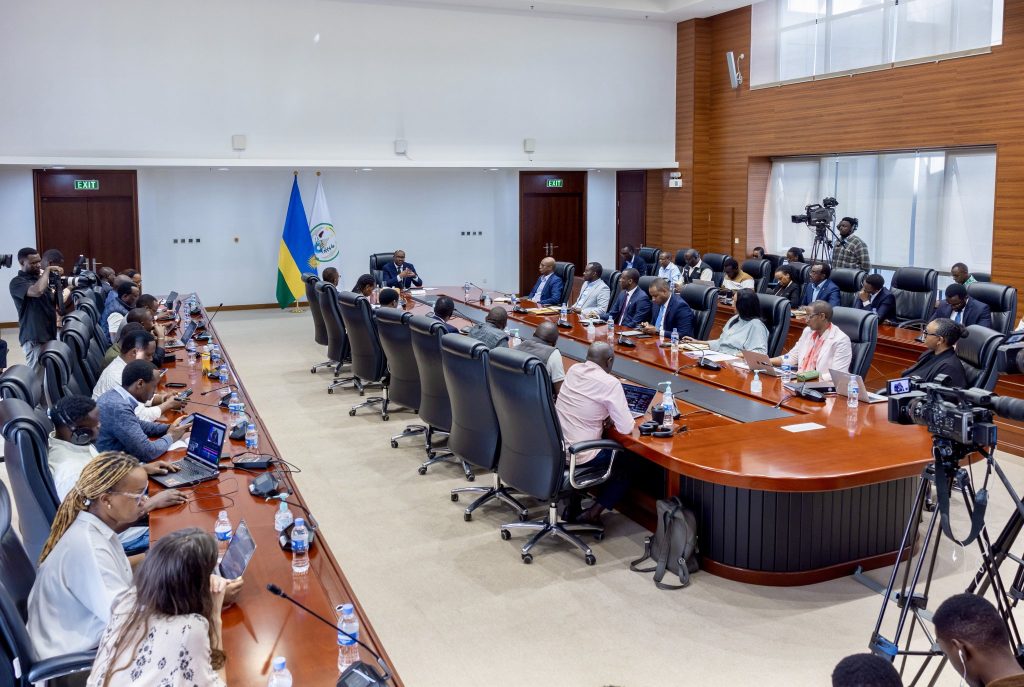
On April 3, 2026, Prime Minister Justin Nsengiyumva told journalists that the situation is impacting Rwanda’s economy.
He said: “This issue is affecting international trade, especially in energy and transportation, and has already caused noticeable effects on prices on the global market, particularly fuel and gas.”
He explained that for Rwanda, the conflict is affecting exports, as some routes have been disrupted, including those to the United Arab Emirates.

Another impact concerns imports, as rising prices on the international market are inevitably leading to increased prices within Rwanda.
He added: “These are the impacts we are observing that may affect our country’s economy. It is expected that global economic growth will decline from 3.3% to 2.7%. It will also impact inflation in Rwanda, meaning it will affect nearly every Rwandan. We must prepare ourselves without panicking.”
RURA confirmed that the new fuel prices were set based on changes in the international oil market, as well as measures taken by the Government of Rwanda to mitigate the effects of ongoing global price fluctuations.