
The 2026 Formula 1 season marks one of the most transformative moments in the sport’s modern history. With sweeping regulation changes, new manufacturers entering the grid and a redesigned race calendar, the championship begins a bold new chapter at the season-opening Australian Grand Prix in Melbourne from 6–8 March.
From radical power unit changes to the arrival of an 11th team, this year represents far more than a routine reset; it is a structural shift in how Formula 1 cars are built, raced and managed.
Radical New Regulations Reshape the Cars
The most significant change comes in the technical rulebook. For 2026, Formula 1 introduces completely new power units, chassis regulations, tyres and fuel specifications. The new engines operate on a near 50-50 split between electric energy and traditional internal combustion power, running on fully sustainable fuels as the sport accelerates its environmental ambitions.
Cars are smaller and lighter, but also more technologically complex. The drag reduction system (DRS) has been removed and replaced with an “overtake mode,” which provides a burst of extra electric energy when a driver is within one second of the car ahead at a detection point.
Active aerodynamics now allow both front and rear wings to adjust angles on straights to reduce drag and increase downforce in corners. During pre-season testing in Bahrain, Ferrari attracted attention with an innovative rotating rear wing design that sparked debate across the paddock.
Reactions from drivers have been mixed. Four-time world champion Max Verstappen described the cars as “like Formula E on steroids” due to the intense energy management demands. Meanwhile, seven-time champion Lewis Hamilton labelled the rules “ridiculously complex,” though he admitted the cars are “more fun” to drive, as reported by BBC Sport.
Lindblad Headlines a New Generation
The 2026 grid features only one rookie: British teenager Arvid Lindblad. At just 18 years old, he partners Liam Lawson at Racing Bulls after a record-breaking Formula 2 campaign.
Lindblad became the youngest race winner in Formula 2 history last year, and he will enter the Australian Grand Prix as one of the youngest drivers ever to start a Formula 1 race, following in the footsteps of Verstappen and others who debuted in their teens.
Spain Hosts Its Own F1 ‘El Clásico’
Spain will host two races this year. Barcelona remains on the calendar with the renamed Barcelona-Catalunya Grand Prix in June, while Madrid debuts a brand-new circuit in September.
The Madring, a 22-corner layout blending public roads and private sections, brings a new dynamic to the European leg of the season. From 2027 onwards, Barcelona will alternate with Belgium’s Spa-Francorchamps until 2032.
Red Bull’s Second Seat Under Pressure Again
Red Bull enters 2026 with French driver Isack Hadjar promoted to partner Verstappen following further instability in the team’s second seat.
Hadjar replaces Yuki Tsunoda after a challenging period for Red Bull’s support drivers. The pressure will be on the 21-year-old to contribute consistently alongside Verstappen, who scored 421 points last season.
Red Bull is also beginning a new technical chapter, producing their own engine for the first time in collaboration with Ford, a significant shift after years of partnership with Honda.
Cadillac and Audi Join the Grid
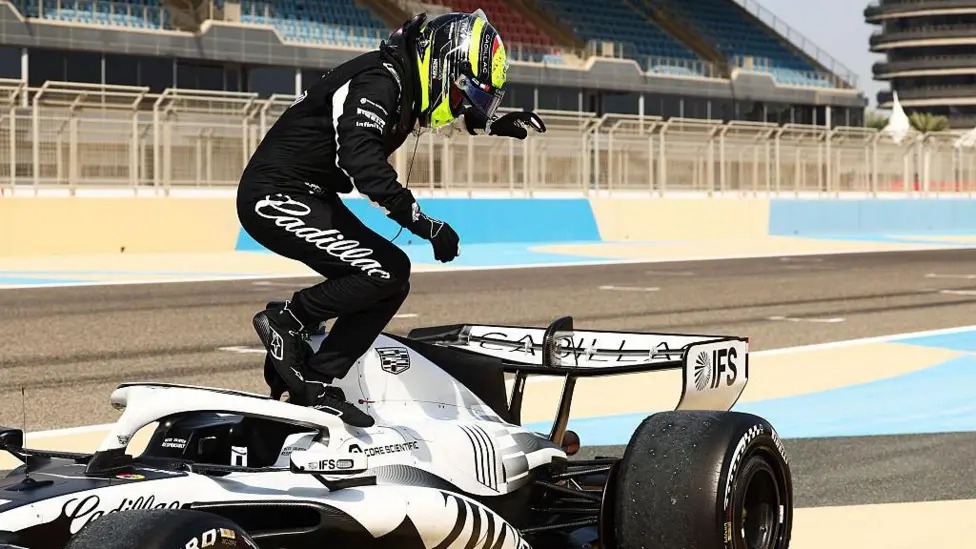
Formula 1 expands to 11 teams in 2026 with the arrival of American outfit Cadillac — the first new start-up entry since Haas in 2016. The team has opted for experience, signing Sergio Perez and Valtteri Bottas, and will use Ferrari power units in its debut season.
German manufacturer Audi also makes its long-awaited entry after acquiring Sauber. Unlike Cadillac, Audi has developed its own in-house power unit, signalling long-term ambition. Early testing suggested midfield competitiveness could be within reach.
Aston Martin’s Honda Partnership Begins
Aston Martin start their works relationship with Honda in 2026, but pre-season testing in Bahrain revealed reliability concerns. Engine issues limited running for both Fernando Alonso and Lance Stroll, raising questions about early-season readiness.
Despite this, Red Bull, Mercedes, Ferrari and McLaren are expected to remain the benchmark teams heading into Melbourne.
Sprint Races and Calendar Changes
Silverstone returns as a sprint race venue for the first time since 2021, joining China, Miami, Canada, Zandvoort and Singapore in hosting the shorter format.
However, 2026 marks the final season for the Dutch Grand Prix at Zandvoort following its successful comeback in 2021. Financial challenges have led to its departure from the calendar.
A Season of Uncertainty
With new engines, new aerodynamic systems and expanded energy management demands, the 2026 campaign begins with more unknowns than usual. Teams face a steep learning curve, and early-season form could be volatile as reliability and strategy evolve.
For fans, the changes promise unpredictability. For teams and drivers, the margin for error has narrowed.The lights go out in Melbourne on 8 March, and Formula 1’s new era officially begins.