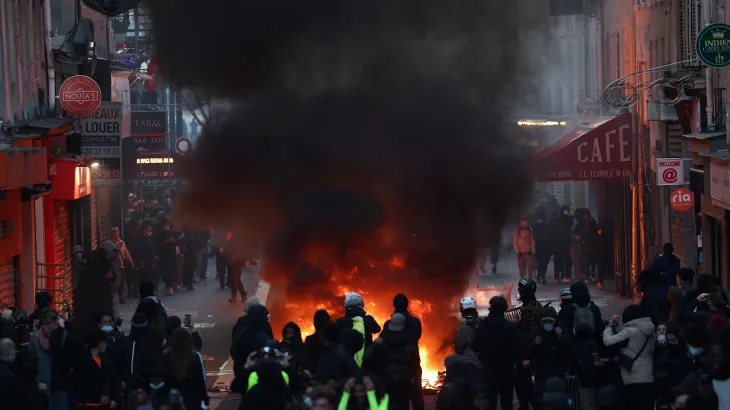

The demonstrations took place on Saturday, October 17, attracting an estimated 550,000 people, according to France’s Interior Ministry, while organisers put the turnout at approximately 800,000 nationwide. In Paris alone, authorities estimated that 110,000 people joined the main march.
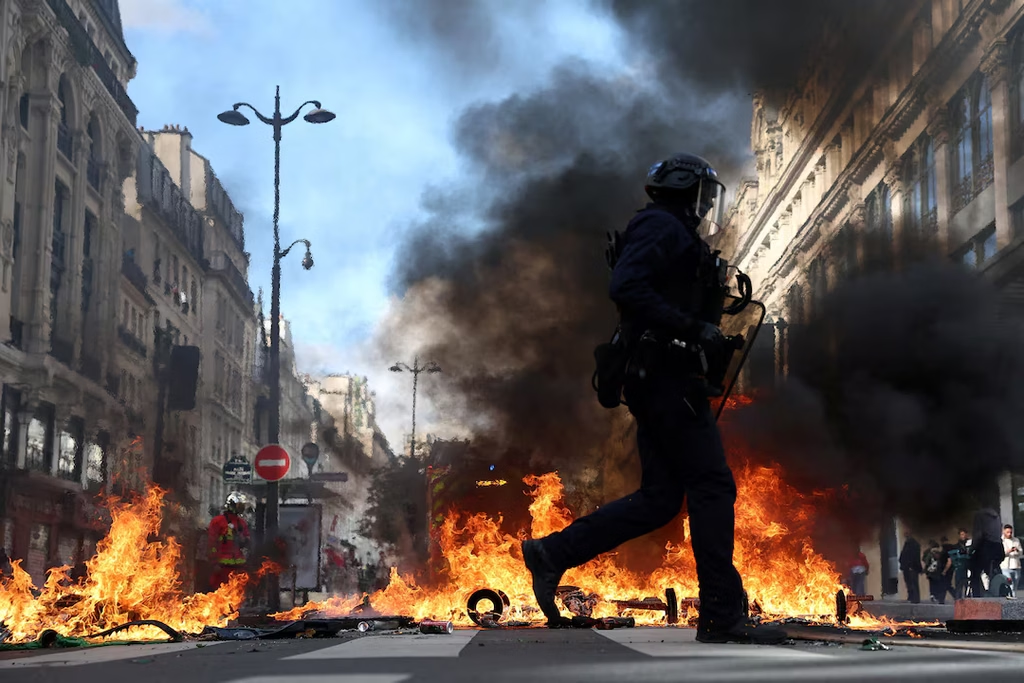
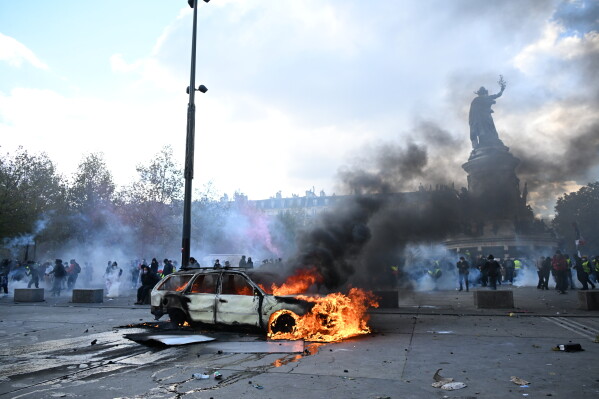
The unrest left hundreds of businesses damaged, public buildings vandalised and security forces injured. By Sunday, October 18, French authorities had reported approximately 2,000 arrests and around 600 injured police officers, gendarmes and firefighters, although the figures remained provisional.
The protests initially emerged among students in September, who demanded better school facilities, more teachers and increased investment in education. The movement subsequently expanded, drawing trade unions and supporters of the Yellow Vest movement, which began in 2018 over fuel taxes and the rising cost of living.
Demonstrators have also expressed frustration over inflation, economic inequality and proposed public spending cuts, adding to pressure on President Emmanuel Macron’s government ahead of France’s 2027 presidential election.
Violence spread across several cities, including Paris, Marseille, Lyon, Bordeaux and Limoges. In Limoges, a historic town hall was largely destroyed by fire, while protesters briefly forced their way into Marseille’s city hall. In Lyon, a fire broke out at a tourist office, and shops and other public facilities were damaged in several locations.
In Paris, police used tear gas and water cannon to disperse groups of masked protesters who threw projectiles and fireworks at officers around Place de la République. Police reported 855 arrests in the Paris region, while the wider national arrest total continued to rise as authorities assessed the damage.
French President Emmanuel Macron condemned the violence and pledged that those responsible for looting and attacks on public buildings would be prosecuted. Prime Minister Sébastien Lecornu and Interior Minister Laurent Nuñez blamed radical groups and criminal elements for some of the destruction, while opposition politicians criticised the government’s handling of the crisis.
The scale of the demonstrations has raised fresh concerns about France’s social and economic tensions, with local authorities calling for emergency support to repair damaged public facilities and businesses.
The government now faces the challenge of restoring order while responding to demands over living costs, education and public services. With the presidential election approaching in 2027, the protests could become a major test of public confidence in France’s political leadership.