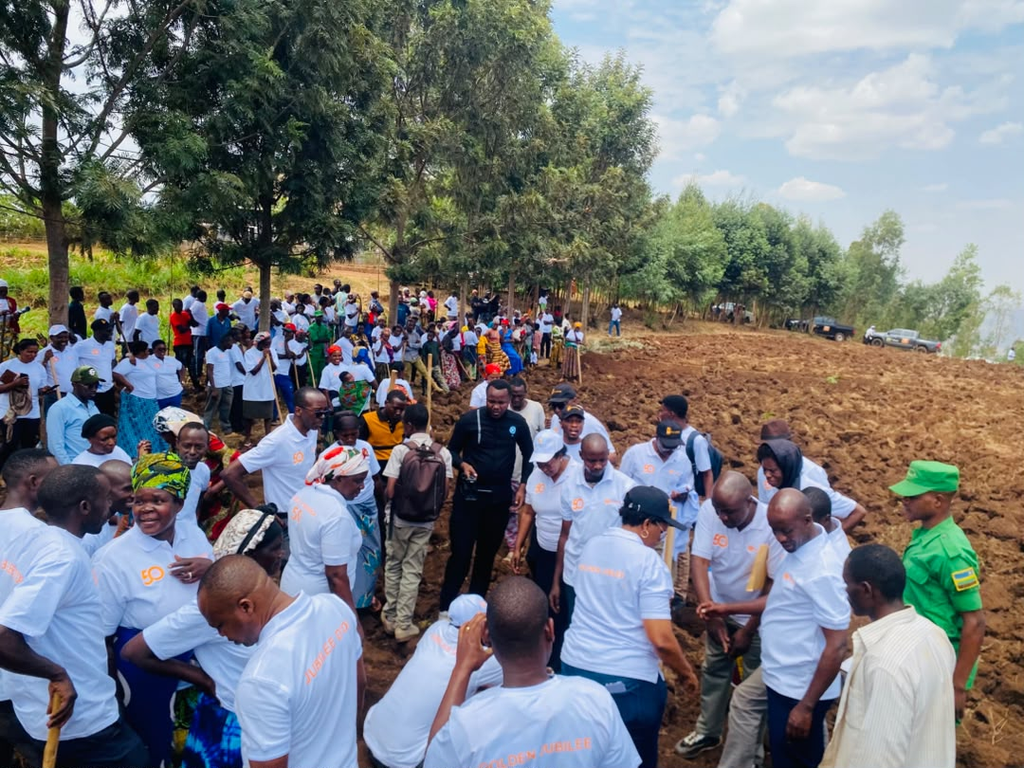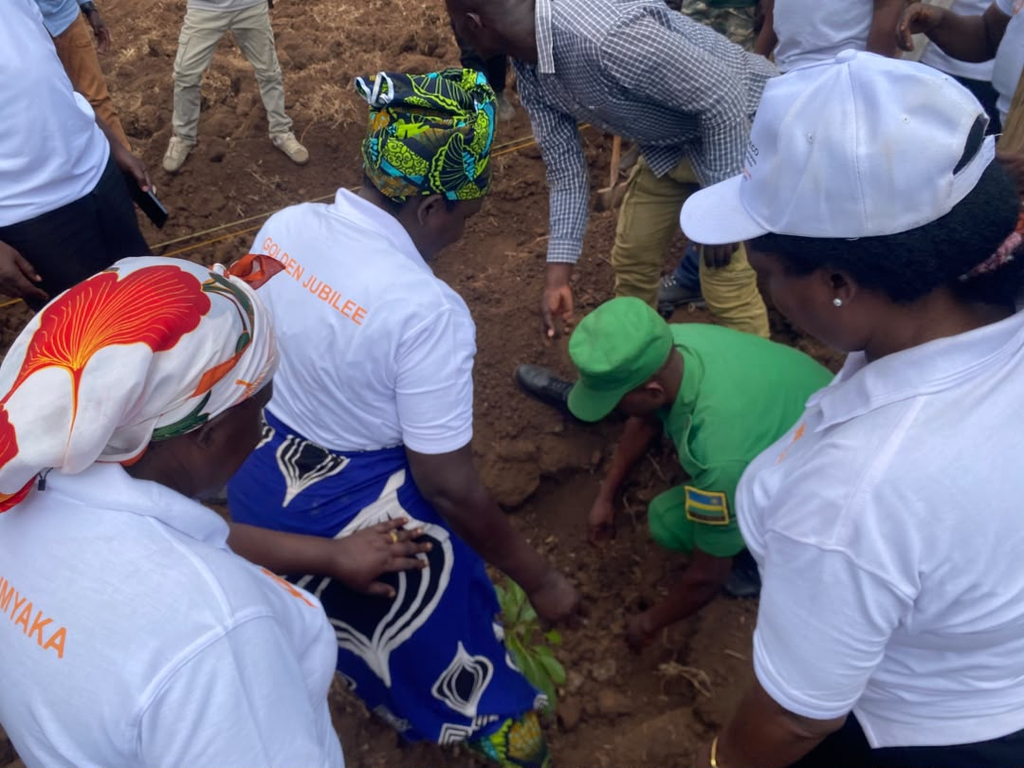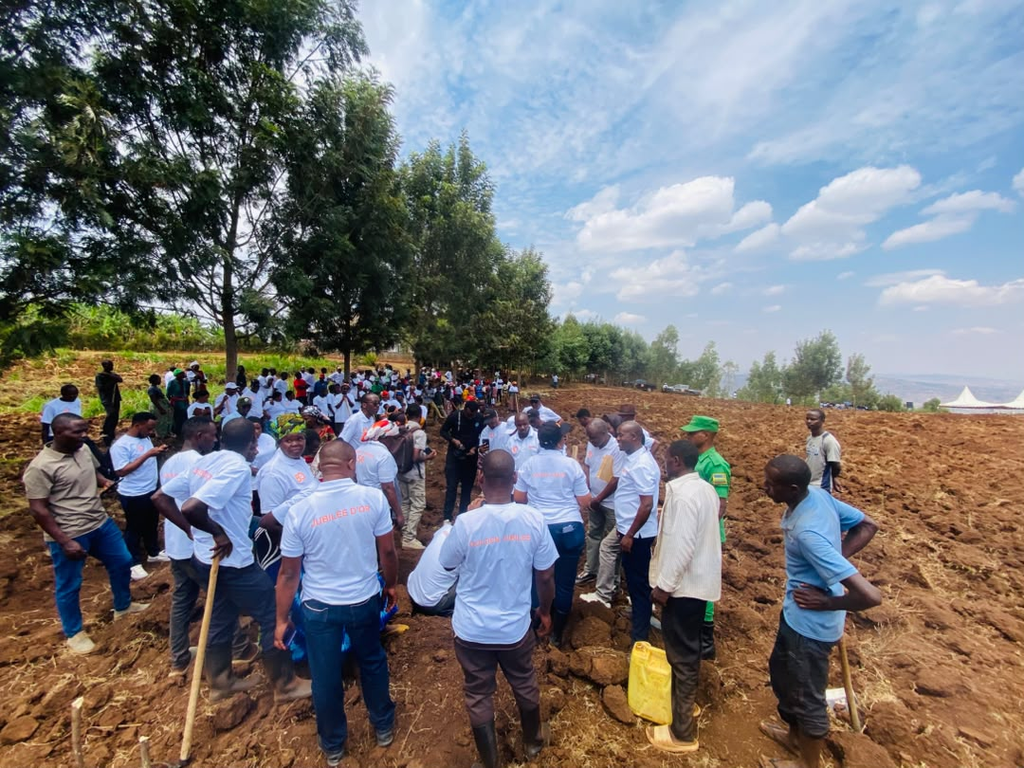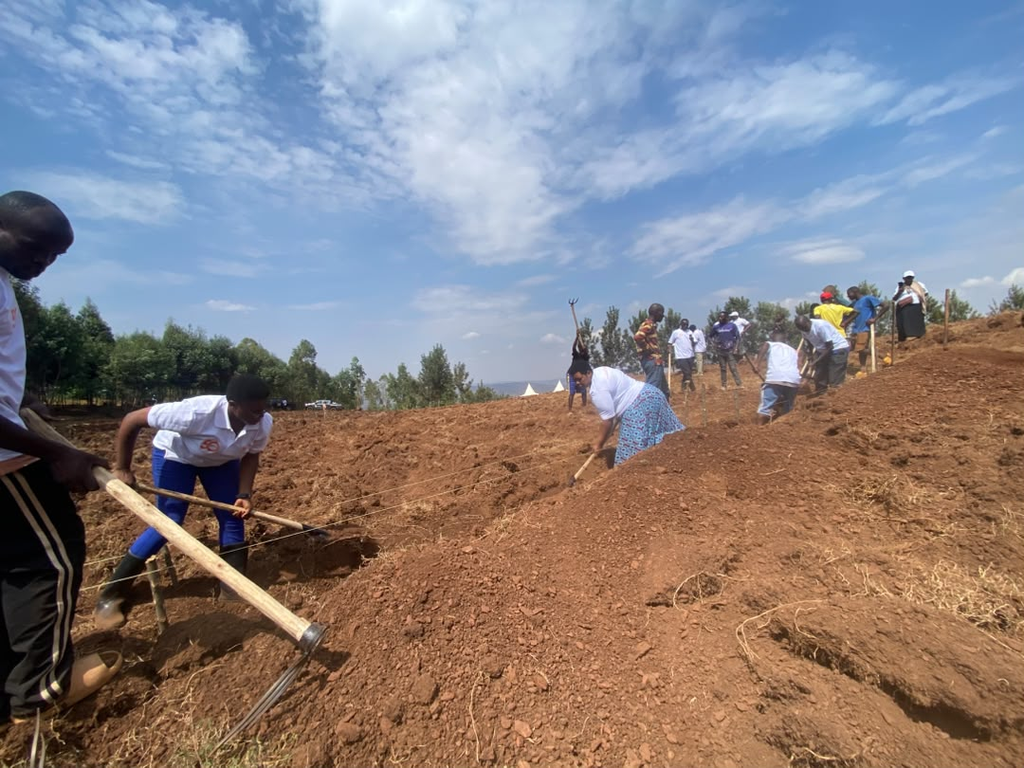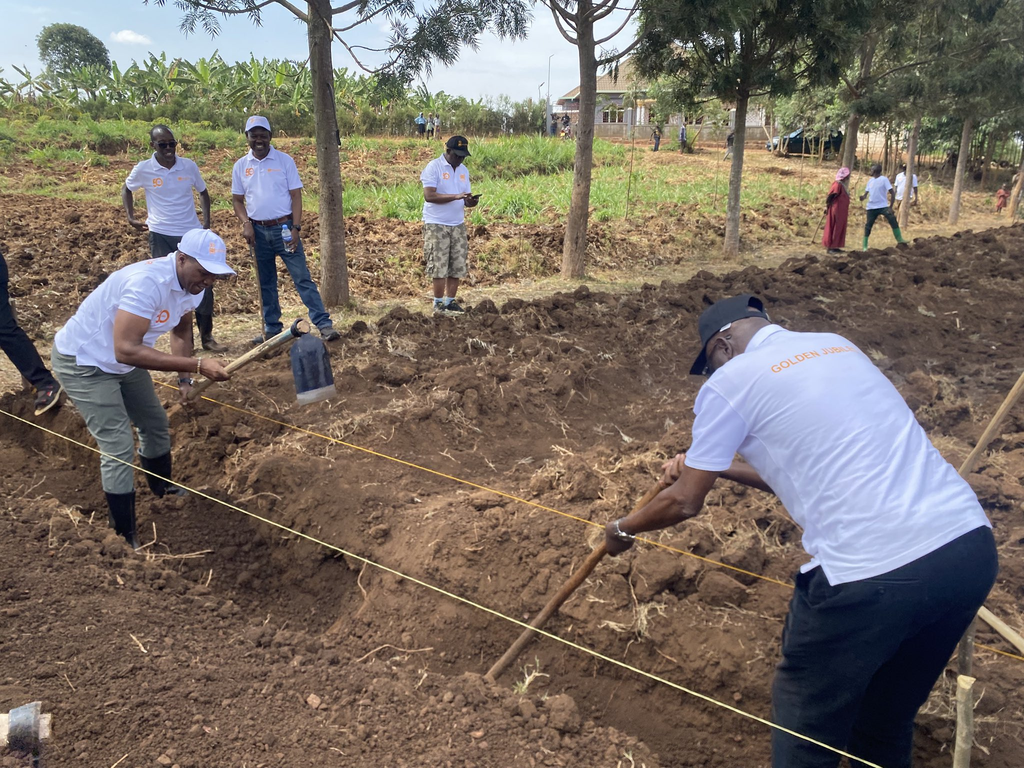
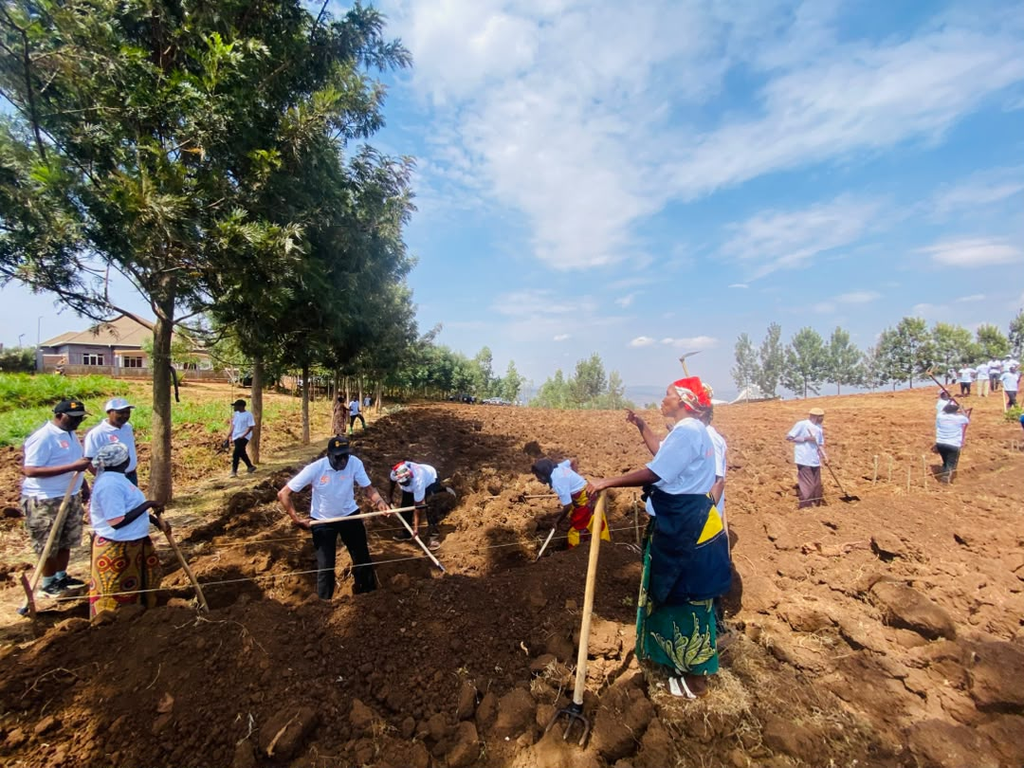

As part of preliminary activities ahead of its 50th Golden Jubilee celebration, the non-governmental organization African Institute for Economic and Social Development (INADES)-Formation Rwanda has brought together farmers, local authorities, residents and partners in Gahengeri Sector, Rwamagana District, Rwanda’s Eastern Province, to promote sustainable agriculture and reflect on its contribution to communities over the past five decades.
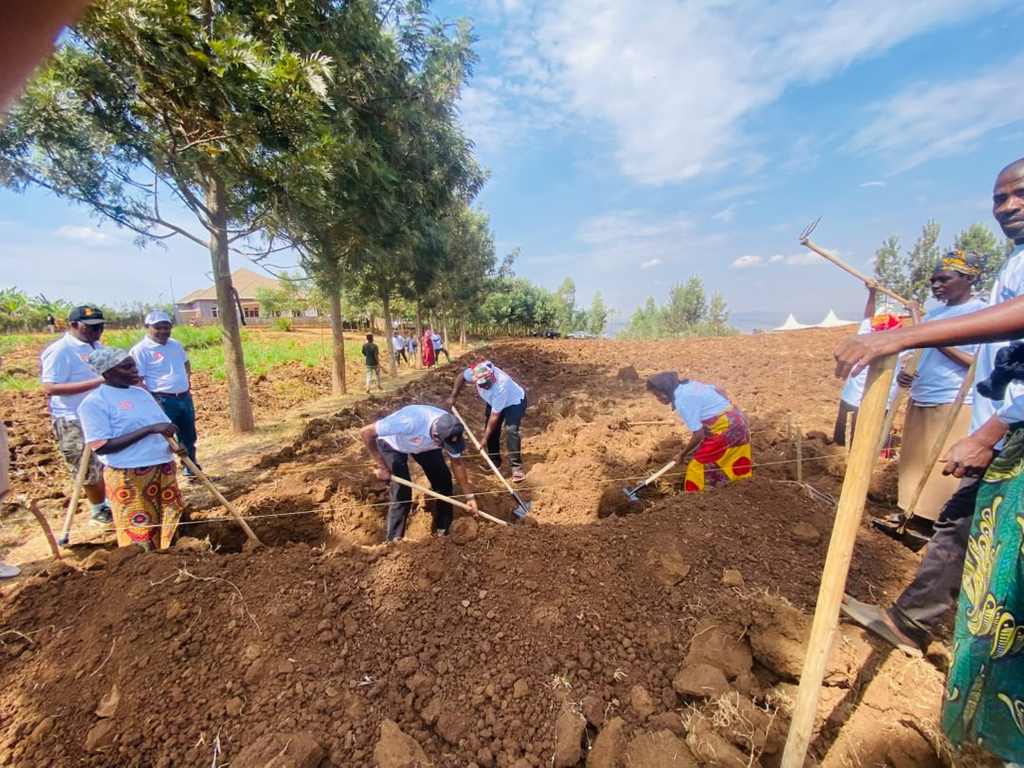
The activities featured initiatives to promote sustainable agriculture and prepare for the 2027A farming season. They form part of programmes being conducted ahead of INADES-Formation Rwanda’s 50th Golden Jubilee celebration on August 28, including the launch of an INADES-Formation Rwanda Farmer Field School (FFS), aligned with the 2025–2040 vision of INADES-Formation International, training on sustainable land and soil management, and practical demonstrations on the production and use of Bokashi organic fertilizer.
Désiré Bimenyimana, Country Director of INADES-Formation Rwanda, said the demonstration farm is intended to equip farmers with practical skills to prepare their land ahead of the rainy season, including terrace construction and improved soil management.
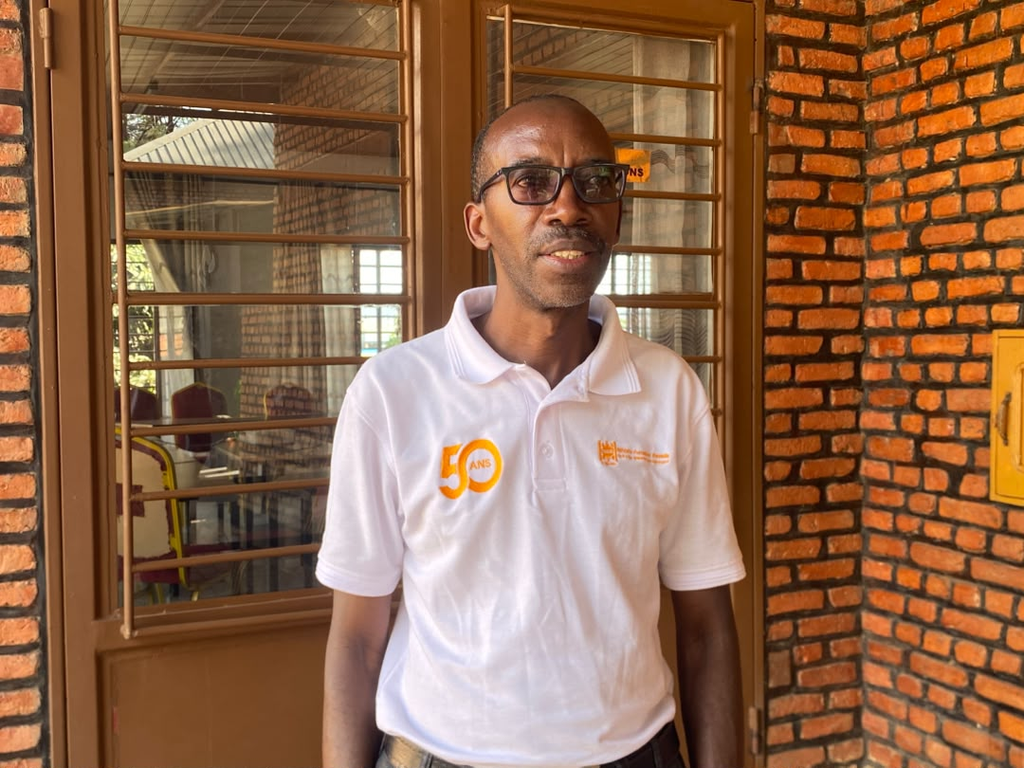
“We want farmers to be prepared before the rainy season by putting in place measures such as terraces and other soil conservation practices,” Bimenyimana said.
Bokashi promotes locally available solutions
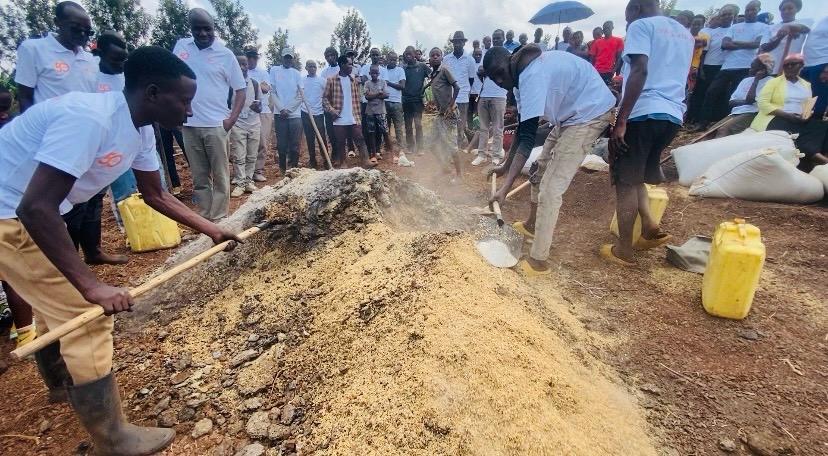
One of the key practices demonstrated was Bokashi, an organic fertilizer made through the fermentation of locally available materials. During the demonstration, a facilitator used banana juice, rice husks, water, poultry manure, and ash to prepare the fertilizer, emphasizing the importance of mixing the materials thoroughly and removing any unwanted waste before preparation.
The practice shows farmers how locally available materials can be turned into organic manure, helping reduce reliance on industrial fertilizers, lower production costs, improve soil fertility, and support environmental conservation.
More than 630,000 beneficiaries
Meanwhile, INADES-Formation Rwanda currently operates in nine districts across three provinces.
In the Eastern Province, it operates in Kirehe, Ngoma, Rwamagana and Bugesera. In the Southern Province, its activities cover Gisagara, Huye, Nyaruguru and Nyamagabe, while in the Western Province, it operates in Nyamasheke.
“Since the beginning of INADES-Formation Rwanda, more than 630,000 people have benefited from our programmes, and this number is expected to increase as we expand our activities,” Bimenyimana said.
Looking ahead, the organization is completing its 2022–2026 plan and preparing to launch its 2027–2031 plan during the Golden Jubilee celebrations. The new plan is expected to focus on expanding programmes, increasing the number of beneficiaries and strengthening partnerships in support of Rwanda’s development priorities.
Bimenyimana also commended the Government of Rwanda and local authorities for their support, emphasizing that peace and security provide a strong foundation for sustainable development.
Beyond Rwanda, INADES-Formation is a pan-African network working to promote equitable and sustainable development. The network operates in 10 African countries: Burundi, Burkina Faso, Cameroon, Côte d’Ivoire, Kenya, the Democratic Republic of Congo, Rwanda, Tanzania, Chad and Togo.
INADES-Formation Rwanda began its operations in 1977, with its work focusing on supporting farmers and rural communities through training, knowledge-sharing and practical agricultural programmes.
Over the years, its activities in Rwanda have included agricultural training and educational materials covering areas such as beekeeping, banana farming, crop production, goat farming and fish farming.
Similarly, the wider network works with rural communities, farmers, women, young people, farmer organizations, civil society and decision-makers, with a broader focus on creating conditions for dignified and sustainable livelihoods.
Farmers welcome the initiative
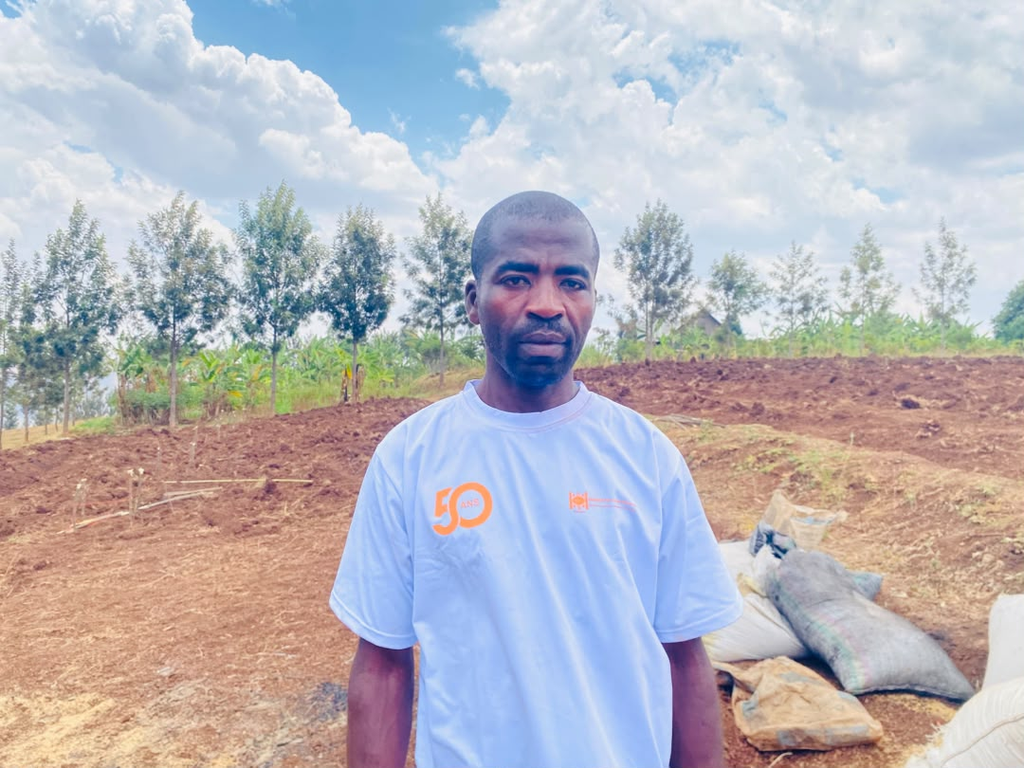
Harerimana Jean Claude, a resident of Gahengeri Sector, said locally produced organic fertilizer could help farmers reduce their spending on industrial fertilizers. He added that he is ready to share the knowledge he gained with other residents to encourage the adoption of this innovative approach to producing fertilizer using locally available resources.
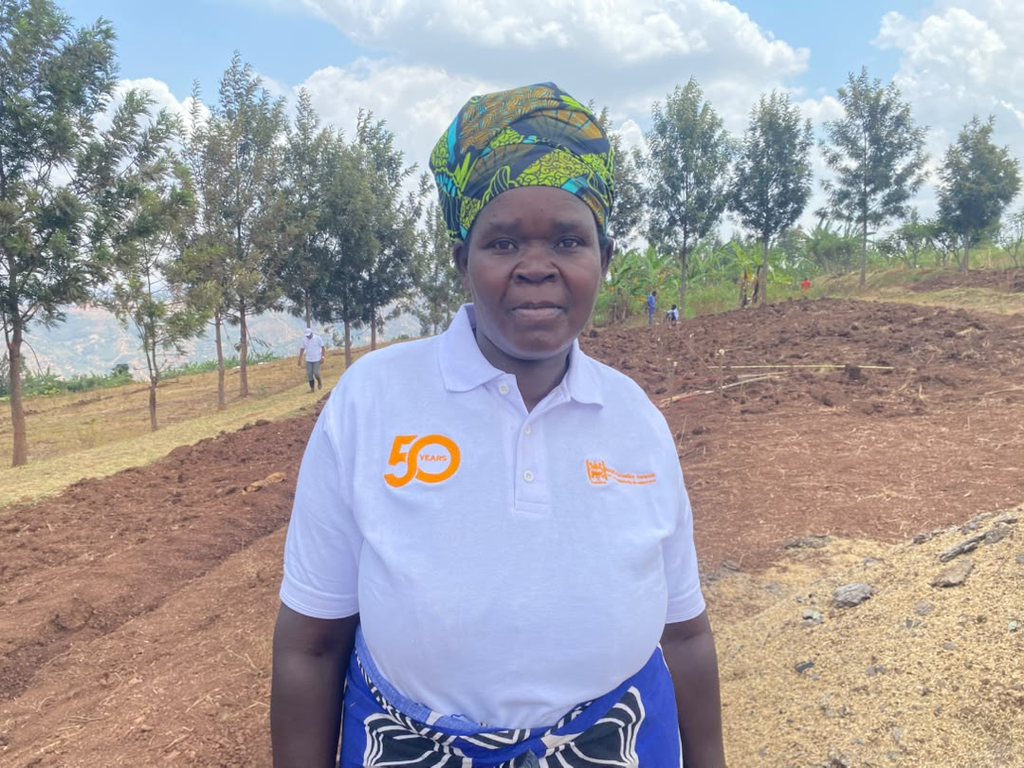
Kankindi Donathile, a resident of Gahengeri, welcomed the initiative and expressed appreciation to INADES-Formation Rwanda for introducing the practice. She said it will help farmers reduce fertilizer costs during the upcoming farming season while improving agricultural productivity.
The activities form part of the preliminary programmes ahead of INADES-Formation Rwanda’s Golden Jubilee, highlighting the organization’s continued commitment to promoting sustainable agriculture, strengthening farmers’ knowledge and skills, supporting community development, and advancing its longstanding mission of serving the common good.
Other photos of the event