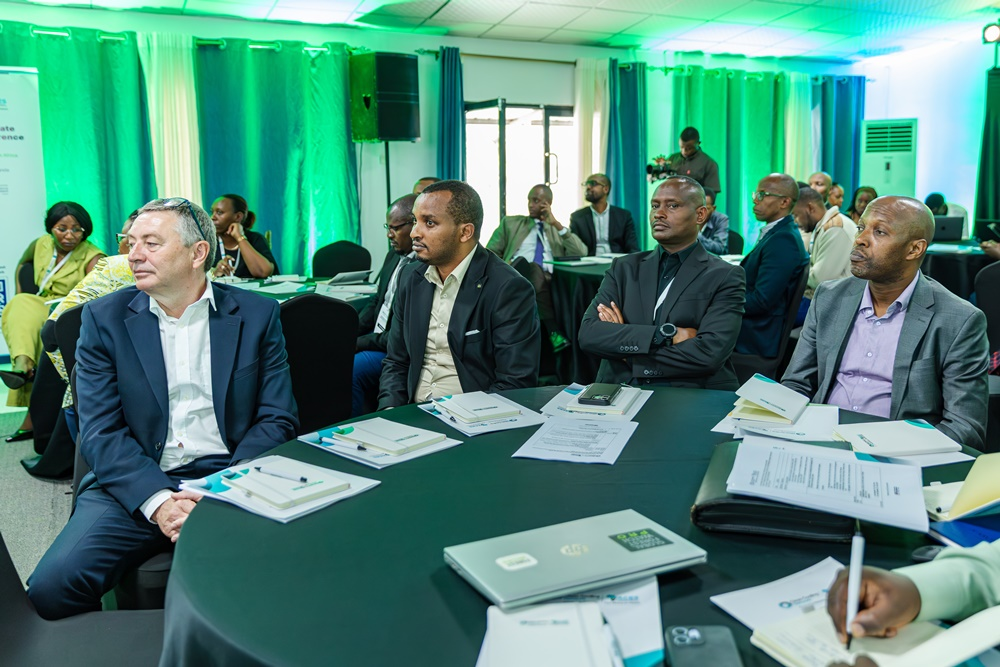

On March, 24, more than 150 leaders from government, finance, industry, and academia convened in Kigali for a high-level conference aimed at unlocking green investment across Africa. The event, organised by the Africa Centre of Excellence for Sustainable Cooling and Cold-Chain, marks a critical step toward translating climate ambition into tangible results.
Under the theme “Catalysing Green Investment in Africa: The UK–Rwanda Climate Partnership,” the two-day forum is not only fostering dialogue but also advancing practical solutions. As a result, stakeholders are increasingly focused on converting climate commitments into investable, scalable projects.
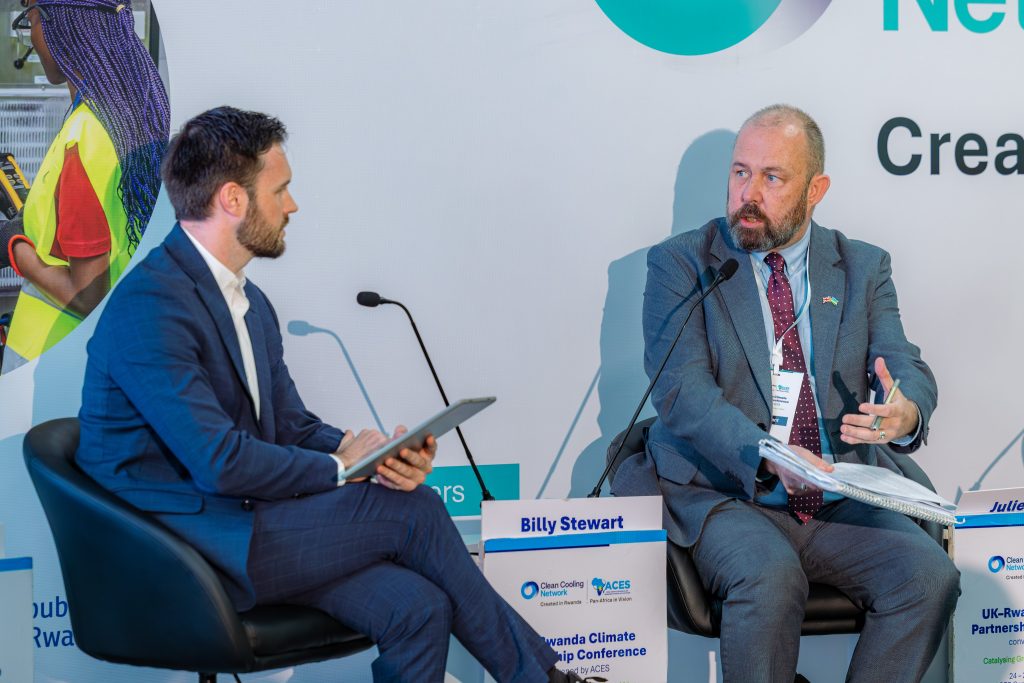
While climate ambition continues to grow across Africa, investment has not kept pace. According to experts, this gap is not due to a lack of capital, but rather weak systems that fail to inspire investor confidence.
Sectors such as sustainable cooling and cold-chain infrastructure remain underfunded, even though they are essential for food security, public health, and trade. Therefore, participants emphasised the urgent need to strengthen regulatory frameworks, technical standards, and workforce capacity.
Opening the conference, Rwanda’s Minister of Environment, Dr Bernadette Arakwiye, delivered a strong message, stating, “This is the moment to move from ambition to execution. We have policy clarity, institutional leadership, and now ACES as a platform to anchor capability, innovation, and investment. What is required now is to align these elements into a coherent ecosystem that attracts capital, builds industries, and delivers impact at scale.”
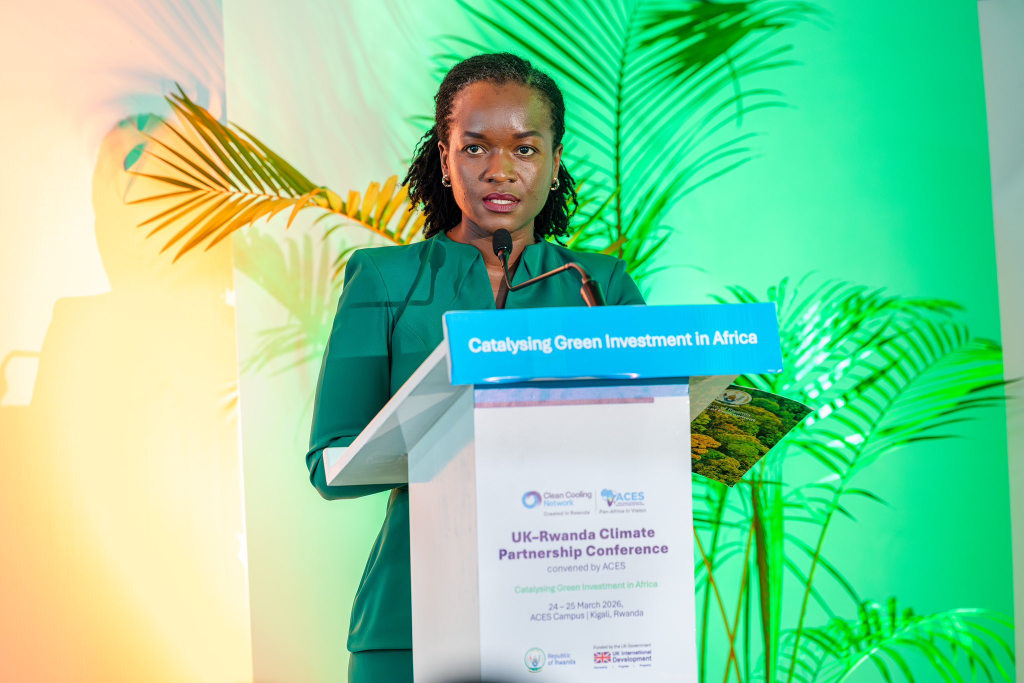
At the same time, development partners renewed their commitment, with Billy Stewart of the UK Government stressing the value of actionable climate solutions.
“Through initiatives such as ACES, we are beginning to see how practical, investable climate solutions can take root in Rwanda. The progress already made shows the potential for locally driven innovation to scale across the region and deliver real impact for communities and markets.” Billy noted.
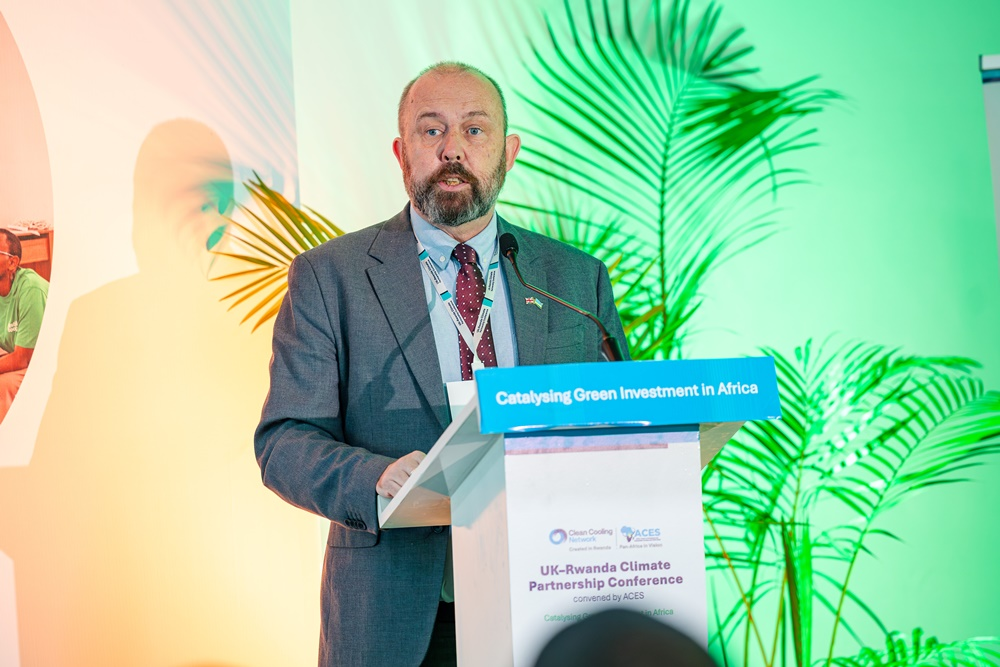
At the centre of the discussions is ACES, which is designed to go beyond policy conversations and deliver real-world impact. In particular, the platform integrates research, training, certification, and industry support to reduce risks and attract long-term capital.
Emphasising this point, Professor Toby Peters, Executive Director of ACES, noted:
“Across Africa, we do not lack ambition or capital; we lack the systems that connect them. Investment flows where there is confidence: in regulation, standards, skills, and delivery. ACES exists to develop those systems.”

Meanwhile, the conference is structured to move from high-level discussions to action. Participants are engaging in policy dialogues, investment planning, and live demonstrations of innovative solutions at the ACES campus.
Key areas of focus include mobilising private finance, strengthening certification systems, building technical skills, and supporting industrial development. Consequently, stakeholders aim to identify concrete steps needed to unlock scalable investment in climate-resilient infrastructure.
Looking ahead, Rwanda is positioning itself as a hub for climate action. The conference sends a clear signal that ambition alone is not enough; strong, functional systems must back it. From Kigali, the message is evident: Africa’s climate future will depend on bold commitments and the ability to translate them into real, lasting impact.