North Korean leader Kim Jong Un has inaugurated a new residential street in Pyongyang for families of soldiers killed while supporting Russia in the war in Ukraine, touring the development alongside his daughter, Kim Ju Ae, widely regarded as his heir apparent.
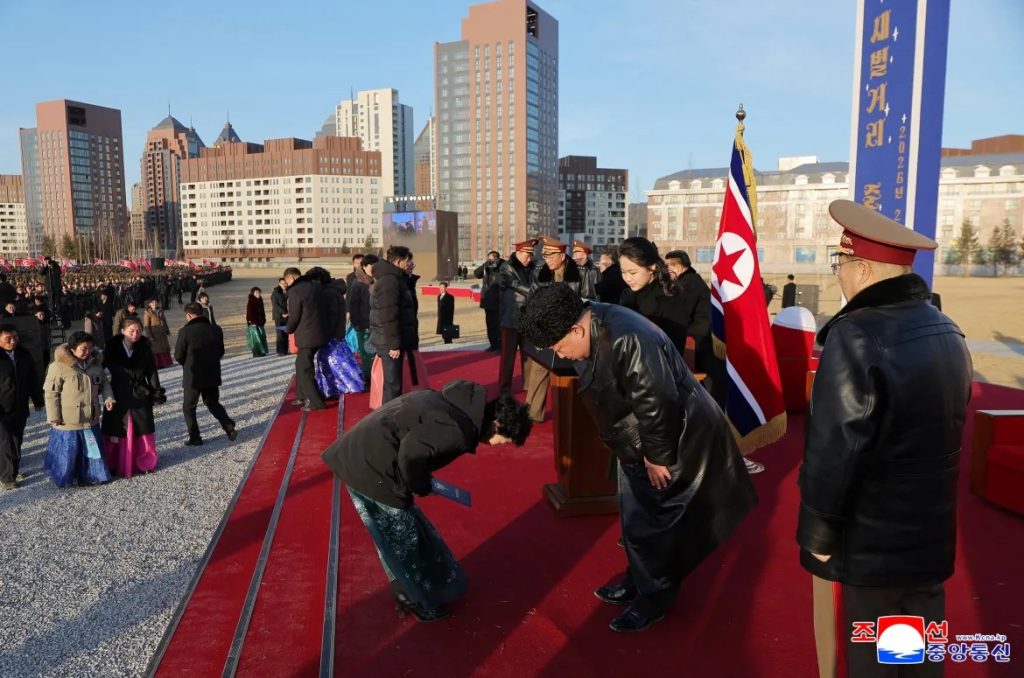
The unveiling comes just ahead of the ruling Workers’ Party congress, the country’s most significant political event, where Kim is expected to outline his five-year domestic and foreign policy objectives. Analysts view the housing project as a calculated political move designed to strengthen domestic loyalty, justify military deployments abroad, and showcase the regime’s care for the families of fallen soldiers (according to Al Jazeera.
State media emphasized the symbolic importance of the project. KCNA reported that the homes reflect the “ardent desire of our motherland” to ensure that the “excellent sons who defended the most sacred things … will live forever” through their families. Families were shown inspecting apartments and utilities, visually reinforcing the state’s commitment to those who sacrificed for the nation.
North Korea has reportedly deployed thousands of soldiers to fight alongside Russian forces, with South Korean and Western intelligence estimating thousands of casualties. The military support has reportedly earned North Korea financial aid, military technology, and supplies from Moscow, strengthening ties between the two leaders amid tensions with Washington.
Observers also note that Kim Ju Ae’s prominent role during the ceremony signals a growing visibility in state affairs, reinforcing speculation that she is being prepared for future leadership. Analysts describe the housing project as both a propaganda tool and a strategic message: it rewards loyalty, glorifies military sacrifice, and consolidates Kim’s domestic authority before the party congress (Al Jazeera, 16 February 2026).
The event follows a series of public ceremonies honoring war dead, including memorial walls and museums, all part of the regime’s effort to bolster nationalist sentiment and justify its military and foreign policies.