

NASA’s highly anticipated Artemis II mission, which aims to send astronauts farther than any humans have traveled in over 50 years, has been delayed until March following a liquid hydrogen leak during a critical pre-flight test at Kennedy Space Center in Florida. The discovery came during a “wet dress rehearsal,” a full simulation of the rocket fueling and countdown sequence designed to uncover potential issues before liftoff.
The delay highlights the complexity of sending humans into deep space, where even small technical problems can have enormous consequences. As NASA engineers work to resolve the leak, safety remains the top priority, a reminder that the path back to the Moon is as challenging as it is historic.
Understanding Artemis II
For those unfamiliar, Artemis II is NASA’s first crewed lunar mission since the Apollo era. Unlike Artemis I, which tested the Orion spacecraft without humans, Artemis II will carry four astronauts: three Americans and one Canadian, on a 10-day journey around the Moon and back. The mission is designed to test key systems in space, including life support, navigation, and communication, preparing both crew and spacecraft for future lunar landings.
While the mission will not land on the Moon, its success is critical. Engineers and astronauts will push Orion to the limits of deep-space operations, traveling farther from Earth than anyone has in decades. The lessons learned will directly inform Artemis III, currently scheduled to return humans to the lunar surface.
Why the Delay Matters
According to Sky News, the hydrogen leak was identified during the rehearsal as fuel was loaded into the massive Space Launch System (SLS) rocket. The wet dress rehearsal is standard procedure, allowing teams to simulate launch conditions and catch potential issues early. NASA emphasizes that setbacks like this are not uncommon in missions of such scale, ensuring problems are found and fixed before crewed flight is exactly the point of these tests.
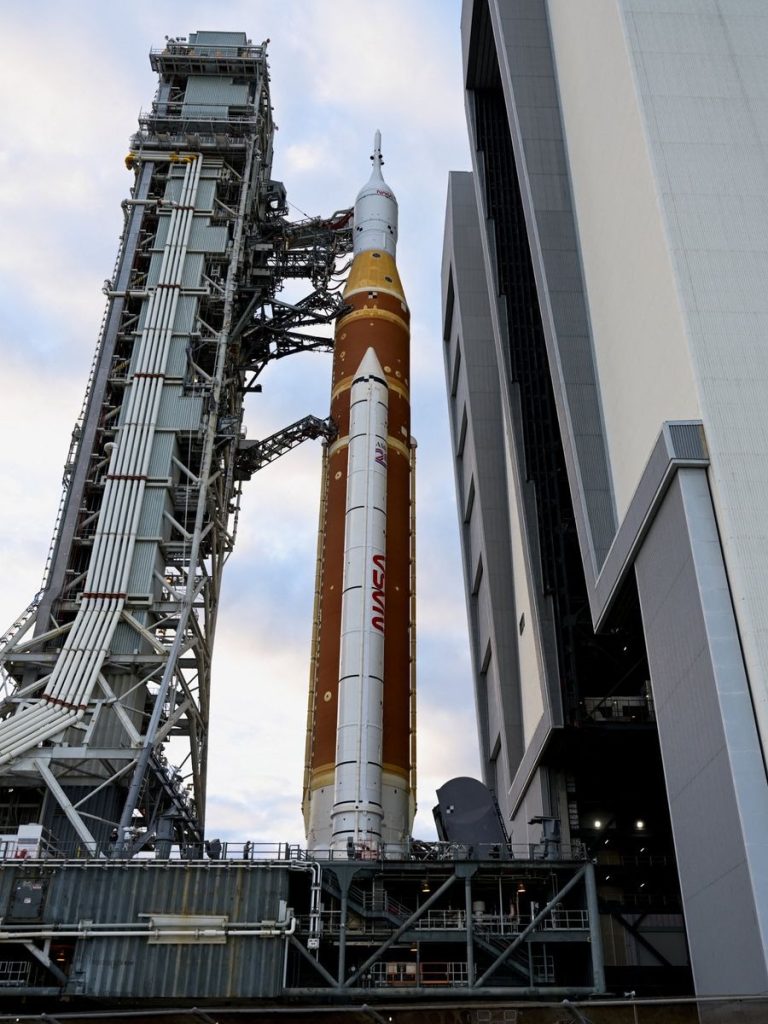
This pause also underscores the human element of space exploration. Every adjustment, every repaired valve, and every safety check is part of a larger effort to protect the astronauts who will make history. NASA’s Artemis II crew has already entered a health stabilization program, ensuring they are ready to fly when the rocket is ready to launch.
A Stepping Stone to the Moon
Artemis II is more than a technical test; it represents a milestone in humanity’s return to the Moon. The mission will provide NASA with crucial data on spacecraft performance, crewed operations, and navigation in deep space, all while reigniting global interest in lunar exploration. Its success will pave the way for the next stage of Artemis: landing humans on the Moon’s surface, potentially at the south pole, for the first time since 1972.
For NASA, Artemis II is both a scientific mission and a human story, a reminder that space exploration is not just about rockets and technology, but also about courage, precision, and the relentless pursuit of discovery.