
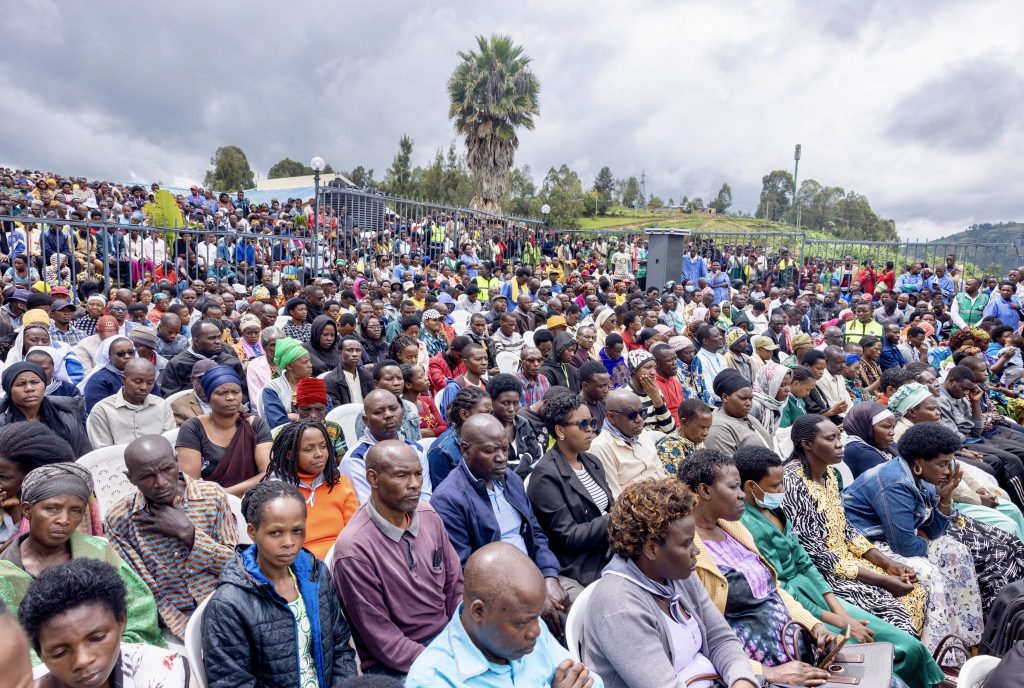
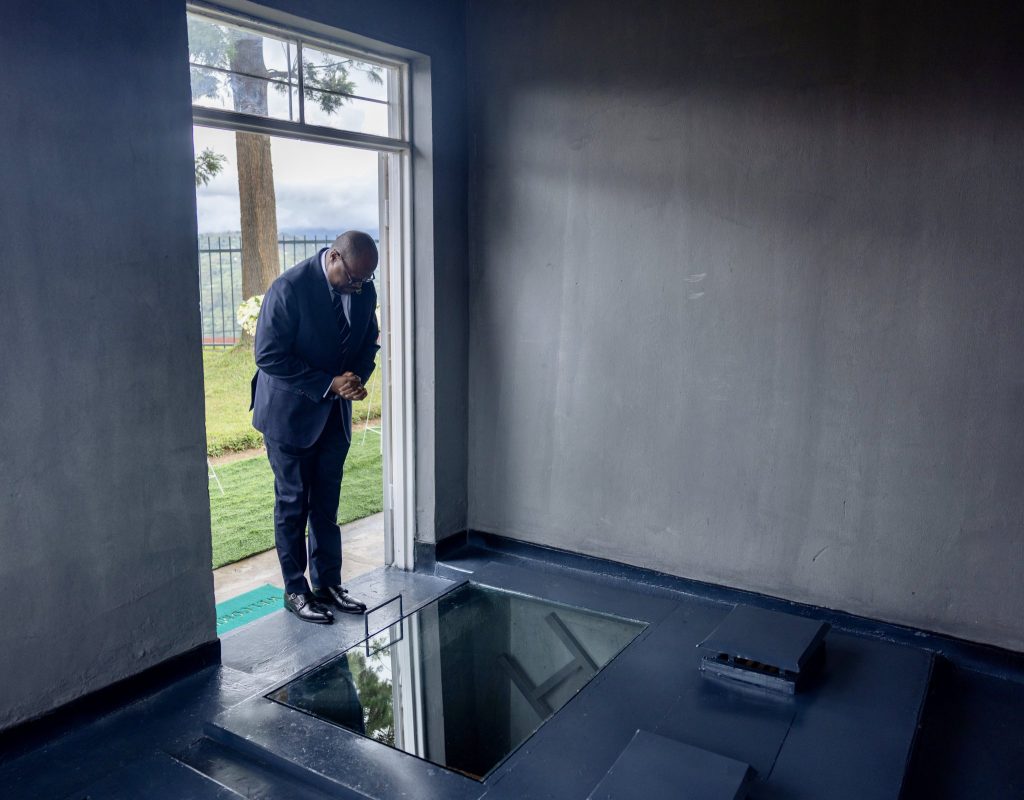
The Prime Minister emphasized that remembering the genocide and drawing lessons from Rwanda’s tragic history, shaped by colonial divisions and poor governance during the First and Second Republics, remains a shared and ongoing responsibility for all Rwandans.
He stressed that combating genocide ideology is not a temporary duty, but a lifelong commitment.
Reflecting on the meaning of remembrance, he stated:
“These painful memories are what compel us to always remember our loved ones who were killed during the 1994 Genocide against the Tutsi. Remembrance is not just a ceremony; it is a solemn covenant we hold to restore the dignity that was taken from them and to reaffirm our commitment that genocide will never happen again in Rwanda.”
The Prime Minister also highlighted the historical significance of Ngororero, noting its particular place in both the planning and execution of the genocide.
He recalled that it is in this area that Léon Mugesera delivered his infamous speech on November 22, 1992, inciting violence against Tutsi. In that speech, Mugesera called for Tutsi to be sent through the Nyabarongo River, referring to it as a return to what he described as their “home” in Abyssinia, remarks widely recognized as a precursor to the genocide.
The Prime Minister further reminded attendees of the atrocities committed at Nyange Parish by Athanase Seromba, a Catholic priest later convicted by the International Criminal Tribunal for Rwanda and sentenced to life imprisonment. Seromba played a central role in the killing of more than 2,000 Tutsi who had sought refuge in the church, which was destroyed upon them.
In contrast to these dark chapters, the Prime Minister also paid tribute to the courage of students from Nyange Secondary School, whose actions have become a symbol of unity and resistance.
He recalled the events of March 1997, when insurgents attacked the school and ordered students to separate themselves along ethnic lines; Hutu on one side and Tutsi on the other, in an attempt to perpetuate the ideology of division.
Instead, the students stood firm and declared themselves simply as Rwandans. Without prior discussion, they chose unity over division, a decision that cost some of them their lives.
He praised their bravery, stating:
“The Nyange students are a powerful example of courage and the brotherhood that binds us. They are a model for our youth and all Rwandans in rejecting genocide ideology and upholding our unity. We once again express our deepest gratitude for their extraordinary bravery.”
As Rwanda continues to commemorate the lives lost, the message from Ngororero was clear: remembrance must go hand in hand with responsibility, ensuring that the lessons of the past shape a future grounded in unity, truth, and the unwavering rejection of division.
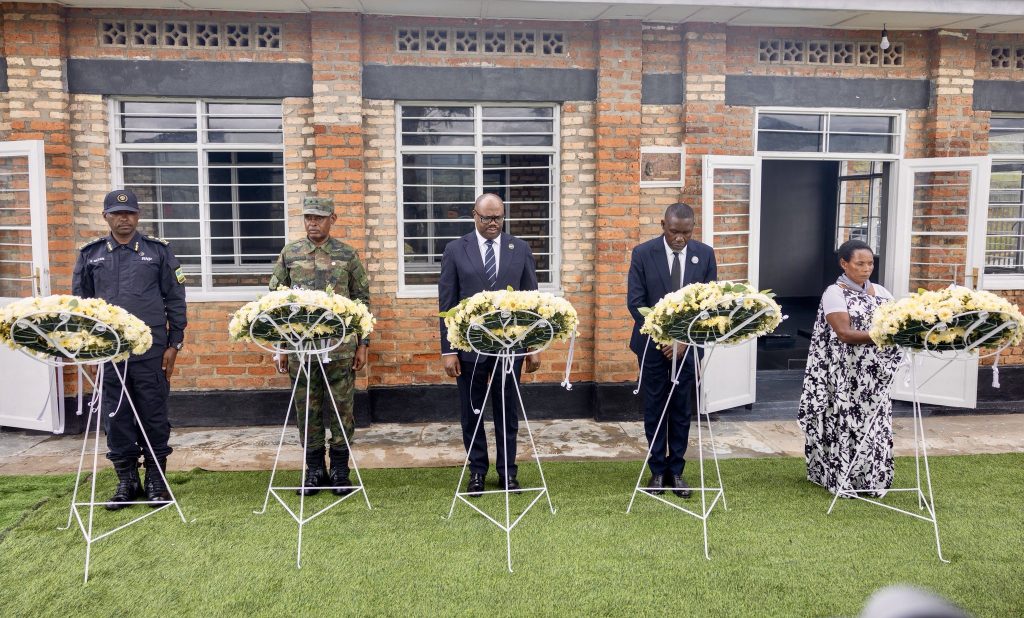
Photos by @PrimatureRwanda