
President Paul Kagame has said he could not accept former President Juvénal Habyarimana’s refusal to allow Rwandan refugees to return home, explaining that this was the reason he and his comrades launched the liberation struggle.
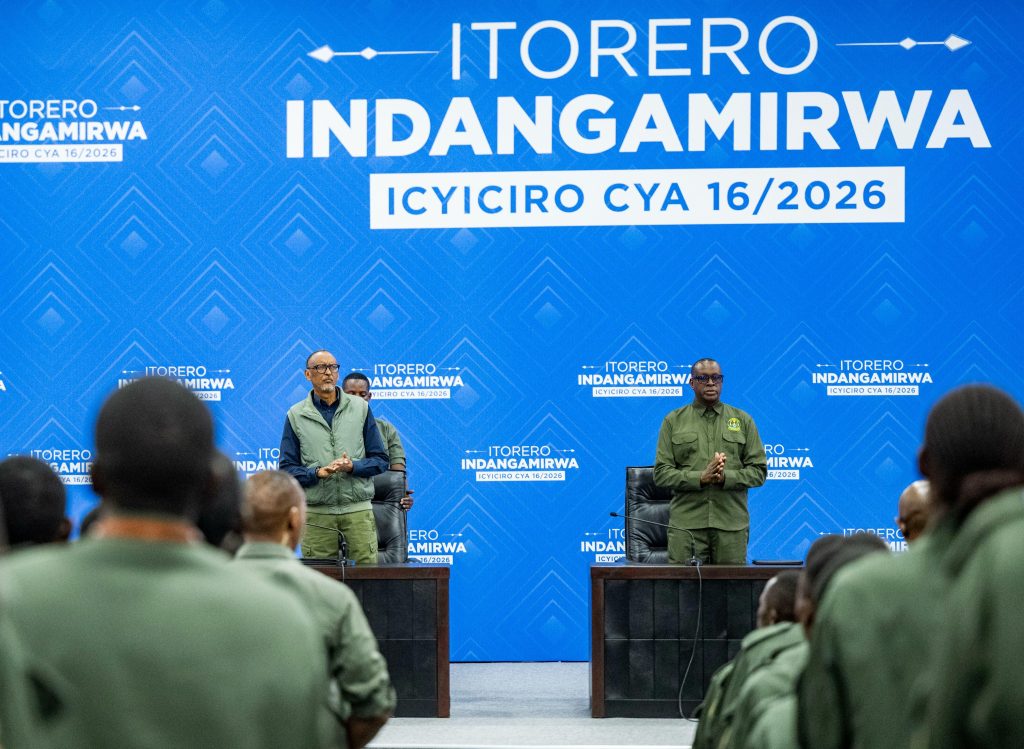
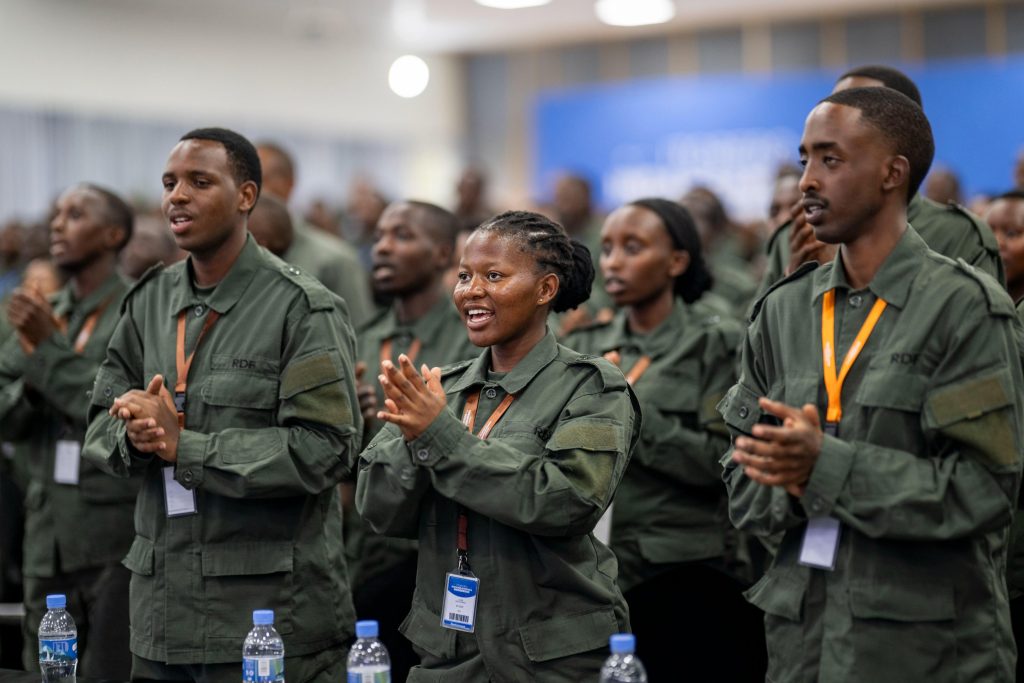
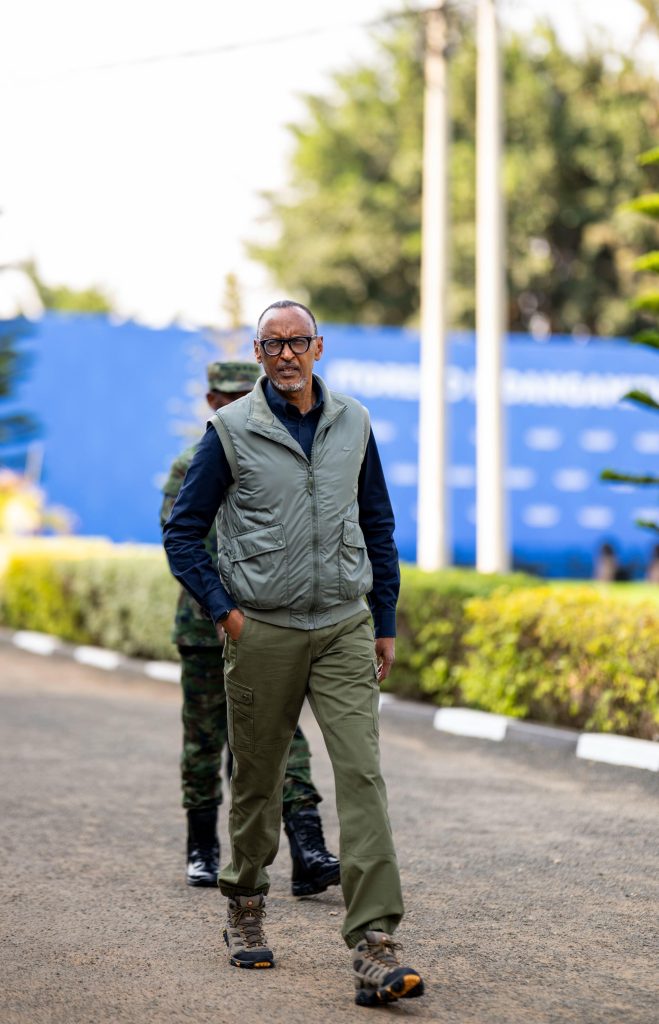
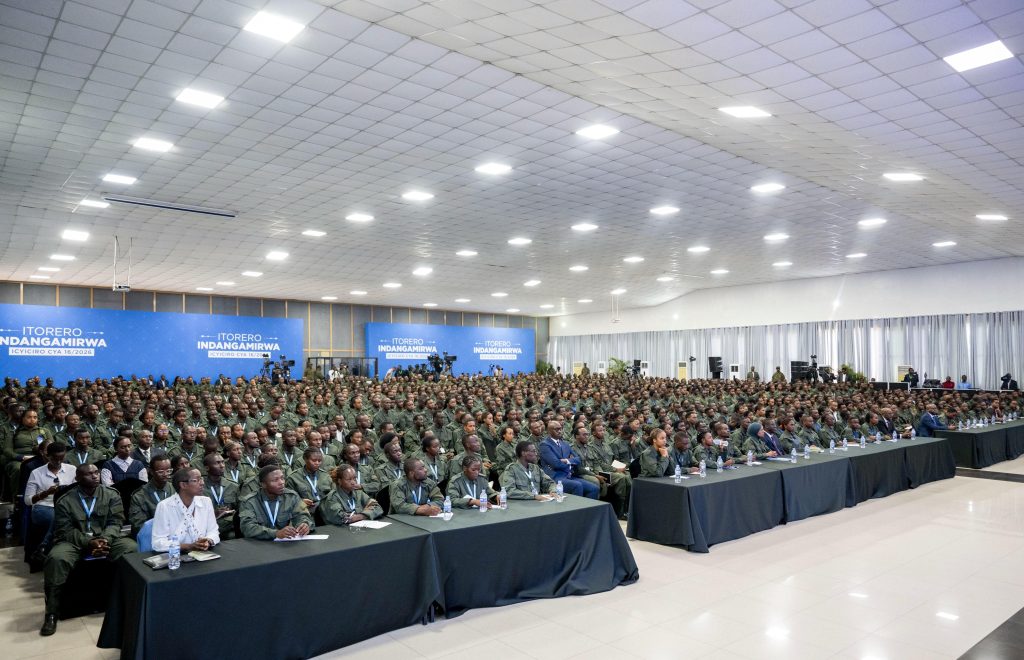
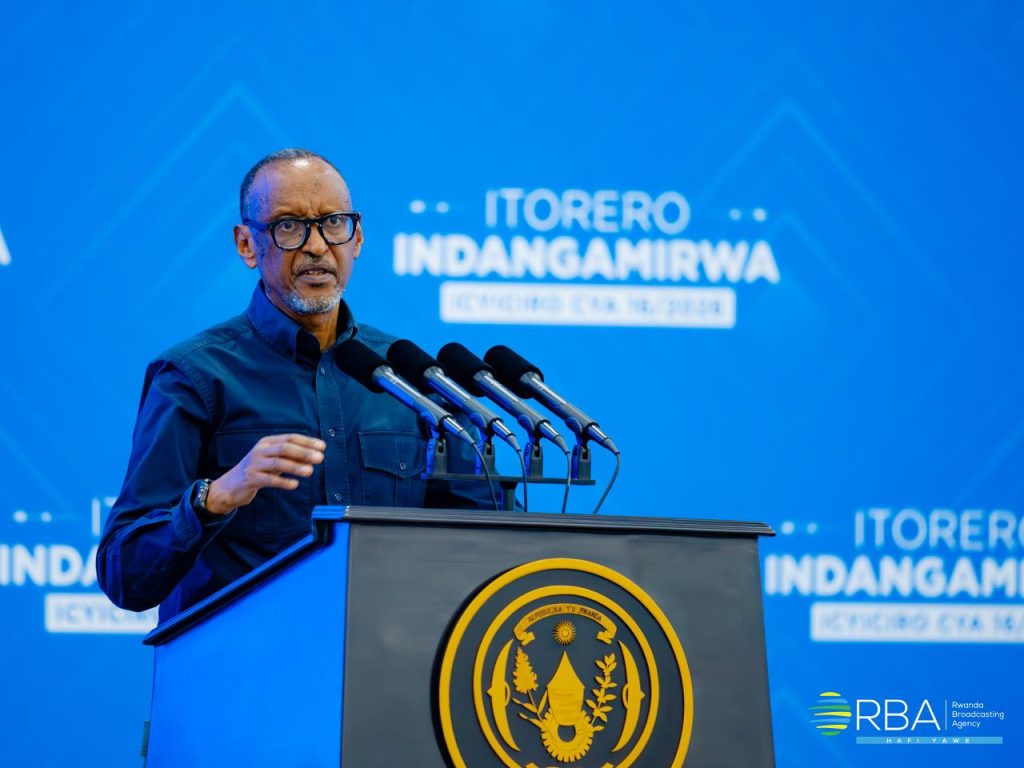
The President made the remarks on July 28, 2026, while addressing members of the 16th cohort of Indangamirwa trainees at the Gabiro Military Training Centre in Gatsibo District.
Speaking to the young trainees, President Kagame reflected on Rwanda’s painful history, which forced many Rwandans into exile beginning in 1959 following ethnically motivated violence.
“I never had the opportunity you have today, to attend a civic education program like this. I never went to such a school. Instead, I found myself searching for answers, asking, ‘There is a problem—what can a person do about it?'” he said.
President Kagame explained that he lived in Uganda from the age of four or five because of those events. He said that by the age of 20 or 21, he had begun looking for ways to address the situation, and by 23, he had joined others who shared the same determination to resolve the problem.
He encouraged the trainees to begin thinking early about protecting their own interests, those of their families, and those of the nation. He also commended them for choosing to join the civic education program to learn the values expected of Rwandans.
The President asked the trainees whether they had learned how to shoot accurately. After they responded affirmatively, he said that while such skills are important, weapons should only be used when absolutely necessary and not indiscriminately.
“There is a time for everything. Until the moment comes when you have no choice but to resort to arms, there is no reason to use them. That moment does not come because of one individual; it comes when people are deprived of their rights, pushed to the limit, and every peaceful solution has failed. Then people say, ‘If that is the case, we are prepared to die for it,'” he said.
President Kagame said that when people are denied their rights and a country is denied peace, the first step should always be to seek peace. However, if all peaceful efforts fail, armed struggle may become the only remaining option, as was the case with the Rwandan Patriotic Army (RPA) liberation war that began on October 1, 1990.
He recalled that while he and his colleagues were living as refugees, they insisted they could not remain in exile forever. At the same time, officials from Habyarimana’s government would travel to Uganda and argue that Rwanda was too small to accommodate them.
“They would say, ‘The country is too small. Those people have nowhere to go,'” he said.
President Kagame said it was unacceptable for Rwandan refugees to be permanently denied the right to return to their own country, adding that it was unreasonable to expect future generations of refugees to remain in exile indefinitely despite having a homeland.
He explained that from the beginning of the liberation struggle, he never blamed the country that had given them refuge, even if it had treated them unfairly. Instead, he held responsible the government that denied them the right to return home.
“The person I had a problem with was the one who had the authority to determine whether I could enjoy my rights in my own country and who denied me those rights. That was the person we had to confront. I was never going to wage war against the country that hosted us because of something it did or did not provide. Whether they chose to help us or not, the real source of the problem was the one who denied us peace in our own country,” he said.
President Kagame concluded by urging the young trainees to learn how to defend their rights and to understand that no one should dictate how they, or Rwanda as a nation, should live.
Courtesy of IGIHE