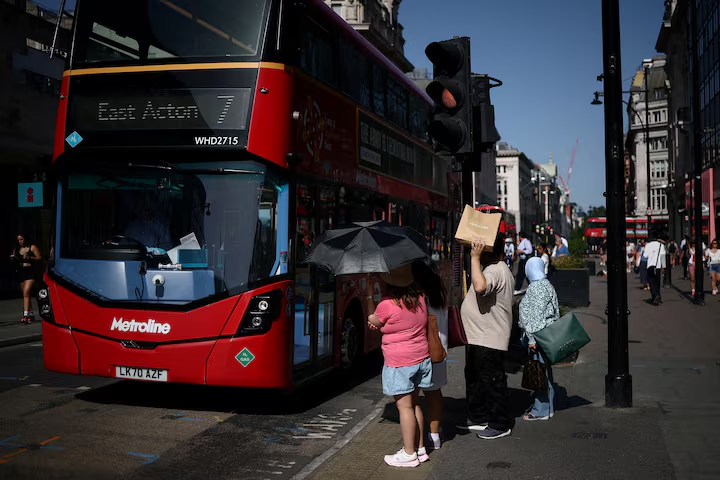
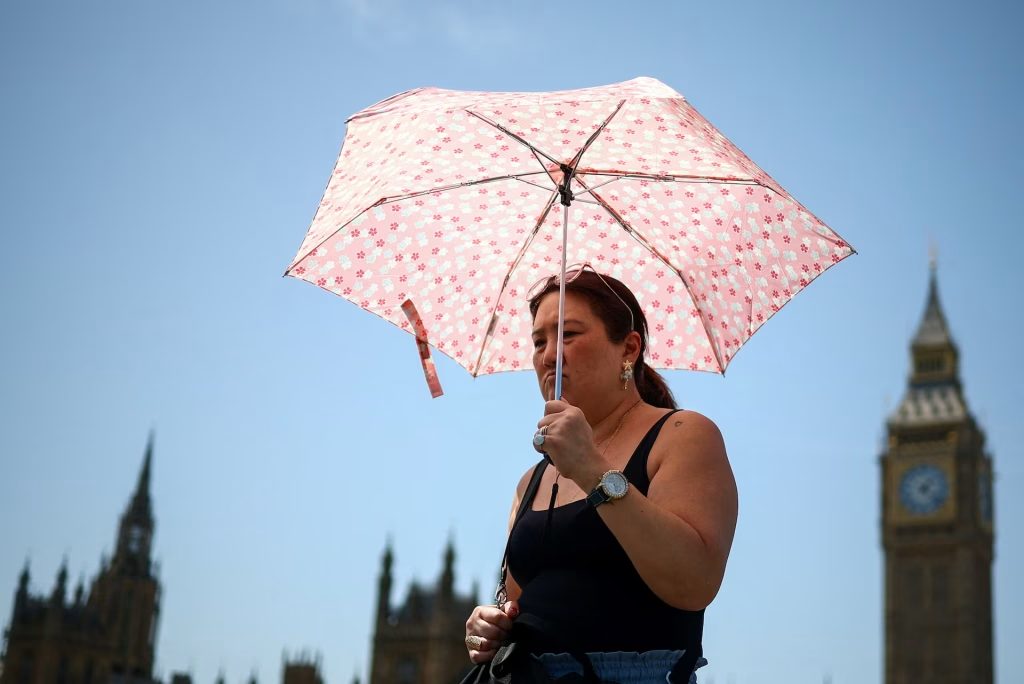

A severe heatwave in London has, once again, highlighted the growing urgency of climate action during this year’s London Climate Week, as extreme temperatures disrupted events, transport systems, and public gatherings.
In particular, an event hosted at the London School of Economics was cancelled after organisers confirmed that the nearly 100-year-old venue had become too hot, raising public health concerns. As a result, the incident exposed vulnerabilities in older infrastructure that still relies heavily on natural ventilation rather than modern cooling systems.
Meanwhile, the week brought together more than 75,000 participants across over 1,300 events, where governments, businesses, financial institutions, and civil society groups discussed strategies to accelerate both mitigation and adaptation efforts. In addition, experts warned that extreme heat, floods, and other climate-related disasters are becoming more frequent and more intense worldwide, according to Reuters.
Furthermore, climate researchers noted that heat-related deaths have increased significantly since the 1990s, with projections indicating that vulnerable regions will continue to face rising risks.
Consequently, policymakers and climate leaders at the event called for increased investment in resilience, stressing that current preparations remain inadequate to address future challenges.
The heatwave served as a powerful reminder that climate change is no longer a distant threat but a present reality. Therefore, it is placing growing pressure on governments and institutions to act more urgently, invest more effectively, and coordinate stronger global responses to protect communities from worsening climate impacts.