
Rhys Hibbert, a father of two, underwent the groundbreaking procedure at University College London Hospital after doctors warned that the tumour could eventually cause him to lose his sight if it was not removed.
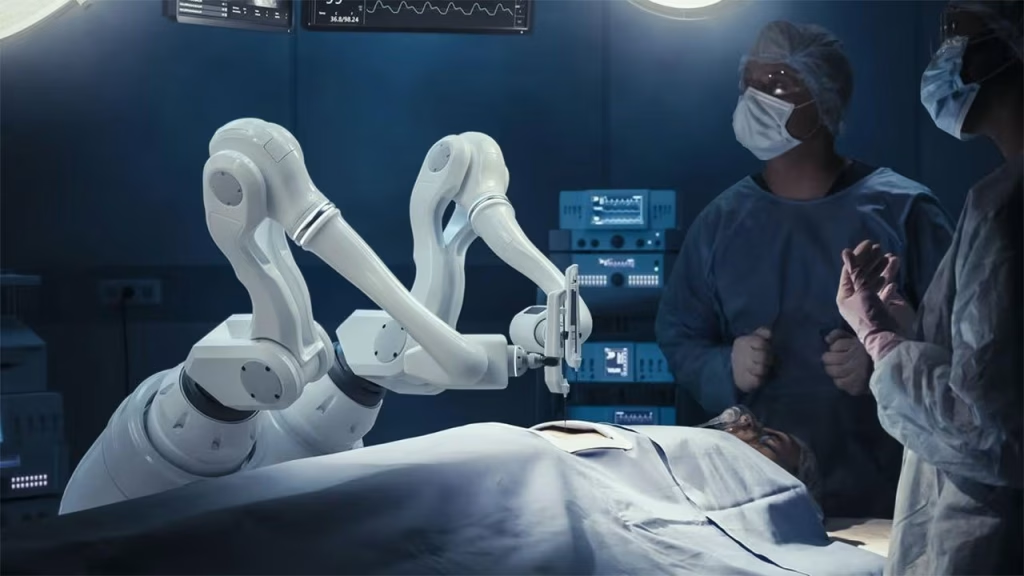
The artificial intelligence system analysed live images from the surgery and provided surgeons with guidance to help them avoid damaging critical blood vessels and nerves that were difficult to see. This helped doctors identify the safest route to remove the tumour.
Hibbert said he believes the technology could significantly improve patient safety.
“There are no signposts inside our heads showing people where to go when treating a patient,” he said, highlighting the potential benefits of using AI to guide complex surgical procedures.
Before his health problems began, Hibbert, who worked in customer service, had lived a healthy life with his wife and children for nearly two decades.
However, about 18 months ago, he collapsed in the street and lost consciousness. He later began experiencing further episodes and symptoms that prompted doctors to carry out detailed brain scans.
The examinations revealed an 11-millimetre non-cancerous tumour on his pituitary gland, a small pea-sized organ located at the base of the brain.
The pituitary gland plays a crucial role in producing hormones that regulate several important body functions, including growth, metabolism, blood pressure and body temperature.
Doctors were particularly concerned because the tumour was located close to major blood vessels and nerves responsible for vision.
As the tumour continued to grow, it began putting pressure on the optic nerves, gradually affecting Hibbert’s peripheral vision. Without surgery, doctors feared his eyesight could deteriorate further.
When he was offered the opportunity to become the first patient to undergo the hospital’s experimental AI-assisted procedure, Hibbert said he did not hesitate.
“If patients don’t agree to take part in research, how are doctors going to learn? How will medicine progress?” he said.
The operation was performed using a minimally invasive technique in which surgeons inserted a small camera through Hibbert’s nose to reach the base of his skull, where the tumour was located.
Finding the safest route to remove the tumour was particularly challenging because the structure of the brain, blood vessels and nerves differs from one patient to another.
In this type of surgery, doctors can face a significant risk of being unable to remove the entire tumour. There is also a risk of damaging critical blood vessels or nerves, potentially causing severe bleeding and life-threatening complications.
During Hibbert’s surgery, the AI system analysed images in real time, tracked the surgical instruments and helped identify areas where important blood vessels and nerves were likely to be located.
The technology also highlighted the safest areas for surgeons to operate, allowing them to carefully navigate around critical structures.
The operation was successfully completed, and the tumour was removed without complications, marking what doctors described as a major step forward in the use of artificial intelligence to improve the safety and precision of brain surgery.