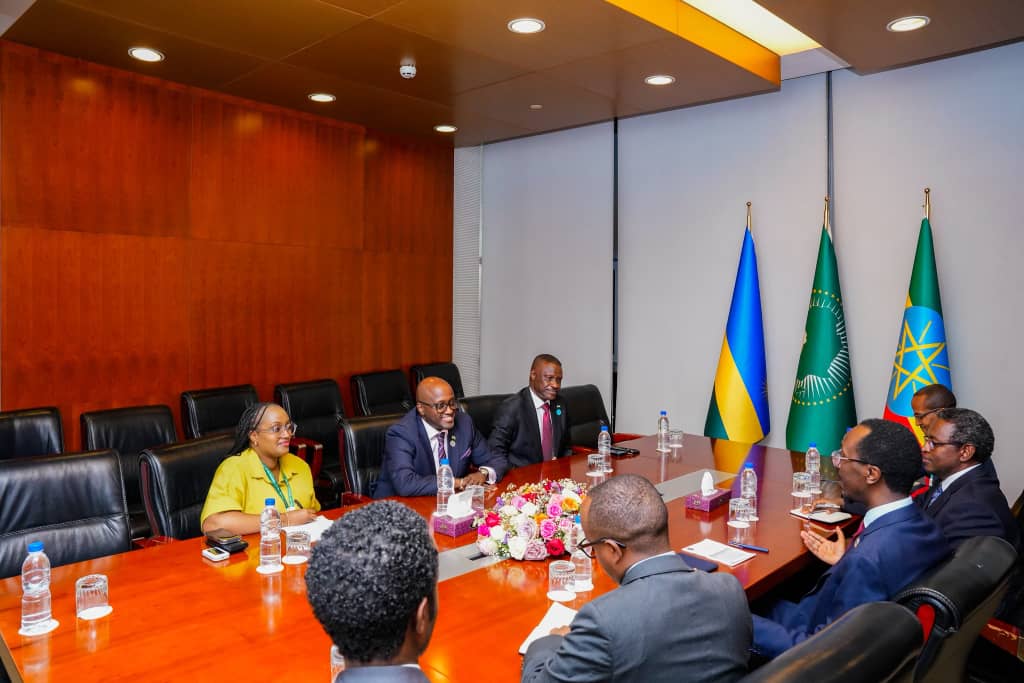
Rwanda’s Minister of Foreign Affairs and International Cooperation, Olivier Nduhungirehe, met with Ethiopia’s Minister of Foreign Affairs, Gedion Hessebon, on the sidelines of the 48th African Union Executive Council Meeting, in a move that underscores the growing partnership between Kigali and Addis Ababa.
The bilateral talks focused on strengthening diplomatic, economic, and political cooperation between the two countries, which have maintained cordial relations rooted in mutual respect and shared continental ambitions. Both ministers highlighted the importance of sustained engagement at the highest levels to advance joint priorities and deepen collaboration across key sectors.
According to officials, discussions also covered the evolving security and political landscape in the Horn of Africa and the Great Lakes region. The ministers exchanged perspectives on ongoing regional developments and emphasized the need for coordinated efforts to promote stability, peace, and sustainable development across the continent.
Rwanda and Ethiopia, both active contributors to African Union initiatives and peacekeeping missions, reaffirmed their commitment to multilateralism and African-led solutions to African challenges. The meeting provided an opportunity to align positions ahead of broader AU deliberations and reinforce cooperation within continental frameworks.
The two sides further explored opportunities to enhance trade, investment, and people-to-people ties, noting the potential to expand economic partnerships in areas such as aviation, infrastructure, innovation, and regional integration.
The engagement reflects a broader trend of deepening diplomatic outreach among African nations amid shifting geopolitical dynamics. As the African Union continues to address pressing continental issues, bilateral consultations such as this are seen as vital in building consensus and strengthening collective action.
The ministers concluded the meeting by reaffirming their shared commitment to further consolidating Rwanda–Ethiopia relations and maintaining close coordination on regional and international matters of common interest.