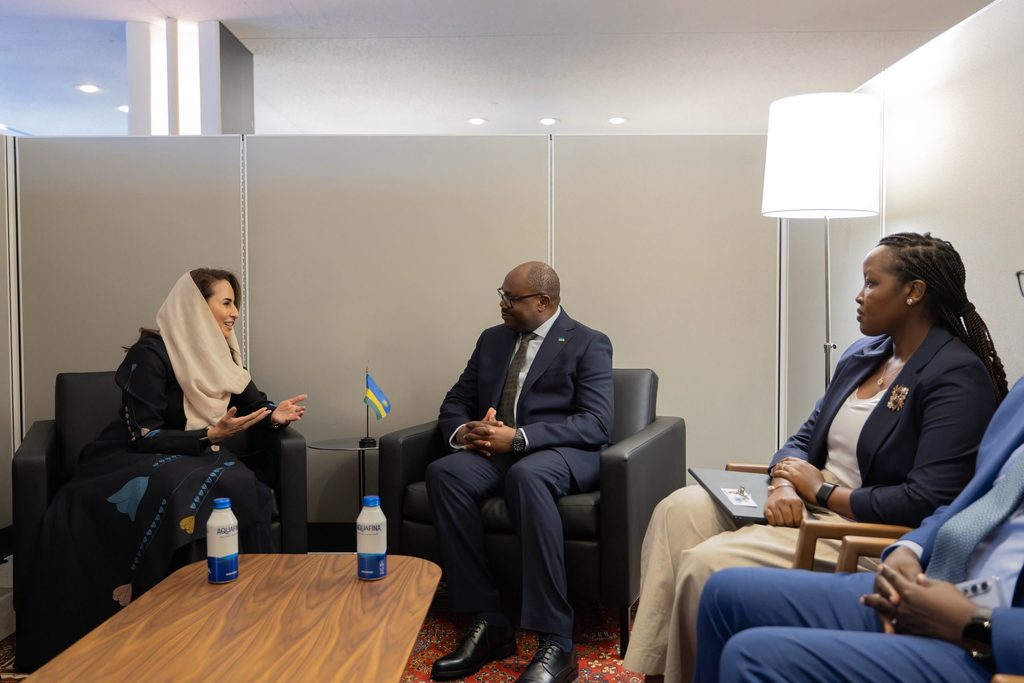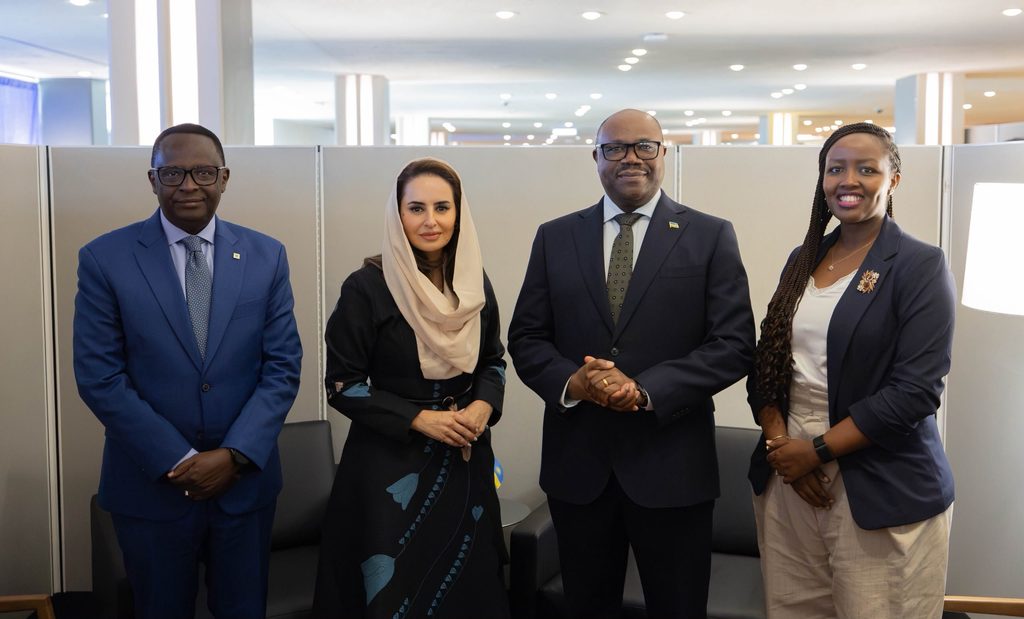


He made the call on September 24, 2026, while attending a high-level meeting on AI governance at the United Nations headquarters in New York.
The Prime Minister said that although Rwanda is not among the countries developing frontier AI systems, it sees significant opportunities to use the technology to improve essential services, including healthcare and education, while strengthening the capabilities of its workforce.
“Like many countries and companies represented here, Rwanda is not building frontier AI. Our reason for being here is that we see an opportunity to use that AI to close gaps and build capacity in our hospitals, in our schools and in our workforce. And we have already started experimenting with how this can be done in practice.”
He said the use of AI must also be accompanied by attention to its safety, reliability and accountability when problems arise.
“That is why the question of AI governance is not theoretical for us. As we make the decision to expand the use of these applications, we ask three questions that every government should ask: Is it safe? Is it reliable? And who is accountable when something goes wrong?”
The Prime Minister said discussions on AI governance are currently dominated largely by major countries and companies developing the technology, while many countries have little or no role in those discussions despite being affected by the decisions made.
“Today, the architecture of AI regulation and governance is being built in two separate rooms. In one room, the major AI research companies are agreeing on the principles they will follow.”
“In the other, governments are negotiating with and among countries they consider to be competitors. Between these two rooms are many countries around the world that are not building this type of AI and have no role in these discussions, yet they are the ones that will be affected by the decisions made in those rooms.”
He called for mechanisms to help countries build the capacity needed to assess and regulate AI, noting that many currently lack such capabilities.
“Many countries do not have the capacity to evaluate frontier AI today, and they will not have that capacity in the coming years. Bringing people into the conversation when they lack the capacity to meaningfully participate is simply a show.”
Prime Minister Nsengiyumva said Rwanda is ready to work with other African countries to build capacity to use and assess AI through Rwanda’s national AI institution.
“That is why we are calling for mechanisms to pool AI assessment capacity and deploy expertise, and why Rwanda’s national AI institution is ready to serve as a continental hub to help build that capacity across Africa. If AI is to contribute to the development of all people, we must do this well in Africa and everywhere else.”
He said the key challenge is not only the rapid pace of AI development, but also whether national institutions can keep pace with the technology while ensuring that every country has a meaningful voice.
“So, the challenge we have in defining what it means to govern AI at the pace of its development is to determine whether our institutions and regulatory systems can keep up with the technology itself, and whether we can do so in a way that gives every country a meaningful voice in the conversation.”
International discussions on AI governance have intensified in recent years as countries seek ways to harness the technology for development while addressing the potential risks associated with its use.