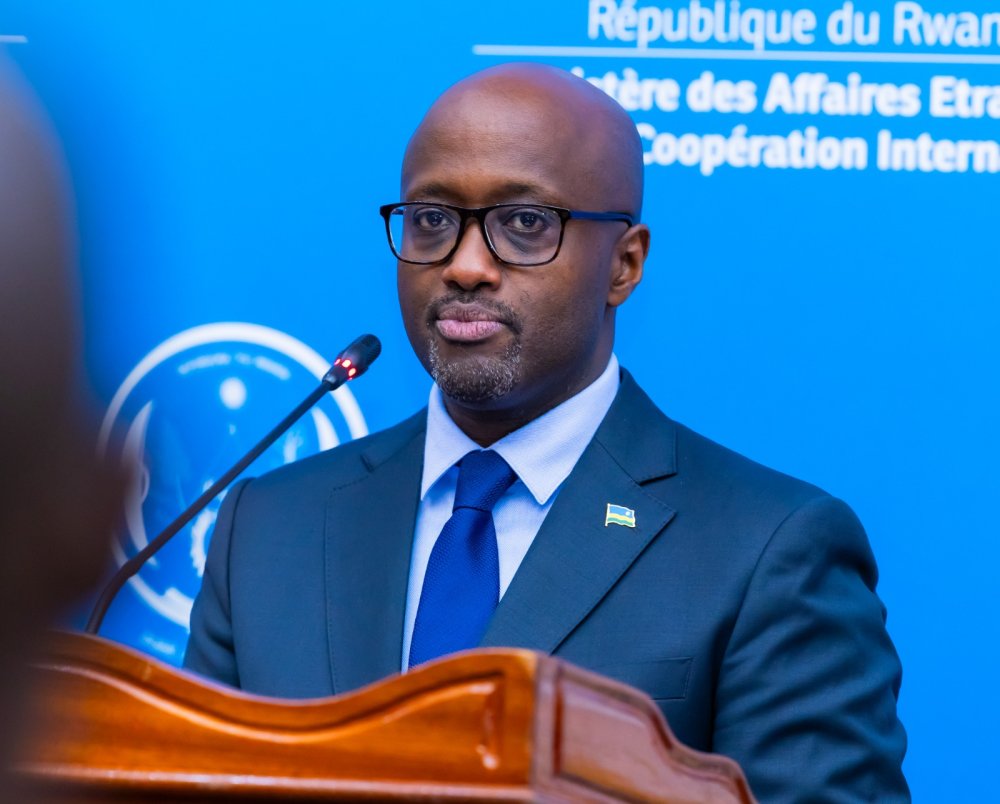

Minister Nduhungirehe made the remarks after a Dutch court convicted Eugène Ntambara of genocide and sentenced him to life imprisonment.
Ntambara becomes the third person to be prosecuted, convicted of genocide and sentenced by Dutch courts, following Joseph Mpambara and Yvonne Basebya.
In a post on X, Nduhungirehe said the Netherlands is among the European countries that have played a significant role in bringing perpetrators of the Genocide against the Tutsi to justice.
“The Netherlands, which also played a role in supporting Rwanda’s justice system after the Genocide, is among the European countries that have played a major role in bringing genocide perpetrators to justice, and we commend it for that,” he said.
Nduhungirehe noted that although several genocide suspects have already been prosecuted, others who are suspected of involvement in the Genocide are still under investigation in the Netherlands.
He called on the relevant authorities to expedite their cases so that justice can be delivered to survivors and families who lost loved ones during the Genocide against the Tutsi.
Eugène Ntambara, a former sector councillor and Interahamwe leader in Mbazi Commune, fled to the Netherlands after the Genocide against the Tutsi. He was accused of involvement in the killing of more than 10,000 Tutsi who had sought refuge at Bwiza Stadium in Mbazi Commune, an area that is now part of Huye District.
Rwanda’s Minister of National Unity and Civic Engagement, Dr. Jean Damascène Bizimana, said Ntambara’s conviction should serve as a warning to other genocide perpetrators hiding abroad, stressing that genocide is an international crime that does not expire and is subject to prosecution worldwide.
“This is also a lesson to other genocide perpetrators who have sought refuge abroad because genocide is an international crime that does not expire and is prosecuted worldwide,” Bizimana said.
A Dutch court convicted Eugène Ntambara of genocide on August 28, 2026, and sentenced him to life imprisonment.
The Netherlands has also previously extradited other genocide suspects to Rwanda, including Jean-Baptiste Mugimba and Jean-Claude Iyamuremye, also known as “Nzinga.” They were subsequently convicted and sentenced by Rwandan courts.