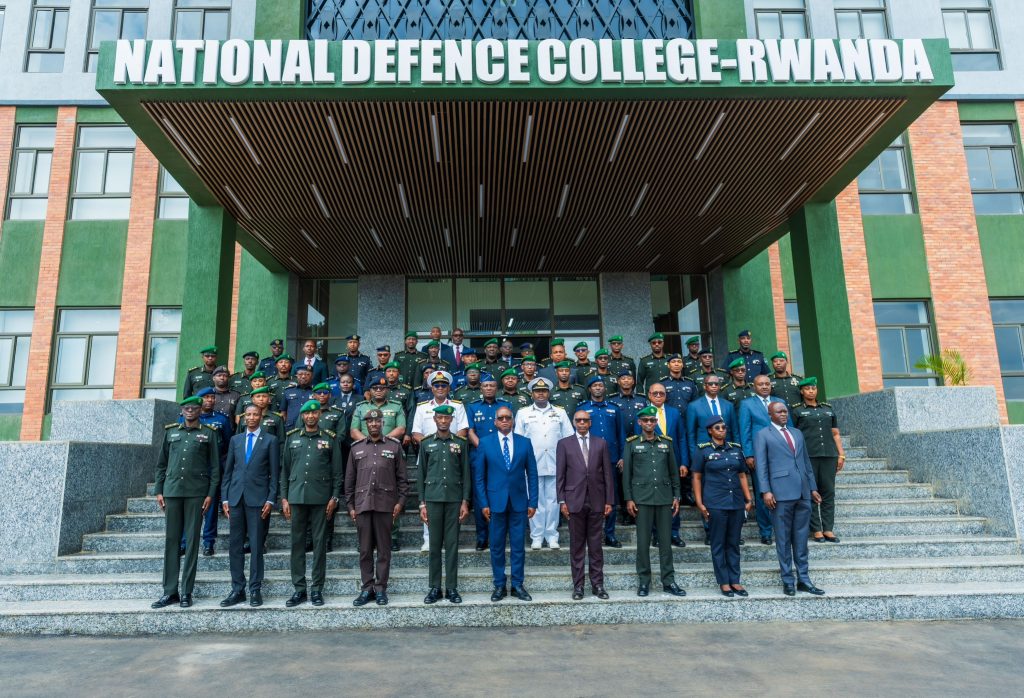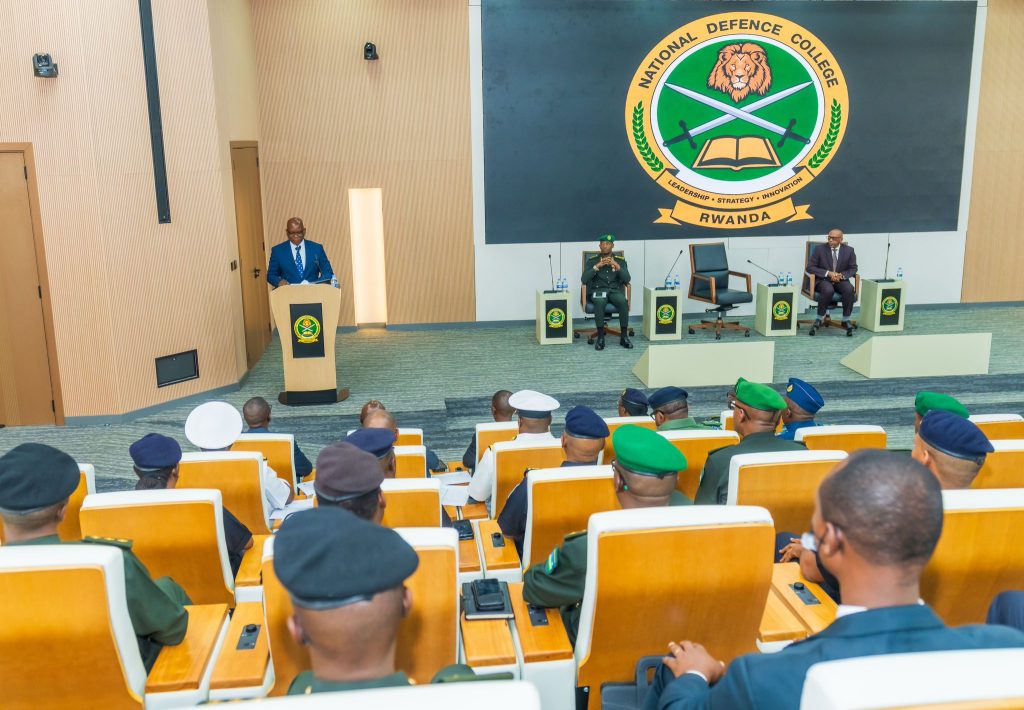
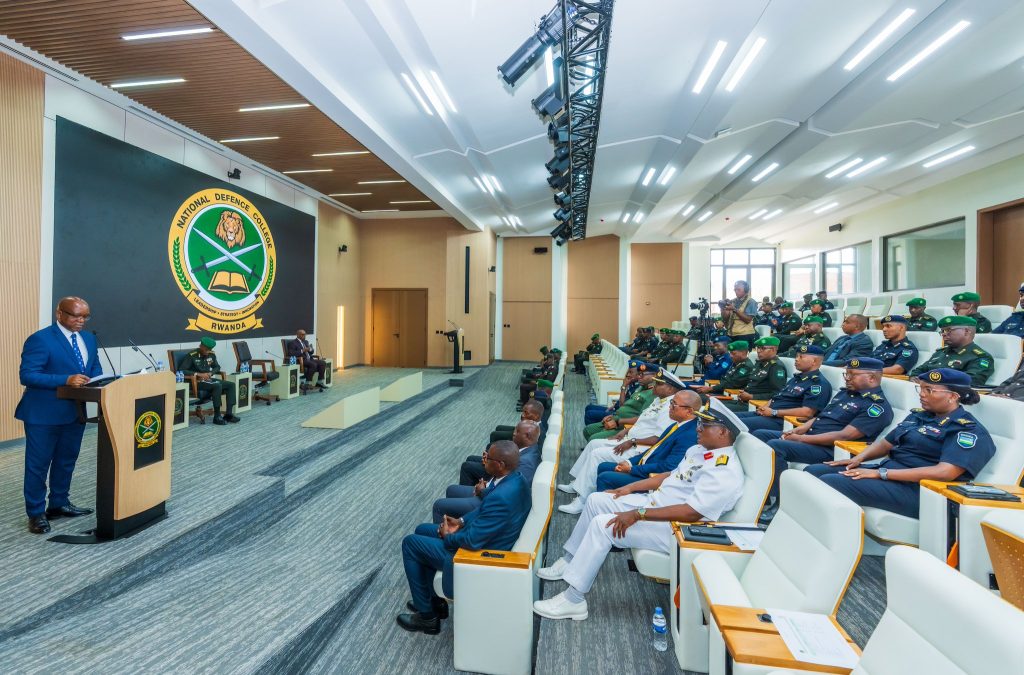

Rwanda has officially opened the first course of the National Defence College–Rwanda (NDC-R), a new institution designed to provide advanced education in defence, security and strategic leadership.
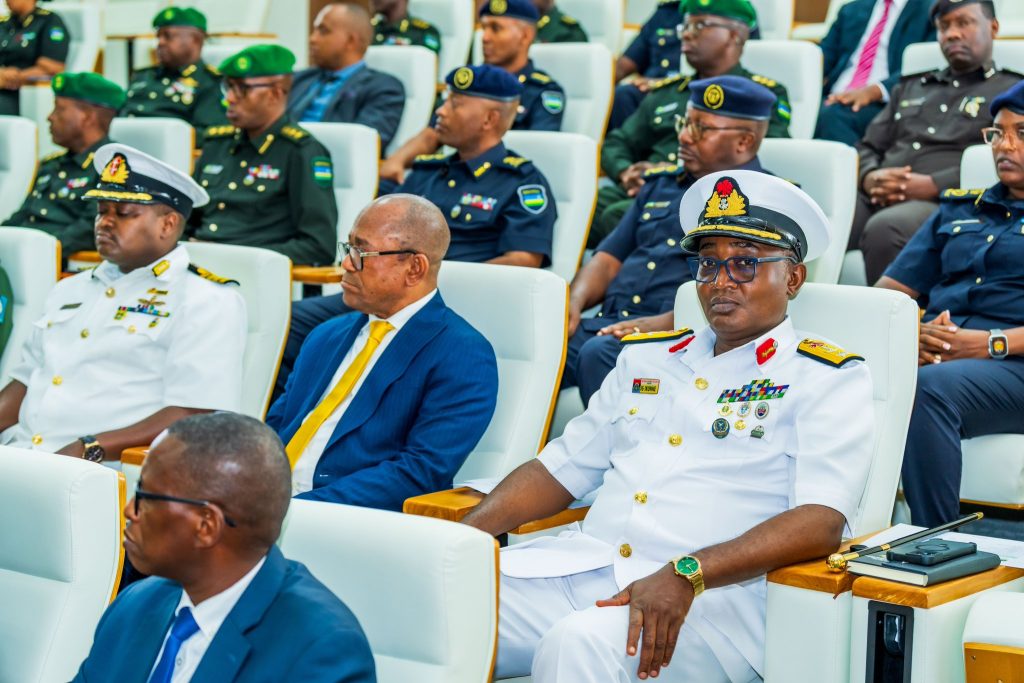
The opening ceremony was held on September 26 at the Bumbogo Campus and was presided over by Rwanda’s Minister of Defence, Juvenal Marizamunda. The programme will run for 11 months and brings together senior officers and civilian faculty members.
Marizamunda described the launch as an important milestone in Rwanda’s defence and security education. He said the college would help prepare leaders to understand security issues beyond military operations and to consider wider national interests.
According to the Ministry of Defence, strategic leadership requires an understanding of different areas, including military, economic, diplomatic and information-related factors.
The minister encouraged participants to approach the programme as a responsibility and to develop their ability to think critically, take part in constructive debate and find solutions to complex challenges.
The National Defence College is part of the National Defence University-Rwanda (NDU-R), which was formally established as part of Rwanda’s effort to develop a structured system of advanced military education. The university also includes institutions focused on defence health sciences, science and technology, and defence and strategic studies.
The college is expected to support research, professional development and strategic thinking among senior leaders. Its creation also adds another level to Rwanda’s military education system, alongside institutions providing training at earlier stages of officers’ careers.
For Rwanda, the launch highlights the country’s continued investment in building professional capacity within its defence and security institutions. The Ministry of Defence says its wider responsibilities include developing human resources and promoting cooperation with other countries and defence organisations to support peace and security.
The inaugural course therefore represents more than the opening of a new training programme. It is part of Rwanda’s broader effort to build local expertise and prepare leaders to respond to changing security challenges in the region and beyond.