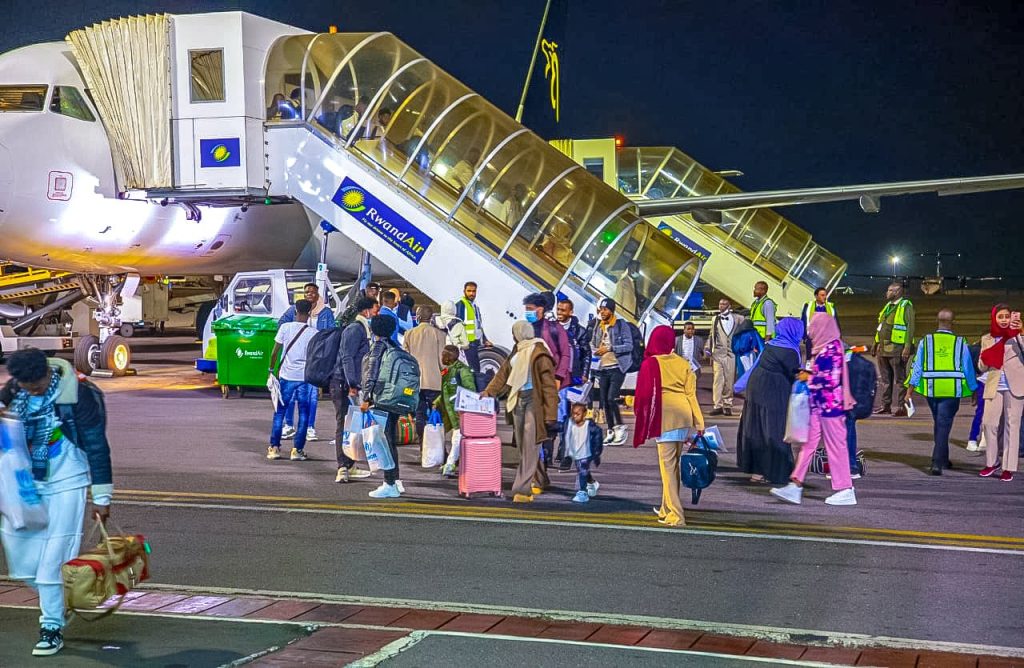
Rwanda, on Wednesday, February 25, received 164 asylum seekers evacuated from Libya, reaffirming its continued role in regional and international refugee protection efforts.
According to the Ministry of Emergency Management, the new arrivals include 143 Sudanese nationals, 19 Eritreans, one Ethiopian, and one South Sudanese. The group was airlifted from Libya under the UNHCR-backed Emergency Transit Mechanism (ETM), a protection arrangement launched in 2019.
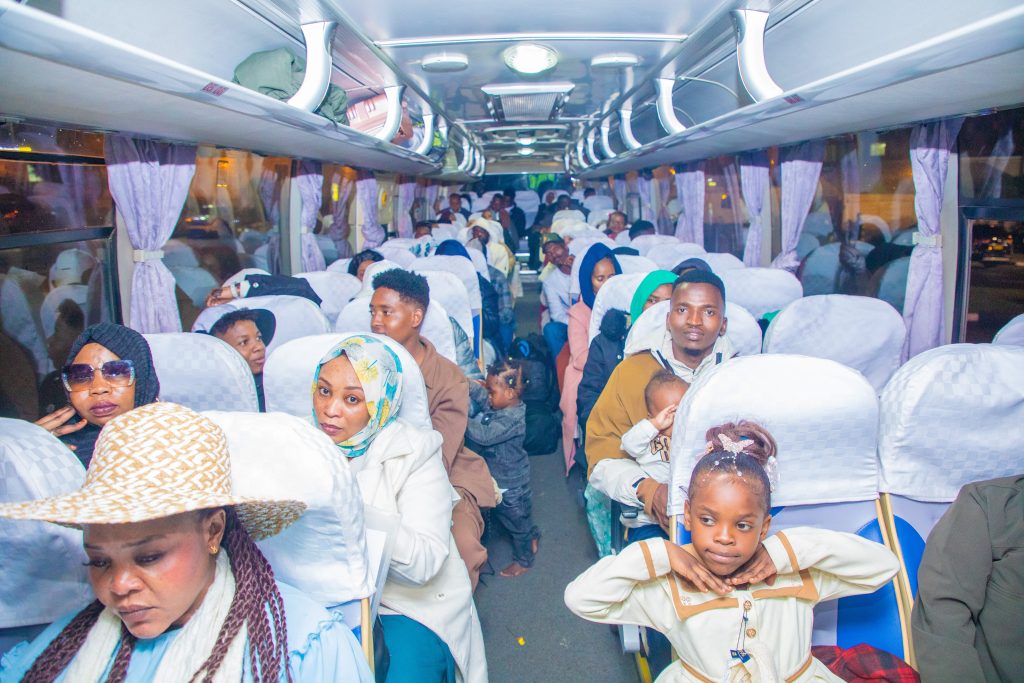
The evacuees were received by Rwandan authorities upon arrival before being transferred to the designated transit facility, where they will be temporarily hosted as their cases are processed.
A Lifeline for Those Trapped in Libya
The evacuation was coordinated by the United Nations High Commissioner for Refugees (UNHCR) in partnership with the Government of Rwanda and the African Union.
The ETM was established in 2019 to provide a safe and temporary transit pathway for vulnerable refugees and asylum seekers stranded in Libya, many of whom face detention, insecurity, and limited access to basic services.
Since its inception, approximately 2,760 people have been evacuated to Rwanda under the mechanism. Of those, more than 2,500 have since been resettled to third countries, according to official figures.
Continued Commitment
Rwanda’s participation in the ETM reflects its broader commitment to international solidarity and refugee protection. While in Rwanda, evacuees receive shelter and essential services as durable solutions — including resettlement, which is constantly pursued.
The latest arrival comes amid ongoing instability in parts of the region, particularly Sudan, where conflict has displaced millions internally and across borders.
For the 164 new arrivals, the evacuation represents a critical step away from uncertainty in Libya toward safety and the possibility of rebuilding their lives.
Further processing and support services are expected to continue in the coming weeks as authorities and partners work toward identifying long-term solutions for the group.
Why Thousands Are Fleeing the Horn of Africa
Across the Horn of Africa and parts of Northeast Africa, a toxic mix of armed conflict, political instability, and economic collapse continues to uproot millions. In Sudan, fighting between rival military factions has devastated entire cities and forced families to flee with little warning, triggering one of the world’s largest displacement crises. In Eritrea, longstanding restrictions and compulsory national service continue to push some to seek safety beyond their borders. Meanwhile, fragile transitions and localized violence in parts of Ethiopia and South Sudan have left civilians caught between insecurity and uncertainty, with limited access to livelihoods, healthcare, and education.
For many, the journey does not end once they cross a border. Smuggling networks operating across the Sahara Desert and into Libya exploit desperation, promising passage to safety while exposing migrants and asylum seekers to extortion, detention, trafficking, and abuse. Libya — itself divided and unstable — has become a bottleneck where thousands find themselves stranded in dire conditions. Reports from humanitarian agencies describe overcrowded detention centres, scarce food and medical care, and widespread trauma among those trapped there.
It is this convergence of conflict at home and peril in transit that drives people to seek asylum through mechanisms such as evacuation and resettlement pathways. Behind every statistic is a family that calculated the risks and still chose to move — not out of ambition, but out of necessity. Understanding these layered crises is essential to grasp why safe corridors and regional solidarity efforts remain critical in this part of the continent.