
Rwanda has reported significant progress in access to justice, social protection, and people-centred reforms during its fourth Universal Periodic Review (UPR) at the United Nations Human Rights Council in Geneva.
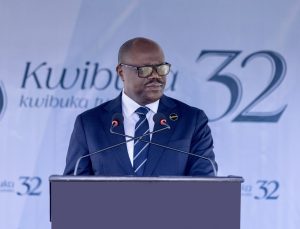
Presenting the country’s report on Wednesday, January 21, Minister of Justice and Attorney General Dr. Emmanuel Ugirashebuja said Rwanda remains committed to strengthening the rule of law and improving the well-being of all citizens through sustained legal, institutional, and social reforms.
“Rwanda approaches the UPR with openness and constructive dialogue,” he said. “It is an opportunity to demonstrate measurable results and reaffirm our commitment to advancing the rights and livelihoods of our people.”
The delegation highlighted major strides in access to justice, noting that more than 38,000 cases were resolved between 2022 and 2026 through alternative dispute resolution mechanisms, including mediation and plea bargaining. An Alternative Dispute Resolution Centre established in Kigali in 2024 has already mediated nearly 200 cases and facilitated the settlement of more than 560 others, with plans to replicate the model in other provinces.
Rehabilitation and reintegration efforts were also underscored. Between 2021 and 2024, 9,387 inmates were released on parole, while 434 received presidential pardons. These reforms have contributed to Rwanda being ranked first in Africa on the World Justice Project Rule of Law Index in both 2024 and 2025, and 39th globally.
On social protection, Rwanda reported substantial reductions in poverty. The national poverty rate declined from 39.8 percent in 2017 to 27.4 percent in 2024, lifting about 1.5 million people out of poverty. Extreme poverty fell from 11.3 percent to 5.4 percent over the same period.
Through the Vision Umurenge Programme, more than 1.2 million vulnerable citizens, including older persons, people with disabilities, and pregnant or lactating women, receive regular cash transfers. The national social registry, Imibereho, now covers over 3.5 million households, enabling more accurate targeting of assistance, while nearly 15,000 community-based para-social workers support families and link them to essential services.
Progress in gender equality and child protection was also noted. Women’s representation in leadership continues to rise, while child labour has declined from 4 percent in 2016–2017 to around 3 percent today.
In education and health, Rwanda reported improved outcomes, with gross school enrolment for children aged 3 to 17 increasing to over 92 percent in 2023–2024, and under-five mortality falling from 45 per 1,000 live births in 2020 to 36 in 2025. Maternal health indicators remain strong, with nearly all births attended by skilled personnel.
The delegation further cited advances in civil liberties, media freedom, access to information, and governance reforms aimed at strengthening transparency, accountability, and citizen participation.
“While challenges remain, including climate-related shocks and socio-economic vulnerabilities, Rwanda is committed to sustained reforms and strong partnerships to ensure inclusive development and the full enjoyment of human rights,” Dr. Ugirashebuja said.
Rwanda’s delegation was led by Ambassador Urujeni Bakuramutsa, Permanent Representative to the UN in Geneva, and included officials from the National Institute of Statistics of Rwanda, the Rwanda Governance Board, and the Ministry of Local Government.