
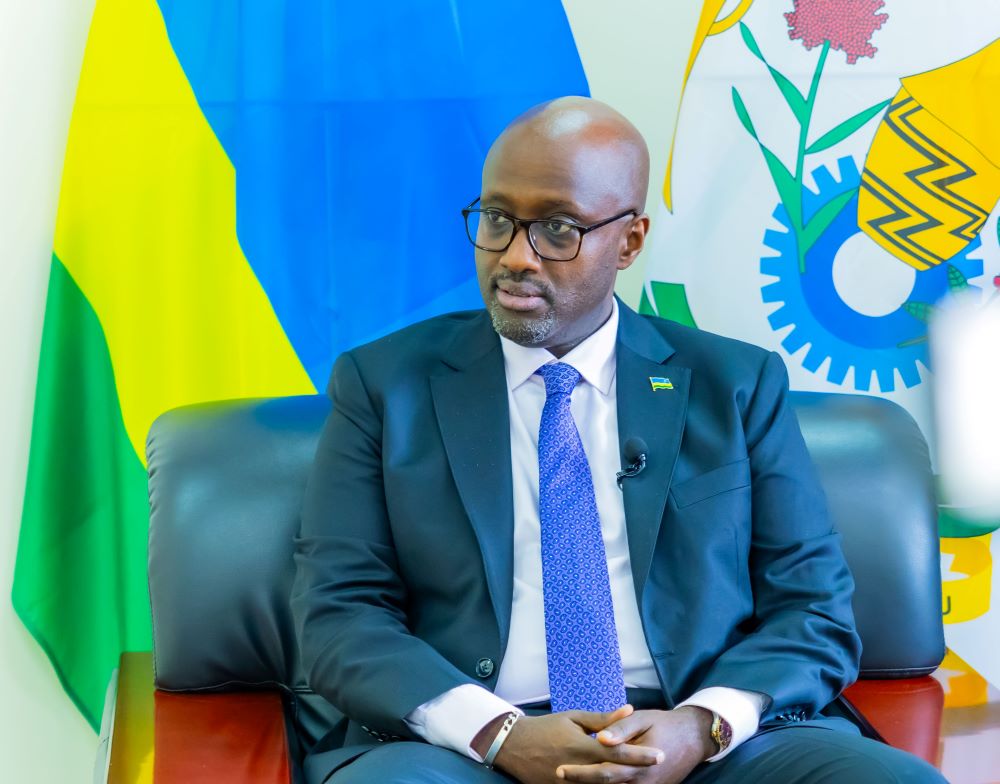
The Minister of Foreign Affairs, Olivier Nduhungirehe, has emphasized that Rwandan troops cannot continue counterterrorism operations in Cabo Delgado Province in Mozambique if funding from the European Union is suspended, while at the same time facing constant criticism from the international community.
Minister Nduhungirehe made these remarks on Monday, March 16, 2026, in a statement issued by Rwanda’s Ministry of Foreign Affairs.
The presence of Rwandan forces in Cabo Delgado has been under discussion following a report by Bloomberg indicating that the €20 million support provided by the European Union for this mission is set to expire in May 2026, with no plans for renewal.
Following these reports, Rwanda’s Government Spokesperson Yolande Makolo and Minister Nduhungirehe stated that Rwanda’s contribution to the mission is significant, and that the country is prepared to withdraw its forces if they continue to be undervalued or if EU funding is discontinued.
In the statement released on Monday, Minister Nduhungirehe clarified that Rwanda has not made a final decision to withdraw, stressing that the intention was to issue a reminder.
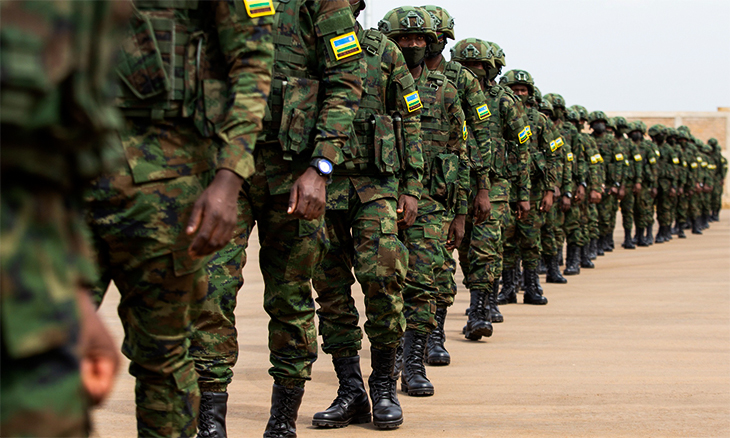
He said “This is not a decision we have taken, but rather a principle we wanted to reiterate. In July 2021, Rwandan forces were deployed to Mozambique at the invitation of the government of that friendly country, specifically to Cabo Delgado in the north, to fight the terrorist group Ansar al-Sunna, which is linked to Islamic State.”
He added that during their deployment, Rwandan forces helped restore stability, allowing residents to resume their normal lives and enabling investment to return.
He said “Over the past four to five years, they have done remarkable work. Civilians have returned to their homes, students have gone back to school, businesses have resumed operations, and major gas investments have restarted, with companies returning to work. All this was achieved by Rwandan forces in collaboration with Mozambican forces and with support from the European Union.”
Our forces cannot continue under constant pressure
Minister Nduhungirehe stressed that Rwanda’s statement was meant to highlight the country’s substantial contribution to the mission.
He said “We reminded that Rwanda has made a major contribution, investing amounts nearly ten times greater than what we receive from the European Union, and we have also lost soldiers in combat to restore stability in that region.”
He added that Rwandan forces cannot continue the mission if they are constantly criticized or subjected to sanctions.
He said “Rwandan forces are working for Mozambique, its citizens, and the international community as a whole including companies investing there. They cannot continue this work while being continuously criticized, sanctioned, and put under pressure.”
Minister Nduhungirehe noted that the troops would continue their mission if the situation changes and EU support is maintained; otherwise, the European Union and its partners would need to find alternative forces.
He said: “This situation cannot continue. That is why we reiterated that Rwanda will continue fulfilling the mission it was requested to undertake as long as the support continues. However, if that support is halted, we will withdraw from the country, and those countries will have to find other forces or another country to take over the mission.”
Rwandan forces were first deployed to Cabo Delgado in July 2021 at the request of the Mozambican government to help combat terrorism that had destabilized the province since 2017. Since then, several rotations of troops have been deployed.