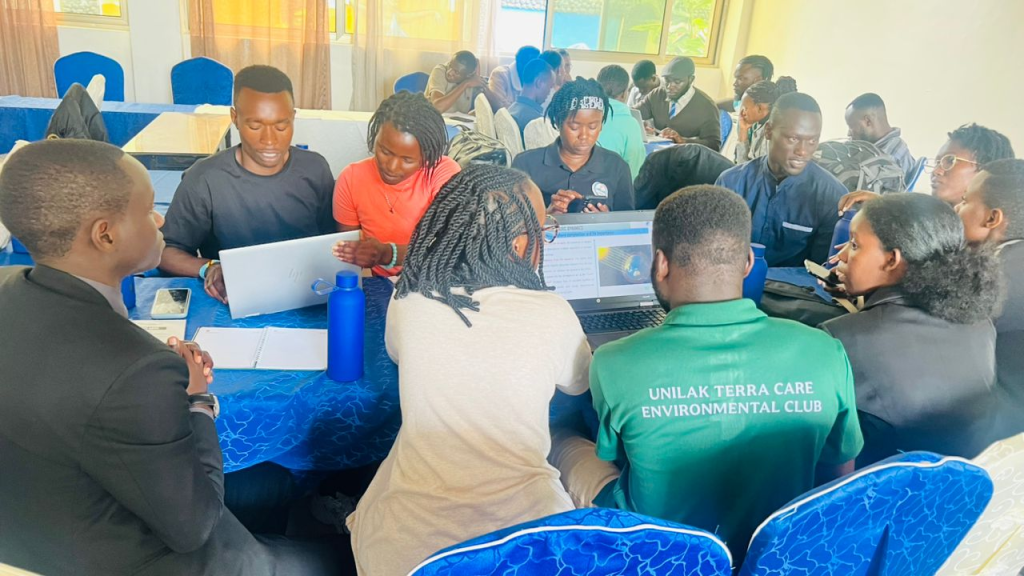
Rubavu, Rwanda – The Rwanda Environmental Management Authority (REMA) hosted a two-day intensive training that brought together 34 youth from Environmental Clubs across universities and higher learning institutions.The program equipped participants with practical skills and knowledge to spearhead environmental protection initiatives and tackle climate change on their campuses and communities.
The workshop, held on February 26–27, 2026, centered on Environmental Protection and Climate Change on Environmental Protection and Climate Change, giving participants a comprehensive understanding of the country’s environmental legal framework, sustainable management of natural resources, pollution control, and practical strategies for climate action.
According to Mr. Christian Kayishema, Environment and Climate Change Education Officer at REMA, the training plays a critical role in empowering young “eco-warriors” with the knowledge and skills needed to protect the environment.
He emphasized that participants should share their knowledge within their clubs and translate it into practical, campus-oriented initiatives.
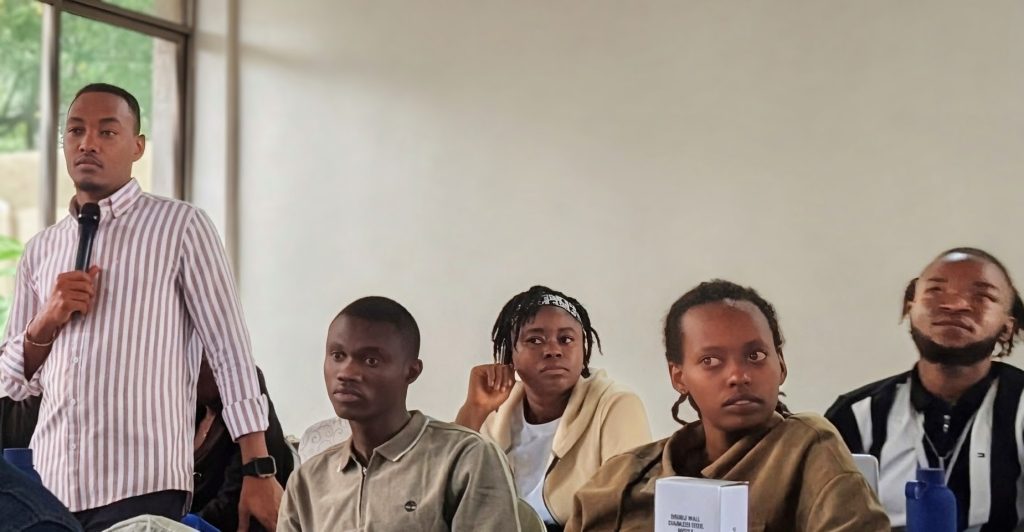
During the sessions, Mr. Kayishema presented Environment Law N°48/2018 of 13/08/2018, highlighting its relevance to environmental governance.
He explained the fundamental principles of environmental protection, including the precautionary principle, environmental sustainability, polluter pays, public awareness, and cooperation.
Furthermore, he emphasized the shared responsibilities of citizens, including students, and decentralized government entities in protecting land, water, forests, wetlands, biodiversity, and air quality.
Conservation and Management of Natural Resources
The training also delved into natural resource management, including land, water, biodiversity, and air.
Mr. Kayishema explained that sustainable management requires monitoring land and subsoil use, protecting water bodies, conserving forests and wildlife, and maintaining air quality. Additionally, participants learned strategies for pollution control, climate change mitigation, and adaptation.
Moreover, Mr. Octavien Ngirabakunzi from REMA explained chemicals and hazardous waste of global concern, their sources, and impacts on human health and the environment.
He guided participants on strategies for efficient and effective management of waste and hazardous substances, emphasizing their role in preventing environmental degradation and promoting public health.
Prohibited Activities and Penalties
Mr. Kayishema provided detailed insights into prohibited activities under the law. Participants were briefed on actions that threaten wetlands, protected areas, biodiversity, and water quality, including dumping waste into rivers and lakes, conducting agriculture or livestock activities too close to water bodies, burning forests or grasslands, harming endangered species, and improperly handling hazardous chemicals.
Key legal provisions highlighted by REMA representatives included:
- Article 42: Prohibitions in wetlands and protected areas.
- Article 47: Up to 3,000,000 RWF fine for illegal draining or diverting rivers.
- Article 58: 5–7 years imprisonment plus 5–7 million RWF fines for hunting or killing endangered species.
As he demonstrated, according to Article 49, agricultural and livestock activities are prohibited within 10 meters of rivers and streams and 50 meters from lake shores to safeguard water quality and aquatic ecosystems.
Administrative sanctions included:
- Dumping waste illegally → 50,000 RWF + restoration.
- Licensed waste handler violating rules → 5,000,000 RWF + license suspension.
- Urinating/defecating in undesignated areas → 10,000 RWF fine.
- Burning household waste, tyres, or plastics → 25,000 RWF fine.

Youth Reflections and Commitments
Participants described the training as transformative. Egide Minani from East African University–Kigali Campus mentioned that the workshop helped him to understand that climate change is real and already causing floods, droughts, and irregular rainfall. He noted that Climate literacy is crucial because students are future leaders.
“I now plan to proceed with raising awareness on campus, encourage eco-friendly habits, and participate in tree planting and waste management initiatives.” He stated.
Meanwhile, Kevine Bwiza Ndora from UNILAK-Kigali Campus expressed gratitude to REMA, saying, “This training inspired me to continue making an impact through the Environmental Club at UNILAK. I aim to share the skills I learned with other students and create initiatives that address environmental challenges.”
Additionally, Mr. Leon De Pere Irakoze from UR-College of Agriculture, Forestry, and Food Science (CAFF)-Musanze campus highlighted the importance of transforming knowledge into action.
“Here we acquire knowledge, but it is our responsibility to decide what to do with it,” He noted. Therefore, setting clear goals, seeking mentorship, and partnering with others are key to success as Environmental Clubs.
He also stressed that protecting natural resources is a collective responsibility, not an individual task, and urged fellow youth to showcase environmental initiatives on social media to inspire others.
“Knowledge creates awareness, action creates change, and consistency creates impact.” He stated.
Building a Generation of Eco-Warriors
Throughout the training, participants explored the sustainable management of water, soil, forests, biodiversity, and waste, as well as key frameworks like the Paris Agreement. They also learned practical strategies for climate change mitigation and adaptation that they can implement at their campuses and in their communities, guided by REMA facilitators.
Looking ahead, the training has ignited a new wave of environmental leadership among youth. Equipped with practical skills, legal knowledge, and climate awareness, the participants noted that they are ready to transform campuses into hubs of sustainable action.
Mr. Kayishema Christian, Environment and Climate Change Education Officer at REMA, emphasized that turning knowledge into action, sharing best practices, and engaging peers are key to driving measurable change in resource management, climate resilience, and environmental advocacy, showing that informed and motivated youth can shape a greener, more sustainable future.